
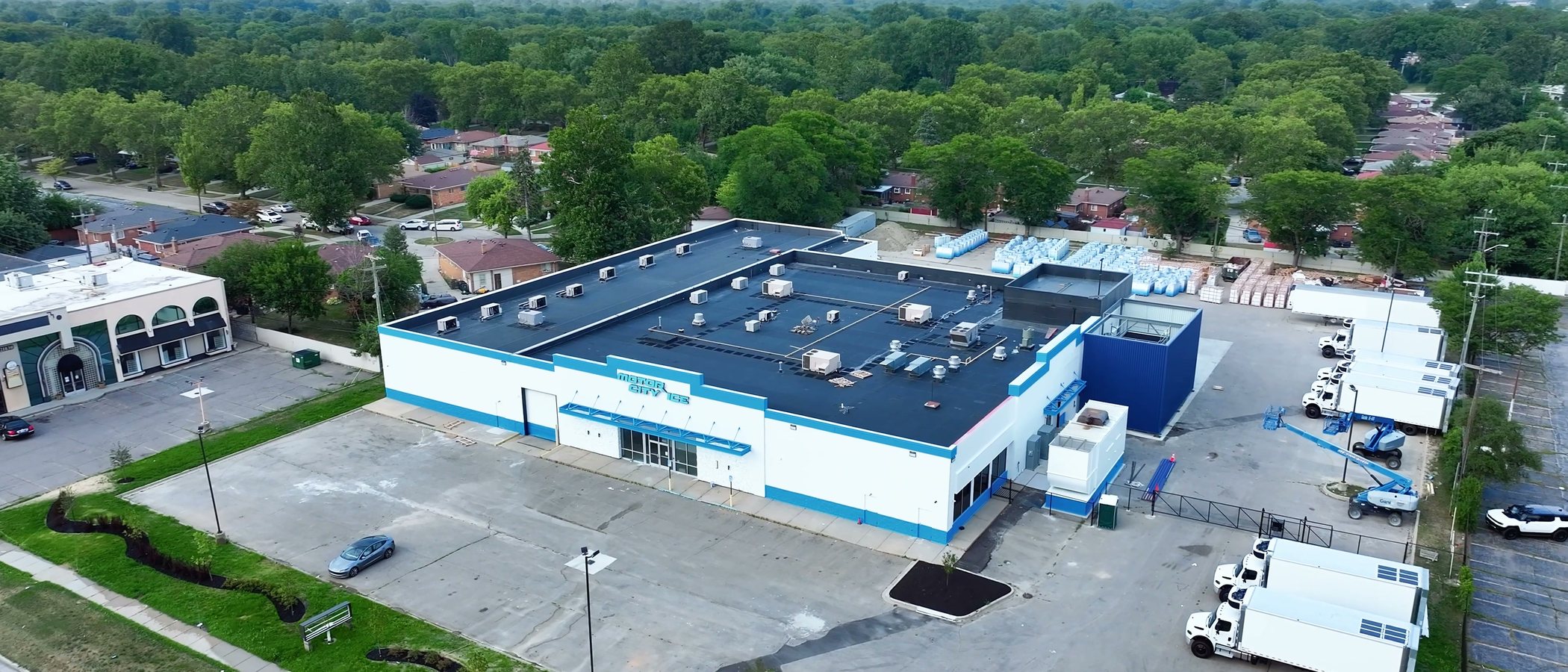
Most people never think about where bagged ice comes from. You grab it out of the chest by the door, you pay, you go. Somebody, somewhere, has to keep that chest full on a hot Saturday.
At Motor City Ice, that somebody is a sensor.
What we saw
Motor City Ice makes and delivers packaged ice out of a plant in southeast Michigan. They are a Workd customer, and they let us walk the building with a camera.
The making side is the part that stops you. Ice comes down through tubes into a collection area. A conveyor lifts it up and out of the room into a holding bin the size of a trailer, with a sifter inside to keep it loose. From there it runs into the packaging room, where it drops through a chute, rides a second set of conveyors, and gets bagged and stacked by the line. On the far side of that wall is the freezer, where wrapped pallets of finished ice wait for the forklift.
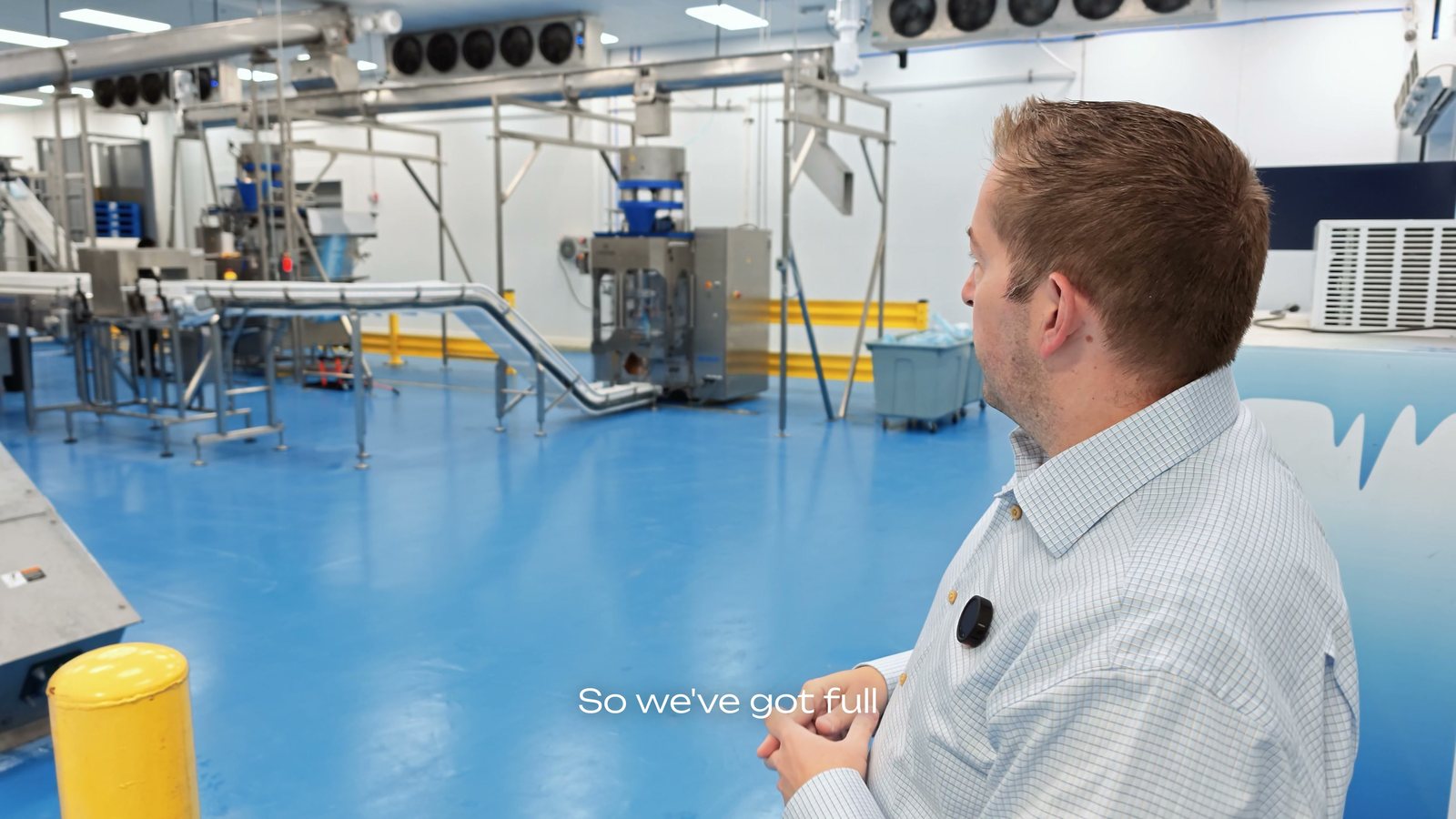
Ice in one end of the building. Pallets out the other. Clean, purified ice, made and packed by the line.
The part you can’t see from the parking lot
The plant is only half the story. The other half sits outside a few hundred gas stations and grocery stores.
Every merchandiser Motor City puts in the field has sensors inside it. The sensors report how full the chest is, whether it is ten miles from the depot or thirty. Workd reads that sensor data and turns it into a capacity picture: this chest is empty, this one is full, this one is somewhere in between.
From there the loop runs itself:
- A bin drops below its reorder level.
- Workd raises the reorder and drops it onto a route.
- The truck delivers, and the invoice and payment are handled at the door.
The store never has to call. Motor City never has to key in the order. The customer’s one job is to pay the bill when it comes due.
Why the calibration step matters
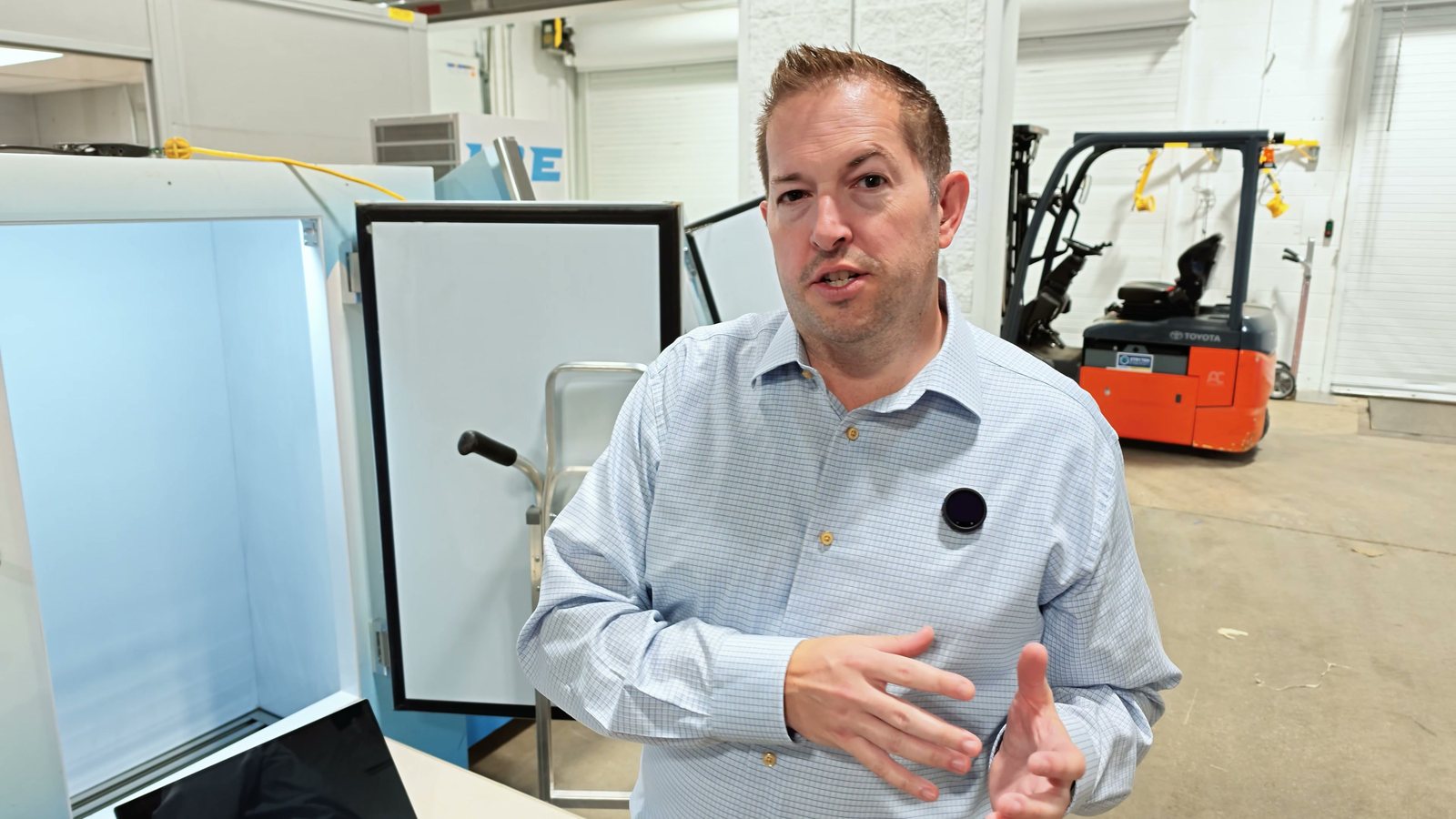
There is one thing Chris makes a point of in the video, and it is easy to miss. Before a merchandiser goes out, the team checks the sensor readings against reality twice: once when the chest is empty, and again after it is filled. That tells the system what “empty” and “full” actually look like for that unit.
It sounds like a small thing. It is the whole thing. An automatic reorder loop is only as good as the number it is trusting. Calibrate once, and every store on the route gets the right expectation from day one.

What it means for a distributor
You may not sell ice. The shape of the problem is probably familiar anyway.
You have product sitting at a customer’s location. Somebody has to notice it is getting low. Somebody has to place the order. Somebody has to route it, deliver it, invoice it, and collect. Every one of those handoffs is a phone call or a keyed entry today, and every one of them is a place where a hot Saturday turns into an empty chest.
What Motor City did was let the system carry the routine part of that chain. Their team spends less time on order entry and more time with customers. Their customers’ paperwork shrinks too. Both sides get to spend their time selling.
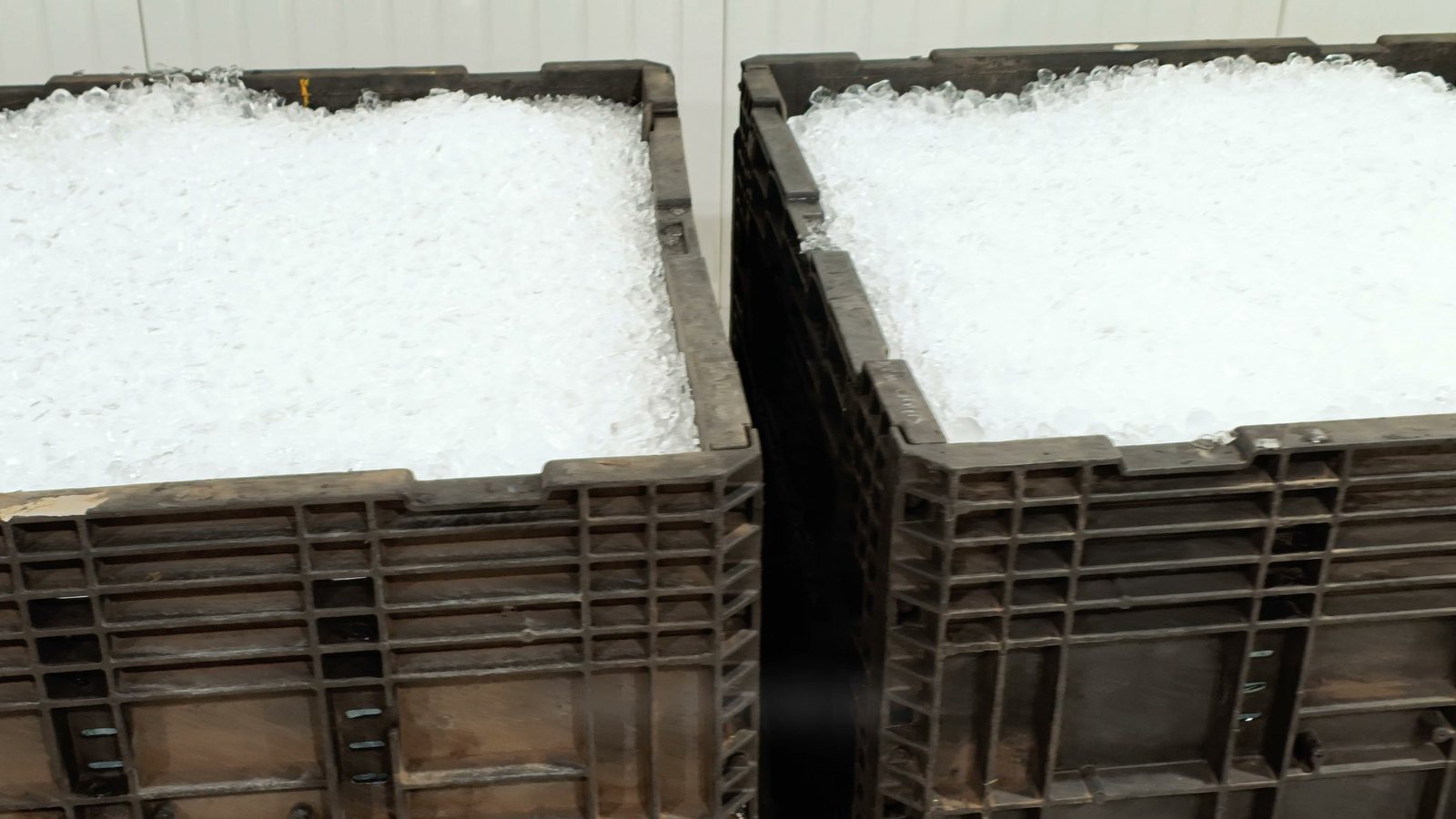
The plant runs on its own. So does the refill. That is the version of automation we like to build toward.
If you need ice
If you run a convenience store or a grocery store in the Detroit area and go through a lot of ice, get in touch with Motor City Ice. They will keep your chest full without you ever placing an order.
If you are a distributor with product in the field and a phone that rings every time it runs low, that reorder loop is built on Workd Routing and Driver Delivery. We would be happy to walk you through how it is wired.