
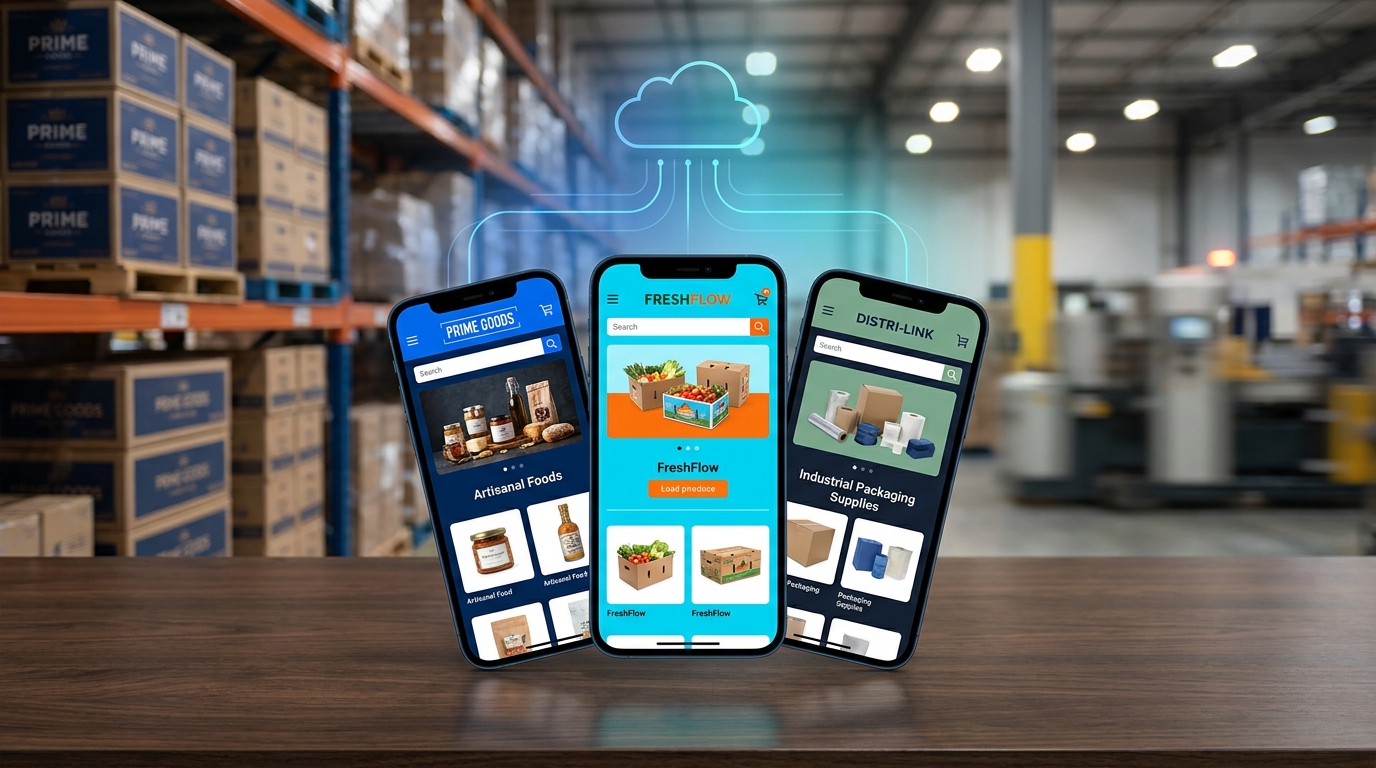
Distributor holding companies and multi-brand operators run their entire portfolio on Workd, separate domains, branding, and customer experiences for each brand, all rolling up to one inventory, AR, and reporting backbone.
Reference Customer
HF Foods runs 16+ sub-brands on Workd.
One inventory backbone. One AR ledger. Sixteen brand experiences. Zero duplicate data entry.
Read the case studyEvery brand has its own ecommerce stack, its own ERP instance, its own customer database. Inventory is fragmented. Reporting takes a week. Pricing decisions in one brand never make it to another.
Brand A is out of stock on a SKU sitting in Brand B's warehouse. Customers wait. Margin disappears.
The same buying group purchases from three of your brands. Each brand thinks they're a small account. They're actually one of your largest.
Consolidated financials require a CSV export, a manual reconciliation, and a controller working a Saturday. Every month.
One backend, configurable boundaries between brands, customer-facing experiences that feel native to each.
Each brand gets its own domain, its own design system, its own product catalog filter, its own customer base. Buyers landing on brand A's storefront never see brand B's branding, pricing, or inventory.
All brands share one inventory ledger by default, with optional per-brand allocation rules. A SKU sitting in any warehouse is visible to any brand that's authorized to sell it. No double-counting, no manual transfers.
Customers can belong to one brand or many. When a multi-brand buyer logs in, they see only what their brand allows, but your sales team sees the consolidated view, including total wallet share across the portfolio.
Run separate AR ledgers per legal entity for clean financials, or consolidate at the parent level for collections efficiency. Choose per-brand and switch later, the migration is a config change, not a project.
Promo codes, sale pricing, and seasonal campaigns can be scoped to one brand, multiple brands, or the entire portfolio. Built into the same Workd Promotions engine your single-brand customers use.
Roll-up dashboards across every brand. Filter by brand, by region, by customer segment, by SKU class, at any level of the hierarchy. No CSVs, no Saturday reconciliations.
HF Foods's per-brand microsites are running on Workd today. Each one its own brand experience, all sharing one backend.
Parent brand and portfolio gateway
Visit siteGreensboro DC, NC/SC/VA/TN service area
Visit siteEach rolling out on the same multi-storefront pattern
Coming online| Capability | Workd | Multi-Shopify | BigCommerce / Magento | OroCommerce |
|---|---|---|---|---|
| Per-brand domain & branding | ✓ | ✓ | ✓ | ✓ |
| Shared inventory backbone | ✓ Native | ~ Via apps | ~ Via integration | ✓ |
| Unified customer master | ✓ Native | × | ~ Limited | ~ Limited |
| Per-entity AR ledgers | ✓ | × | × | ~ Custom |
| Brand-aware promotions | ✓ | × Per-store only | ~ | ~ |
| Consolidated reporting | ✓ Built-in | × Manual | ~ Add-on | ✓ |
Comparison reflects out-of-the-box capability without third-party apps or middleware. Configurations vary; talk to us about your specific stack.
Walk us through your current setup. We'll show you what a Workd consolidation looks like, what migrates day one, and what stays as-is.
Distributors from $5M to over $1B run their sales, orders, and deliveries on Workd.
Not sure where to start? Try our AI: (248) 522-9680