
Every month a group of researchers asks a few hundred logistics managers the same eight questions: are your inventories up or down, is your warehouse space tighter or looser, what’s happening to the price of a truck. The answers get rolled into one number called the Logistics Managers’ Index, and September’s came in at 70.2. That’s the second-highest reading in four years, and anything over 50 means growth.
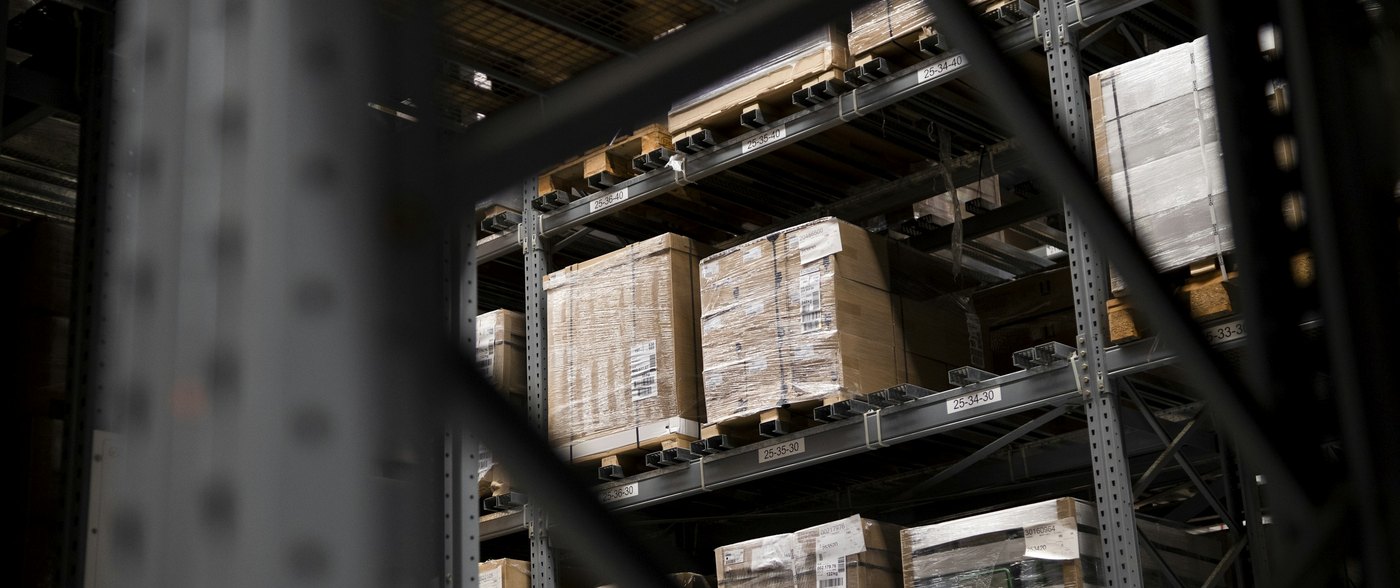
Growth sounds like good news. Most of this reading is, but it’s growth of a particular kind. Read the eight questions separately and what you get is a picture of a lot of product arriving at once into buildings that are running out of room.
The three numbers that matter
Inventories jumped. The inventory levels reading rose 6.1 points in a month to 58.9. Unlike last summer, when a lot of operators overbought to get ahead of tariffs, this one is seasonal. Goods for the fourth quarter are landing, some of them late, and they’re landing together.
Space is contracting, fast. Warehousing capacity dropped 14.2 points to 39.3. Below 50 means it’s shrinking, and the report calls this the fastest rate of contraction for the metric since March 2022. Utilization went up at the same time, which is the same story from the other side: the space that exists is fuller.
Freight is near its ceiling. Transportation prices came in at 92.7, the fifth month out of the last six above 90. Transportation capacity fell to 34.4. There are fewer trucks available and they cost more, which after two issues on diesel will not surprise anyone reading this.
Put those together and you get the operating conditions for the next ninety days. More product is coming in, there’s less room to put it, and moving it anywhere costs a premium.
The pallet you’re not selling is now sitting in the most expensive square foot you’ve rented in four years.
Why that’s a distributor’s problem specifically
The report splits respondents into upstream, meaning manufacturers and wholesalers, and downstream, meaning retailers. The squeeze is sharper upstream: inventories are higher there (61.4 against 53.8), warehouse utilization is higher (68.4 against 53.8), and so is transportation utilization. The product is sitting with the distributor, waiting for the retailer to pull it.
That’s the normal rhythm of the fourth quarter, and in a normal year it’s fine, because the stock turns. The trouble comes from what doesn’t. Every building has a share of inventory that stopped moving months ago: the case pack a customer stopped ordering, the SKU a vendor replaced, the special buy that was a great deal in April. In a loose market that stock costs you the money tied up in it and not much else. In a market where space is contracting at the fastest rate in four and a half years, every pallet position it occupies is one you can’t use for product that’s actually turning, and one more reason to pay for overflow space or turn away a truck.
The inventory costs reading was 79.9, which is where the survey puts the price of holding what you have. It has been high all year. It’s just never been this high while space was this scarce.
The play to run this week
The useful version of this is a short list, not a project. Most order systems can produce it in ten minutes.
- Pull everything with no sales in 90 days. By SKU and by location, with quantity on hand and extended cost. Ninety days is generous; in a fourth quarter you could argue for sixty.
- Add the footprint. Pallet positions or cubic feet per SKU, however your building counts space. Sort by footprint, not by dollars. The cheap, bulky item that stopped moving is the one hurting you right now.
- Decide each line in one of three ways. Return it to the vendor if the terms allow, sell it through to a customer who still moves it at whatever price clears it, or write it down and get it out. The fourth option, leaving it where it is, is the one that costs money every week between now and January.
- Freeze the reorder. For every SKU on the list, check the reorder point and the open purchase orders. A surprising amount of dead stock has a replenishment order behind it, because the min and max were set when it was selling.
Step four is the one that pays for the afternoon. Dead stock is bad; dead stock with an open PO is a second pallet of it arriving next week.
The part that keeps the list from coming back
The first pass is a report. The problem is that the list rebuilds itself, because the conditions that create dead stock, a customer who changes a buyer, a vendor who tweaks a pack size, a rep who overpromises on a special, never stop. An annual purge handles last year’s mistakes and leaves this year’s sitting there until next October.
The operators who stay ahead of it are the ones whose inventory, by location and by age, lives on the same screen as the orders and the reorder points, so a SKU that stops turning shows up when it stops, not at the next physical count. That’s what multi-warehouse inventory inside Workd is built to do: quantity, age and open purchase orders by location, running off the same orders and receipts you’d otherwise be exporting by hand.
Either way, run the list once. September’s numbers say the squeeze is already here. The pallet positions you free up this week are the cheapest space you’ll find before the year ends.
Sources
- September 2026 Logistics Managers’ Index · Logistics Managers’ Index, released October 6, 2026
- Fuel Behaved. Then It Didn’t. · Workd Weekly, Issue #6, on transportation costs
- Workd Inventory · multi-warehouse inventory, reorder points and purchase orders