
Why Mid-Market Manufacturers Are Hiring Chief AI Officers Before They Hire CTOs

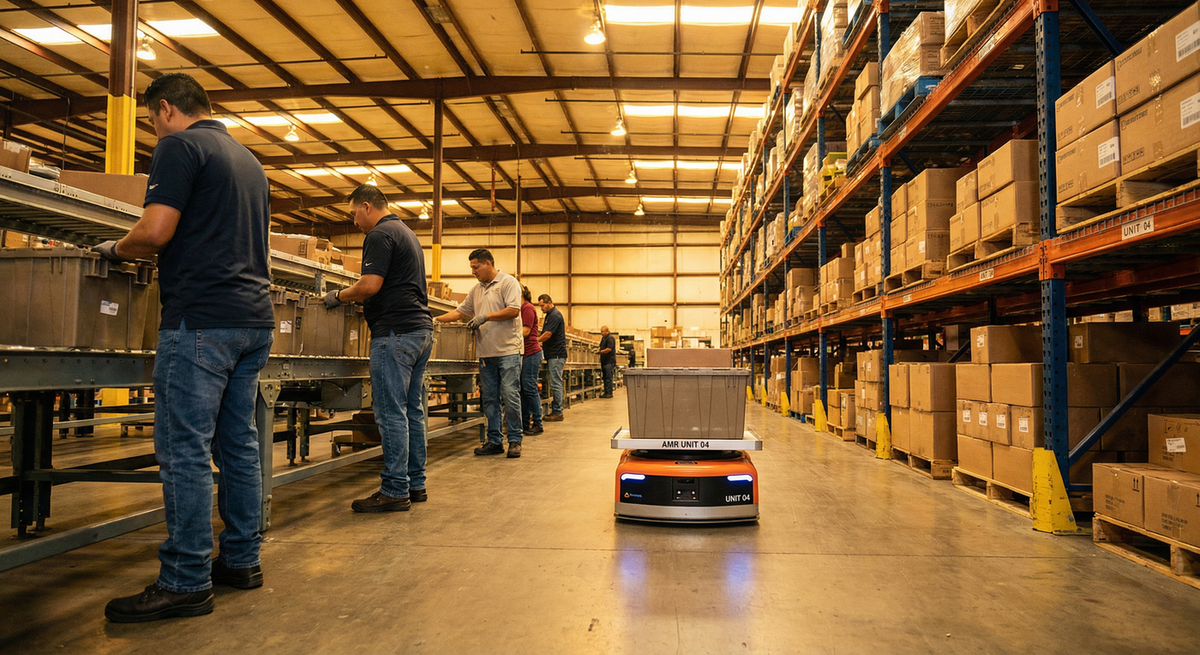
Twenty-six percent of organizations now have a Chief AI Officer, up from 11% just two years ago, according to IBM's latest research. By 2026, more than 40% of Fortune 500 companies are expected to have a dedicated CAIO role. And the trend isn't confined to enterprise. Forbes reported in October 2025 that CAIO hiring, "initially concentrated among Global Fortune 500 companies, has expanded significantly into the middle market."
For mid-market manufacturers and distributors, companies with $20 million to $500 million in revenue, this signals something important. AI has crossed the threshold from experimental technology to operational infrastructure, and the organizations adopting it fastest have decided that the CTO's plate is already full. AI strategy needs its own seat at the table.
The Gap Between AI Deployment and AI Value
The case for a dedicated AI executive starts with a paradox. Seventy-eight percent of companies use AI in at least one business function, according to IBM. Gartner projects that by 2026, more than 80% of enterprises will have deployed generative AI applications. Adoption is not the problem. Value extraction is.
Gartner's own prediction underscores the gap: by 2027, less than 10% of organizations that implement agentic AI within their ERP systems will realize significant measurable value. The technology is being deployed everywhere. The returns are showing up almost nowhere, because deploying AI without a coherent strategy, governance structure, and organizational alignment is like installing a production line without training anyone to run it.
In manufacturing specifically, the disconnect is acute. Predictive maintenance has a 78% adoption rate among manufacturers using AI, according to a 2025 study published in PMC. Seventy-seven percent of current users report satisfaction with predictive maintenance benefits. But most implementations remain siloed, a machine learning model monitoring one production line, disconnected from quality systems, supply chain planning, and financial reporting. The value exists in pockets. It doesn't compound across the operation because nobody owns the end-to-end AI strategy.
26% of organizations now have a Chief AI Officer, up from 11% two years ago. The role is expanding rapidly from Fortune 500 into the middle market.
, IBM, 2025
Why the CTO Can't Do This Alone
The instinctive response at most mid-market companies is to assign AI responsibilities to the existing CTO, CIO, or VP of IT. On paper, it makes sense, AI is technology, and the technology leader should own it. In practice, it doesn't work for three reasons.
The CTO's mandate is infrastructure stability. At a mid-market manufacturer or distributor, the technology leader is responsible for ERP uptime, network security, hardware lifecycle management, and keeping the operational systems running. These are critical responsibilities with zero tolerance for downtime. Adding "develop and execute an AI strategy that transforms business operations" to that mandate creates a priority conflict. Infrastructure stability always wins because the cost of failure is immediate and visible. AI strategy loses because the cost of inaction is gradual and invisible.
AI strategy is a business problem, not a technology problem. The most valuable AI applications in manufacturing and distribution, demand forecasting, dynamic pricing, automated order processing, predictive quality control, require deep understanding of business operations, customer behavior, and market dynamics. The CAIO role bridges technology capability and business strategy in a way that a purely technical CTO role typically doesn't. As RSM noted in its analysis of AI in the C-suite, CEOs and boards have "a responsibility to remain competitive and determine where AI can grow revenue, reduce costs and mitigate risks." That's a strategic framing, not an IT framing.
AI governance requires dedicated attention. Responsible AI deployment involves data privacy, algorithmic bias, regulatory compliance, and vendor management for an expanding ecosystem of AI tools. The EU AI Act, evolving state-level regulations in the U.S., and industry-specific compliance requirements (FDA for pharmaceutical distributors, FSMA for food distribution) add layers of governance that generic IT oversight isn't equipped to handle. A CAIO owns the governance framework that ensures AI is deployed safely, compliantly, and with measurable accountability.
What a Mid-Market CAIO Actually Does
The Fortune 500 CAIO often leads a team of data scientists and machine learning engineers. The mid-market version is different, more strategic, less hands-on, and often a fractional or part-time role initially.
AI opportunity identification. The CAIO audits business operations to identify where AI can create measurable value. In distribution, the highest-ROI opportunities typically include automated order entry (reducing manual data input from phone, fax, and email orders), demand forecasting (improving inventory accuracy and reducing stockouts), dynamic pricing (optimizing margins in real time based on market conditions and customer behavior), and accounts receivable automation (accelerating cash collection). The CAIO prioritizes these by ROI and implementation complexity, creating a roadmap rather than allowing ad hoc experimentation.
Vendor and tool selection. The AI vendor landscape is overwhelming. A mid-market manufacturer evaluating AI tools for quality inspection alone faces dozens of vendors with overlapping capabilities. The CAIO evaluates options based on integration requirements, data needs, and realistic ROI, not demo impressions. They also prevent the "shiny object" problem: adopting AI tools that generate buzz but don't connect to actual business outcomes.
Data strategy. AI is only as good as the data it runs on. Most mid-market manufacturers and distributors have significant data quality issues, inconsistent product data, siloed customer information, incomplete transaction histories. The CAIO owns the data strategy that cleans, structures, and governs the data foundation that all AI applications depend on. Without this, every AI initiative underperforms.
AI Training Built for B2B Operations
Free 1-hour live sessions on AI automation for B2B, voice AI, CRM, operations, and more. Join on Zoom with live demos and Q&A.
Check It OutOrganizational change management. AI adoption fails most often not because the technology doesn't work, but because the people expected to use it don't trust it, don't understand it, or don't see how it fits their workflow. The CAIO leads the change management effort, working with operations teams to integrate AI tools into daily processes, training staff on new workflows, and demonstrating value through quick wins that build organizational confidence.
Governance and ethics. As AI tools handle more customer-facing and financial decisions, pricing recommendations, credit terms, order prioritization, the governance framework becomes critical. The CAIO establishes policies for algorithmic decision-making, data usage, bias monitoring, and regulatory compliance. For distributors in regulated industries (pharmaceutical, food, medical devices), this governance layer isn't optional.
The Fractional CAIO Model
Most mid-market manufacturers and distributors don't need, and can't justify, a full-time C-suite AI executive. The emerging model is the fractional CAIO: an experienced AI strategist who works 10-20 hours per week, providing the strategic leadership, vendor evaluation, and governance oversight that a full-time hire would, at a fraction of the cost.
Hartman Executive Advisors, which specializes in mid-market technology strategy, described this approach in their 2025 analysis: partnering with mid-market organizations "to design and implement governance frameworks that balance innovation with protection" through AI readiness assessments, roadmaps, and advisory services. The fractional model gives companies access to senior AI expertise without the $300,000-$500,000 fully loaded cost of a full-time executive.
The Chief AI Officer site (chiefaiofficer.com) has published implementation frameworks specifically for lower middle-market companies, documenting how businesses in manufacturing, finance, healthcare, and professional services use a 5-phase approach: opportunity identification, pilot project execution, scaling successful implementations, optimization, and governance maturation. The model is designed for companies that can't afford to get AI wrong but also can't afford to ignore it.
By 2027, less than 10% of organizations that implement agentic AI within their ERP systems will realize significant measurable value, reinforcing the need for dedicated AI leadership.
, Gartner, 2025
What This Means for Distribution
Distribution companies sit at an inflection point. AI-powered tools for order automation, customer service, inventory optimization, and pricing are mature enough to deploy and affordable enough for mid-market budgets. But the companies deploying them successfully have one thing in common: someone is accountable for making AI work across the business, not just within a single department.
Whether that person carries the title of Chief AI Officer, VP of AI Strategy, or Director of Digital Transformation matters less than the mandate itself. Someone needs to own the AI roadmap, evaluate vendors without conflicts of interest, govern data quality, manage organizational change, and report to the CEO on measurable results.
The manufacturers hiring CAIOs before CTOs aren't making a statement about technology priorities. They're making a bet that in 2026 and beyond, the ability to operationalize AI will determine competitive position more than the ability to manage traditional IT infrastructure. For mid-market distributors watching that bet unfold, the question is whether they can afford to wait and see, or whether the market has already answered it for them.
Stay ahead of the curve
Get weekly insights on distribution technology and AI automation.
Go Deeper in the Resource Library
Get AI prompts, implementation templates, SOPs, and call scripts built for distribution companies. 47+ resources and growing, free access.
Access the Resource Library, FreeAlso free: Workdshop live sessions for distribution leaders
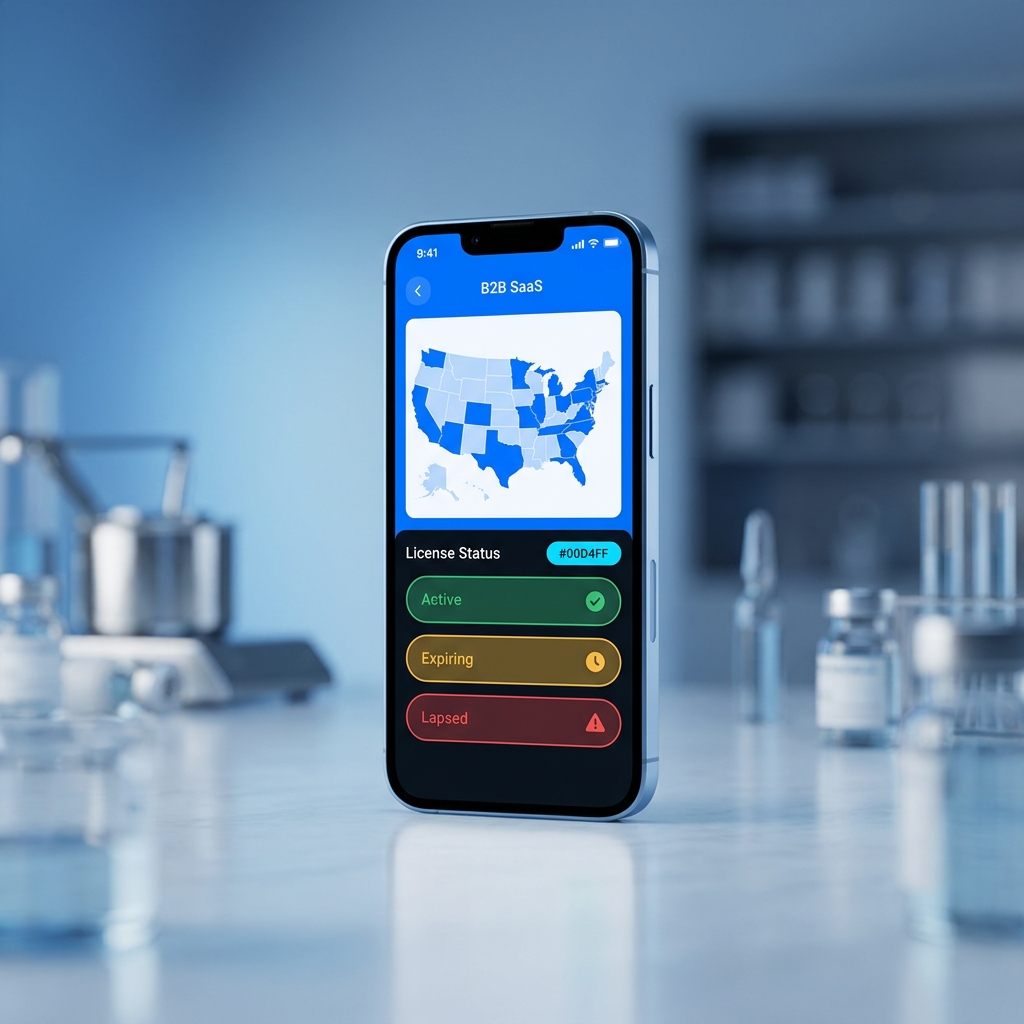
Catch lapsed customer licenses before they ship.
Workd License Check pulls every state board, NPI registry, and DEA records daily. Free audit on your top 100 accounts.
Run a Free License Audit