
The Voicemail Is Dead. 157 Million Americans Talk to AI Every Day.

About 157 million Americans now use voice assistants regularly, according to Statista projections for 2026. That's nearly half the country talking to machines every single day. Asking Siri for directions. Telling Alexa to reorder paper towels. Dictating texts through Google Assistant. It's normal. Nobody thinks twice about it.
And yet. When those same 157 million people call a B2B company during business hours, they get a phone tree. They sit on hold. They get dumped into a voicemail box that nobody checks.
I see this disconnect every day in our work at Workd. Consumer voice technology crossed the mainstream threshold years ago, but business phone systems are still stuck in 2009. That gap isn't just an inconvenience anymore. It's a measurable revenue problem.
Let's Clear Up the Biggest Misconception First
One of the biggest things I run into when talking with B2B leaders about voice AI is this: they think it means replacing humans with bots.
They get nervous. They worry their customer base will be upset. They'll lose the personal touch. They'll lose relationships they've built over years. They're really sensitive about maintaining personalized sales and communication. And honestly, I get it. In many larger companies there are actual policies against using AI in customer-facing situations.
But here's the thing. That's a fundamental misunderstanding of what this technology actually does.
Voice AI is not about replacing humans. It's about making sure that when a human calls in with a question or a concern, they can get it addressed quickly. Regardless of whatever else is going on at the business. Regardless of whether your best sales rep is already on another call. Regardless of whether it's lunch hour or someone's on PTO.
The goal isn't fewer humans. The goal is fewer unanswered phones.
The Voicemail Reality Is Worse Than You Think
In almost every single case when we look at a company's phone data, and this matches the industry numbers perfectly: voicemail answers the phone 60 to 80 percent of the time. Main company lines. Individual direct lines. Doesn't matter. It would be surprising to most leaders how bad the typical outcomes actually are.
A study by 411 Locals monitored 85 businesses across 58 industries over 30 days and found that 62% of calls go unanswered. Of those, 37.8% hit voicemail and 24.3% got no response at all.
According to data compiled by ZoomInfo, 80% of B2B calls go to voicemail. Of first-time voicemails, 90% are never returned. The average voicemail response rate is 4.8%.
Let that sink in. For every 100 voicemails left at a business, fewer than five generate a callback. The voicemail box has become a dead letter office.
And the reason is actually pretty simple. If you have a truly gifted sales team, or compliance team, or vendor management team, those people are busy doing their jobs most of the day. They're on calls. They're in meetings. They're working through complex orders. They are not going to be available to pick up that phone when it rings. That's just the reality.
The Vicious Circle Nobody Talks About
Here's what actually happens in most B2B companies, and I'd bet this sounds familiar.
Your team toggles back and forth between being on the phone handling their daily tasks and then addressing the voicemails that came in while they were busy. It's a constant back-and-forth. And what we conveniently forget about is that there are a whole bunch of calls where the person never left a message at all.
We don't even know what they were calling about. We don't know if it was a hot lead, a customer with a problem, or someone ready to place an order. Many of those are lost opportunities of one shape or another. And we'll never know.
The financial impact is direct. Research from Dialora.ai estimates that missed calls cost small and mid-size businesses an average of $126,000 per year, with each unanswered call representing roughly $1,200 in lost sales opportunity. Dialzara reports that 85% of callers who fail to reach a person will never call back, and 62% will contact a competitor instead.
For B2B companies where deal sizes run into five or six figures, a single missed call during a buying cycle can cost more than most annual software subscriptions.
What If Nobody Got Voicemail Anymore?
Imagine this. Instead of getting voicemail when they call your company, a caller gets an agent that says, "Hey, Jim's on the phone right now, but how can I help?"
And they can actually get help. They can ask about tracking on an order. Check pricing or availability. Ask about an invoice payment. Book a time to talk with Jim later. Any number of things the AI can handle because it has access to all the information it needs.
That caller is going to be excited just to have some step in the right direction. They called for a reason. They want progress. And they're getting it, even though Jim is tied up on another call.
At minimum, you're going to collect the details, create a case, create a follow-up, create notes. You are not going to lose the information that came in on that call. Ever.
And the benefits for your team are just as big. Think about it:
- You don't have to go back and listen to a voicemail and manually process it with a bunch of notes, because that's already been done for you.
- You actually got the information. In many cases when someone hits voicemail, they just hang up. You don't know anything about why they called. Sometimes you don't even realize they called at all.
It's a beautiful thing to get off the phone or get done with whatever your task is, look up, and see that you've got notes that have been automatically recorded from several calls that happened while you were away. Everything is there. Context, details, next steps. Ready to go.
It Gets Worse Before It Gets Better (Without AI)
This whole situation is compounded by real life. Time off. Peak times. Taking a morning off for a dentist appointment. A long lunch. Offsite meetings. Company gatherings. All of these things are completely distracting to the actual call flow and customer maintenance flow of your business.
The result? Getting back to your phone and realizing you have a mountain of things that stacked up while you were away. Missed calls. Voicemails you need to listen to. Messages you need to return. Context you need to piece together.
Customers do not like that. Here's what might surprise some people: they are perfectly fine talking to your AI agents and getting the information they need quickly. That is actually their preference, believe it or not.
According to research compiled by Smallest.ai, 72% of customers expect immediate assistance when they call a business. The emphasis is on "immediate." The alternative, being on hold, navigating a phone tree, reaching a voicemail box, that's the actual source of frustration. Not whether a human or AI answered.
WeAreBrain reports that 50% of customers say they enjoy interacting with voice assistants in customer care scenarios. And businesses with high-quality voice AI see 70% or more additional customer interactions and responses compared to those without.
The question isn't "Would you prefer to talk to a human or a robot?" The real question is "Would you prefer to talk to an AI that answers in two seconds, or would you prefer to leave a voicemail that has a 4.8% chance of being returned?" When people see the actual alternative, the answer is obvious.
The Market Is Moving Fast
Consumer expectations have already shifted. The 157 million voice assistant users from that Statista figure? That represents the end of a decade-long adoption curve. Google Assistant reaches about 92.4 million U.S. users. Apple's Siri reaches 87 million. Amazon's Alexa reaches 77.6 million. Big overlap across platforms, but the point is clear: talking to AI is mass-market behavior now.
When a procurement director speaks to an AI assistant at home fifteen times a day, then calls a supplier and reaches a voicemail box, the contrast registers immediately. The expectation has been set.
Deutsche Telekom underscored this at Mobile World Congress 2026, where it unveiled the Magenta AI Call Assistant, built with ElevenLabs. It runs at the network level. No app download needed. It handles calls, screens spam, takes messages with context, and supports live translation across multiple languages. When a major European telecom builds AI call handling directly into its network, the signal is pretty clear. Voice AI isn't a feature. It's becoming the default layer of phone communication.
The voice AI agents market was valued at $2.4 billion in 2024 and is projected to reach $47.5 billion by 2034, a compound annual growth rate of 34.8%, according to Market.us. Production implementations grew 340% year over year across more than 500 organizations, per Ringly.io's 2026 voice AI report.
The economics explain the velocity. Gartner forecasts $80 billion in contact center labor cost savings in 2026, driven largely by AI handling routine calls. The per-call cost comparison is stark: $7 to $12 for a human agent versus about $0.40 for a voice AI agent, according to Gartner data compiled by Ringly.io.
A Gartner survey of 321 customer service leaders found that 91% reported executive pressure to implement AI specifically to improve customer satisfaction. NextLevel.ai reports that 80% of all businesses plan to integrate AI-driven voice technology into customer service by end of 2026. And Gartner predicts that agentic AI will autonomously resolve 80% of common customer service issues without human intervention by 2029.
The window between "planning to implement" and "already behind" is getting smaller every month.
See What Voice AI Looks Like for Your Business
We'll walk through your current call flow, show you where opportunities are falling through, and demo exactly how an AI agent would handle your calls.
Book a WalkthroughWhat We're Actually Seeing at Customer Launches
I want to share what's been happening with companies that have actually launched this technology, because it's been genuinely exciting to watch.
It's been very eye-opening for these teams. Even companies that are not particularly technical, that don't fully understand how the AI works under the hood, have been willing to try and explore. And when they get the results, you can see they're completely thrilled.
Their teams are able to be significantly more performant. They're doing more with less, and it doesn't feel like extra work. That's the part that surprises people the most. It's not another tool they have to learn or another dashboard to check. It just works in the background, catching what used to fall through the cracks.
Every call answered. Every inquiry captured. Every piece of information logged and routed to the right person. The difference between a 38% answer rate and a 100% answer rate, compounding across thousands of calls per year, is the difference between steady growth and chronic leakage.
That's a beautiful thing.
The Math Is Simple
Consider a mid-market B2B company that receives 200 inbound calls per week. Using the 411 Locals data, 62% go unanswered. That's 124 missed calls per week, roughly 6,448 per year. If even 10% of those callers are qualified prospects and average deal value is $15,000, the company is looking at potential pipeline leakage in the millions annually.
Voice AI doesn't guarantee that every missed call converts. But it guarantees that every call is answered. Every caller's information is captured. Every inquiry is logged. The voicemail was a reasonable solution for 1985. It was tolerable in 2005. In 2026, with 157 million Americans speaking to AI as a daily habit, it is a liability.
Every unanswered business call sends a signal to the market: this company is not ready. Every voicemail prompt is an invitation for the caller to hang up and try someone else.
The companies that answer every call, capture every lead, and respond in real time will outperform those that don't. That's not a prediction. It's arithmetic.
Go Deeper in the Resource Library
Get AI prompts, implementation templates, SOPs, and call scripts built for distribution companies. 47+ resources and growing, free access.
Access the Resource Library, FreeAlso free: Workdshop live sessions for distribution leaders
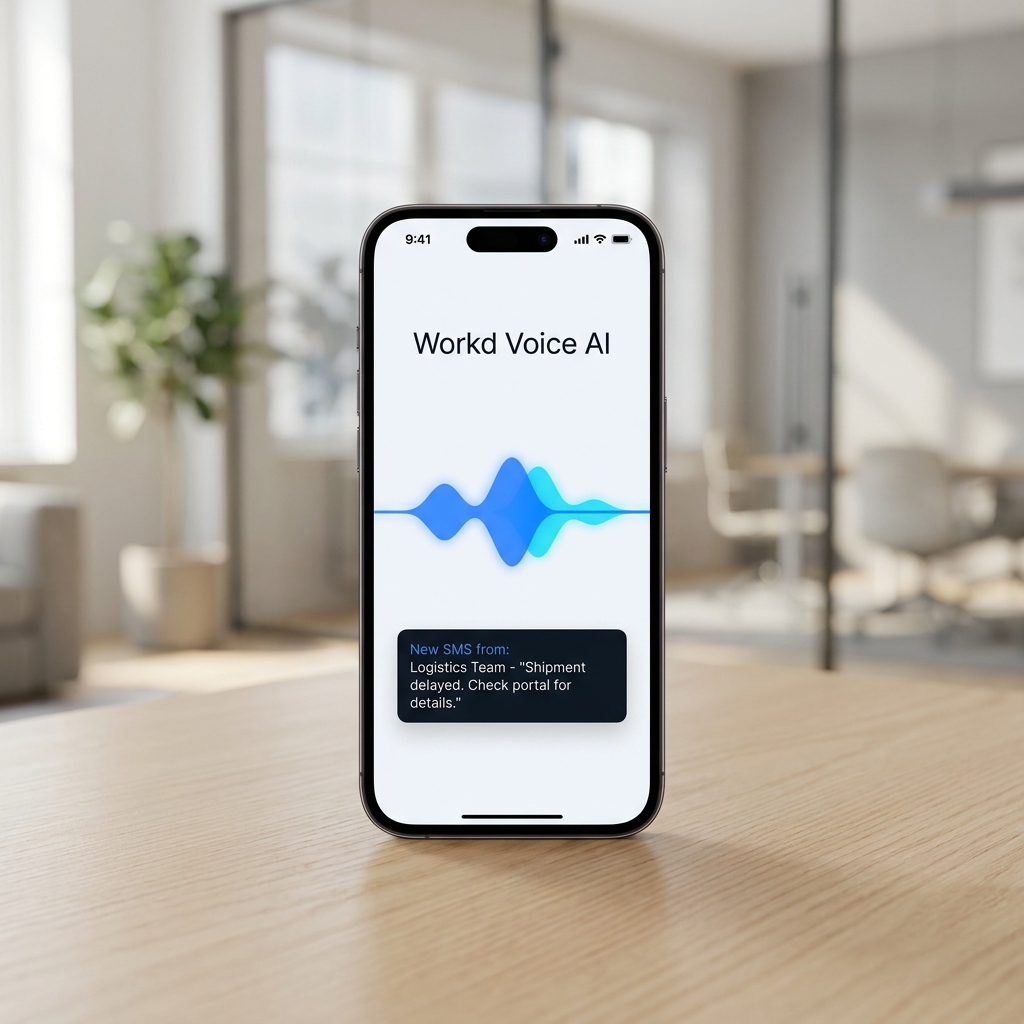
Never let another sales call go to voicemail.
AI answers every call 24/7, handles routine, escalates what matters. SMS handoff included.
Try the AI Voice Agent