
State-Level Buy American Medicine Laws Are Coming — What Distribution Companies Should Prepare For

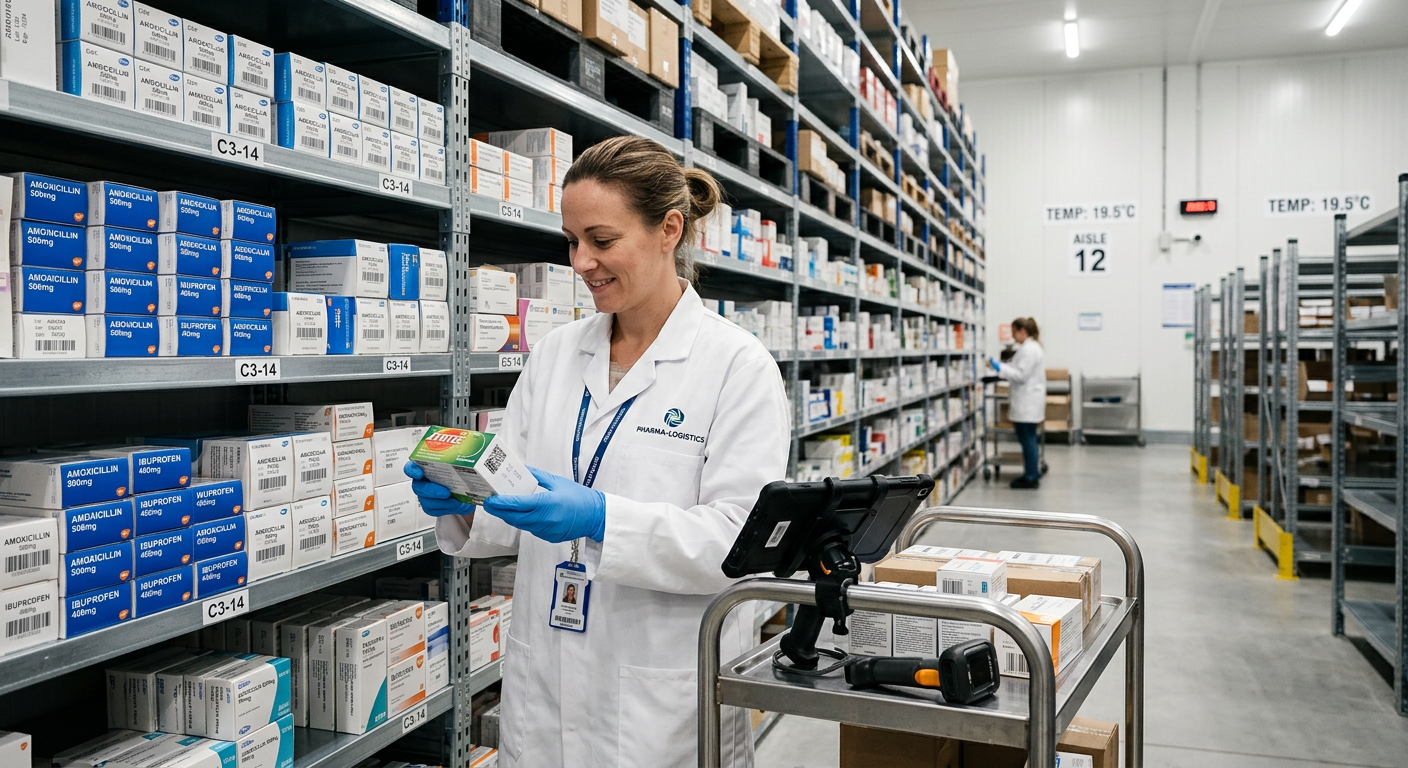
Seventy-two percent of active pharmaceutical ingredient facilities supplying the U.S. market are located overseas, according to the FDA. That number has been cited in congressional hearings, executive orders, and industry white papers for years. Now, for the first time, individual state legislatures are trying to do something about it.
Georgia's proposed Buy American Medicine Act, introduced in the current legislative session by State Representative David Clark, would require that certain pharmaceutical products procured with state funds meet domestic sourcing thresholds. It's one of a growing number of state-level bills aimed at reshoring pharmaceutical supply chains — and for the distributors who sit between manufacturers and end customers, the operational implications are significant.
The Federal Push That Opened the Door
State legislation doesn't exist in a vacuum. The federal government spent the last year laying aggressive groundwork for pharmaceutical reshoring.
In May 2025, President Trump signed Executive Order 14293, directing the FDA to streamline regulatory review for domestic pharmaceutical manufacturing facilities and instructing the EPA to expedite permitting. The order also called for more rigorous inspections of foreign manufacturing sites — a move intended to tilt the competitive playing field back toward U.S.-based production.
Then came the tariffs. In September 2025, Trump announced a 100% tariff on all branded or patented pharmaceutical products manufactured abroad, effective October 1. The stated goal: make it financially untenable to produce drugs overseas and sell them into the American market without a domestic manufacturing footprint.
100% tariff on imported branded pharmaceuticals took effect October 1, 2025 — the most aggressive pharmaceutical trade action in modern U.S. history.
In August 2025, the FDA launched a new program specifically designed to increase regulatory predictability for companies building drug manufacturing facilities in the U.S. And Congress introduced the Enhancing Domestic Drug Manufacturing Competitiveness Act, directing the GAO to study regulatory barriers that prevent the expansion of pharmaceutical production on American soil.
The message from Washington has been unambiguous: domestic pharmaceutical manufacturing is a national priority. States are now picking up that signal and writing their own rules.
What State-Level Bills Actually Require
Georgia's proposal is representative of a broader pattern. These state-level bills typically target pharmaceutical procurement tied to state-funded programs — Medicaid, state employee health plans, correctional facility healthcare, and public hospital systems. They introduce domestic sourcing preferences or outright requirements for drugs purchased with state dollars.
The practical mechanics vary. Some bills establish percentage thresholds — requiring, for example, that 50% of active pharmaceutical ingredients in state-procured drugs originate from U.S.-based facilities within a set timeline. Others create preference systems that give domestic manufacturers a scoring advantage in procurement evaluations, even if their pricing is marginally higher.
What they share is a compliance burden that flows directly downstream to distributors. If a state requires documentation proving domestic API sourcing for state-funded purchases, the distributor is the entity that has to produce that documentation — or risk losing the contract.
Why Distributors Bear the Compliance Weight
Pharmaceutical distributors already operate in one of the most heavily regulated supply chains in the country. The Drug Supply Chain Security Act, whose enhanced package-level requirements for wholesale distributors took effect in August 2025, requires serialized tracking of every unit from manufacturer to dispenser. Adding domestic sourcing verification on top of DSCSA compliance creates a compounding documentation burden.
For the three largest national distributors — McKesson, Cardinal Health, and AmerisourceBergen — absorbing new compliance requirements is a matter of scaling existing infrastructure. For mid-market distributors handling $10 million to $500 million in annual revenue, the calculus is different. These companies typically run leaner compliance teams, rely on fewer supplier relationships, and have less leverage to demand sourcing transparency from manufacturers.
The Sourcing Problem Nobody's Solved
The fundamental challenge with Buy American medicine legislation is that domestic pharmaceutical manufacturing capacity doesn't yet exist at scale.
John Murphy III, President and CEO of the Association for Accessible Medicines, testified before the House Energy and Commerce Committee in June 2025 that generic drug manufacturers face four key barriers to domestic production: lack of government financial incentives for API manufacturing, broken reimbursement structures, labor shortages, and regulatory complexity.
The numbers illustrate the gap. Patrick Cashman, President of U.S. Antibiotics — the last remaining end-to-end domestic manufacturer of amoxicillin — told the same hearing that his Bristol, Tennessee facility has capacity to meet 100% of U.S. amoxicillin demand but currently supplies just 5% of the market. Lower-cost foreign production undercuts domestic pricing to the point where building new capacity makes no financial sense without subsidies or mandates.
U.S. Antibiotics can produce 100% of America's amoxicillin supply but holds just 5% market share — undercut by cheaper foreign production.
Organizations like Civica Rx and Phlow Corporation are working to change that equation. Phlow received a $354 million federal contract to build a domestic pharmaceutical supply chain focused on essential medicines, and Civica Rx is constructing a manufacturing facility in Virginia designed to produce 90 million vials and 50 million pre-filled syringes annually. But these facilities are just beginning to come online in 2026 — well before state legislatures expect compliance with domestic sourcing mandates.
That timing gap creates a real problem for distributors. A state may pass a law requiring domestic sourcing within 24 months, but the manufacturing capacity to fulfill that requirement may not exist for 36.
What Distribution Companies Should Do Now
The smart play isn't to wait for legislation to pass and scramble. It's to build the operational infrastructure now that makes compliance manageable regardless of which states act and when.
Map your supplier chain by origin. Most mid-market distributors don't have granular visibility into where their products' active pharmaceutical ingredients are manufactured. Start requesting country-of-origin data from every manufacturer you work with. Build a database that can be queried by product, API source country, and manufacturing facility location. When a state procurement officer asks for domestic sourcing documentation, you need to produce it in hours, not weeks.
Identify domestic-sourced alternatives. For your highest-volume products that flow through state-funded channels, start identifying whether domestically manufactured alternatives exist. In many therapeutic categories, they won't — yet. But knowing which products have domestic options and which don't allows you to plan substitutions proactively rather than reactively.
Invest in compliance automation. The combination of DSCSA serialization requirements and emerging domestic sourcing mandates creates a documentation load that manual processes can't sustain. Distributors that invest in automated compliance systems now — platforms that can track product provenance, generate audit-ready reports, and flag sourcing gaps — will have a structural advantage as requirements proliferate across states.
Watch the legislative map. Georgia isn't acting alone. Track pharmaceutical sourcing legislation across every state where you hold distribution contracts. The Healthcare Distribution Alliance and state pharmacy boards are useful starting points, but direct legislative monitoring is essential for companies with multi-state footprints.
Find out how much revenue manual compliance is costing you
Take our 2-minute Revenue Leakage Assessment
Start AssessmentThe Competitive Opportunity
Compliance mandates are often framed as pure cost. But for distributors willing to move early, domestic sourcing capabilities can become a genuine competitive differentiator.
State procurement is a massive market. Medicaid alone covered 93 million Americans as of 2024, according to CMS. State employee health plans, public hospital systems, and correctional healthcare add billions more in annual pharmaceutical spend. Distributors who can credibly demonstrate domestic sourcing compliance will be positioned to win contracts that competitors can't touch.
There's also a relationship angle. Manufacturers who are investing in domestic production — companies like Civica Rx, Phlow, and the growing roster of generics firms exploring U.S.-based API production — need distribution partners who understand the compliance landscape. Becoming an early partner to domestic manufacturers creates supplier relationships that become more valuable as legislation spreads.
The Timeline Is Shorter Than You Think
Federal tariffs are already in effect. DSCSA enhanced requirements are live. The FDA's domestic manufacturing support program is operational. Executive orders have been signed. Congressional bills are advancing through committee.
State-level Buy American medicine legislation is the next layer — and it's the layer that will hit distributors hardest, because it attaches specific sourcing requirements to specific contracts with specific deadlines. Georgia's bill may pass or stall, but the legislative pattern is clear. More states will follow.
For mid-market pharmaceutical distributors, the question isn't whether domestic sourcing requirements are coming. It's whether your operation will be ready when they arrive.
Stay ahead of the curve
Get weekly insights on distribution technology and AI automation.
Go Deeper in the Resource Library
Get AI prompts, implementation templates, SOPs, and call scripts built for distribution companies. 47+ resources and growing — free access.
Access the Resource Library — FreeAlso free: Live virtual training sessions — Thursdays 1 PM ET
Catch lapsed customer licenses before they ship.
Workd License Check pulls every state board, NPI registry, and DEA records daily. Free audit on your top 100 accounts.
Run a Free License Audit