
The Skilled Trades Talent War: How Construction and Manufacturing Firms Are Weaponizing Benefits to Win Gen Z Workers


Gen Z trade school enrollment has climbed 17% since 2021, according to Bureau of Labor Statistics data. In 2024, 18- to 25-year-olds accounted for nearly 25% of all new hires in skilled trade industries, per workforce analytics firm Gusto — outpacing their 18% share of the overall U.S. labor force. The so-called "toolbelt generation" is arriving. The question facing mid-market distributors, manufacturers, and contractors isn't whether young workers will show up. It's whether those workers will stay.
The answer depends almost entirely on benefits — and not the ones most companies currently offer.
A Structural Shortage That Wages Alone Can't Fix
The numbers paint a grim picture for companies relying on traditional recruitment. The Associated Builders and Contractors estimates the construction industry alone needs 454,000 additional workers beyond normal hiring in 2025. In manufacturing, nearly one-third of the workforce is over 55, according to a Quickbase analysis of federal labor data. One in five construction workers has already crossed that same threshold.
McKinsey's 2024 analysis of critical trade skills found that approximately 70% of companies competing for the same pool of skilled labor report production strain, quality concerns, and declining productivity as direct consequences of the shortage. Labor Department forecasts, cited by BlackRock in a February 2026 report, project skilled trades employment growing 5.3% from 2024 to 2034 — well above the 3.1% overall employment growth rate.
Replacing a single skilled frontline worker costs between $10,000 and $40,000 according to Deloitte — and that's before accounting for lost productivity during the ramp-up period.
For mid-market distributors running on tight margins, a 20% annual turnover rate in warehouse and delivery operations can quietly drain six figures from the bottom line every year. The math has shifted: retention investment now delivers better returns than perpetual recruiting.
Gen Z Wants In — But on Different Terms
The conventional wisdom that young people don't want physical work is collapsing under the weight of data. CNBC reported in April 2025 that Gen Z workers are increasingly opting out of four-year degrees and into trades, noting roughly two million fewer college students compared to pre-pandemic enrollment. A 2025 Harris Poll found that while fewer than 40% of Gen Z respondents initially expressed interest in trades, that number spiked to 55% — and later to 60% — as awareness of earning potential and AI-related job displacement concerns grew through 2025 and into 2026.
But interest doesn't equal commitment. And the firms winning this generation's loyalty aren't the ones paying the highest hourly rates. They're the ones rethinking the entire value proposition of blue-collar employment.
An ADP Employee Pulse Survey of 3,000 full-time employees identified the three most desired benefits among young workers entering trades: paid family and medical leave, employee training programs, and tuition reimbursement. Mental health counseling, community service days, and even pet-friendly workplace policies rank higher than traditional perks like company vehicles or overtime bonuses.
The Benefits Arms Race: What's Actually Working
The firms pulling ahead in recruitment and retention aren't guessing at what Gen Z wants. They're deploying specific, measurable benefit programs that address the generation's documented priorities.
Tuition reimbursement and certification funding. With average student debt topping $30,000 for those who attended college and trade school costs rising, tuition assistance has become the single most effective recruitment differentiator. Companies covering trade certifications, CDL training, or associate degree programs report measurably lower first-year turnover. The Universal Technical Institute reported in 2025 that employer-sponsored programs are accelerating apprenticeship completion rates, with partnered companies seeing retention gains of 15-25% over non-participating employers.
Mental health and wellness programs. Construction Dive reported that Gen Z workers rank mental health counseling among their top three benefit priorities — ahead of retirement contributions. Firms offering employee assistance programs (EAPs) with proactive mental health support, rather than reactive crisis intervention, are seeing engagement scores climb. This matters in trades where injury rates, seasonal stress, and physical demands create compounding burnout risks.
Flexible and compressed schedules. The four-day work week, once considered impractical for operations-dependent businesses, is gaining traction in manufacturing and distribution. Compressed schedules — four 10-hour shifts instead of five 8-hour days — give workers an extra day off without reducing productivity hours. Warehouse and distribution operators implementing flexible shift models report improved retention because, as one SupplyChainBrain analysis noted, "workers don't have to leave to gain flexibility."
Skilled trades employment is projected to grow 5.3% from 2024 to 2034, nearly double the overall employment growth rate of 3.1% — according to Labor Department forecasts cited by BlackRock.
Career pathing and technology exposure. Gen Z didn't grow up avoiding technology — they grew up immersed in it. The stigma around trades work is eroding partly because the work itself has changed. Warehouses run on WMS platforms, delivery routing uses AI optimization, and manufacturing floors rely on IoT monitoring. Companies that frame trades roles as technology-integrated careers — not just manual labor — attract candidates who would otherwise default to office jobs.
The Distribution Industry's Specific Challenge
Mid-market distributors face a compounding version of this talent war. Unlike large construction firms or national manufacturers with brand recognition, a $50M electrical distributor or a $100M food service wholesaler doesn't have name-brand appeal on a job listing. Competing for the same Gen Z workers against Amazon's $21/hour warehouse wages, UPS's tuition-free college program, and national logistics companies' signing bonuses requires a different playbook.
The advantage mid-market companies hold is proximity. Smaller operations can offer what the NAHB's October 2025 analysis called the factors genuinely drawing younger workers to construction and trades: direct mentorship, visible career advancement, and meaningful work where individual contribution is recognizable. A warehouse associate at a 200-person distributor can become an operations lead within two years. At a mega-distribution center, that path takes five.
But proximity only works as a recruitment tool if the basics are covered. Companies still offering bare-minimum health insurance and no paid parental leave are losing candidates before the first interview. The table stakes have shifted, and distributors that haven't updated their benefits packages since 2019 are competing with a pre-pandemic playbook in a post-pandemic labor market.
See how much revenue you're leaving on the table
Take our 2-minute Revenue Leakage Assessment
Start AssessmentAutomation as a Retention Strategy, Not a Replacement
There's an irony in the skilled trades talent conversation that gets overlooked: the companies investing most heavily in automation are often the same ones with the strongest retention numbers. It's not because they're replacing workers. It's because they're eliminating the work nobody wants to do.
Automating repetitive data entry in order processing, deploying voice-picking technology in warehouses, and using AI to handle after-hours customer inquiries removes the tedious components of trades and distribution roles. What remains is the skilled, problem-solving work that Gen Z actually signed up for. When a warehouse associate spends less time keying in purchase orders and more time managing complex fulfillment operations, the job becomes more engaging — and the employee stays longer.
This aligns with what Instawork's 2025 warehouse workforce report identified as the critical shift: "Retention is the new recruitment." The companies winning aren't just hiring more people. They're making the roles worth keeping.
What to Watch Next
The talent war in skilled trades isn't a temporary disruption. It's a structural realignment of who works in these industries and what they expect in return. Several developments will shape the next 12-18 months:
Apprenticeship program expansion. Federal and state-level apprenticeship funding continues to grow. Companies that formalize apprenticeship tracks — with clear milestones, compensation increases, and certification outcomes — will build internal talent pipelines instead of competing on the open market for every hire.
Benefits benchmarking pressure. As more companies publish their benefits packages publicly (driven partly by pay transparency laws expanding into total compensation disclosure), the gap between leaders and laggards will become visible to candidates. Mid-market firms that haven't benchmarked their offerings against regional competitors will feel this first.
Technology as a differentiator, not a threat. The firms that position trades roles alongside technology adoption — showing candidates they'll work with modern systems, not against them — will attract the strongest applicants. Gen Z isn't afraid of technology replacing their jobs in trades; they're afraid of working somewhere that hasn't adopted it yet.
The companies that treat benefits as a cost center will continue churning through workers. The ones that treat benefits as a competitive weapon — deployed strategically against a known set of generational priorities — will build the workforce that carries them through the next decade.
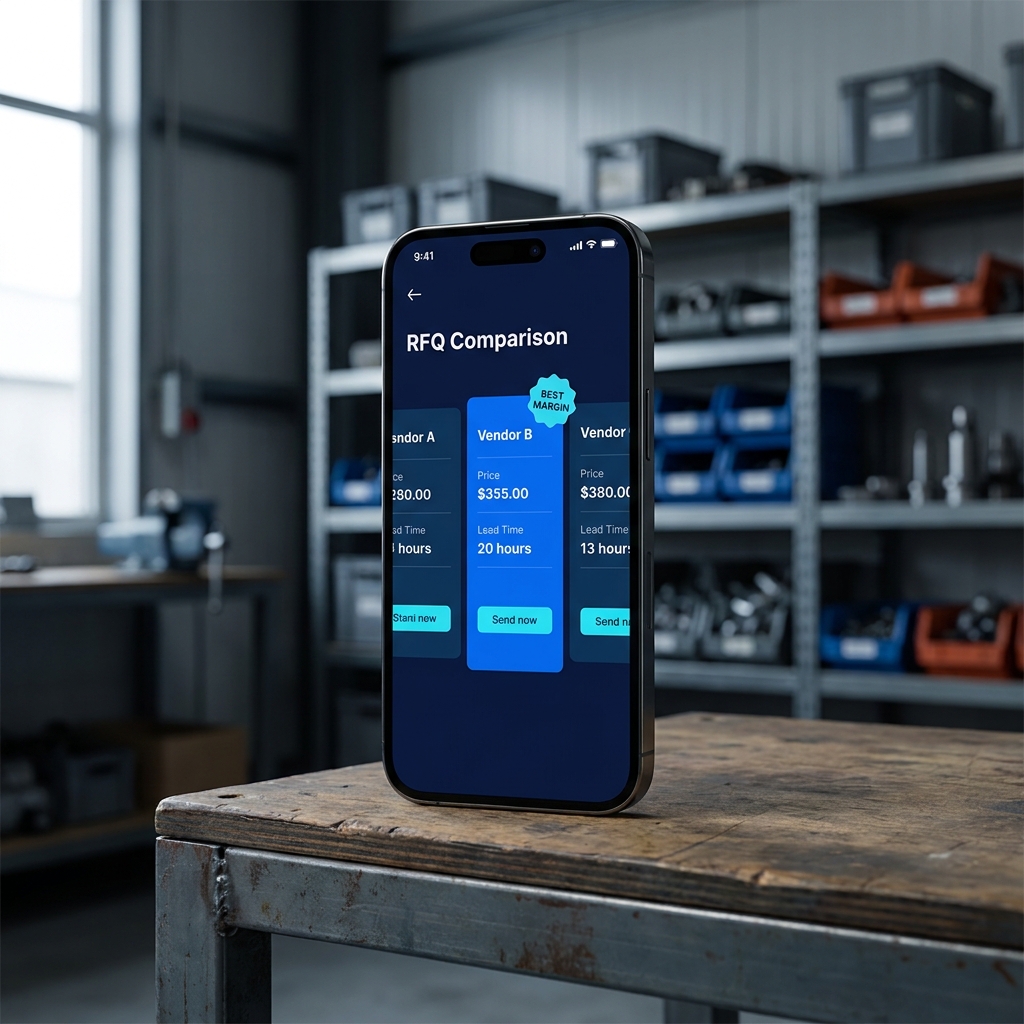
Stop losing margin in the email thread.
Vendor RFQs linked to customer quotes — sales sees real-time vendor pricing on every active quote.
Free Sourcing AuditStay ahead of the curve
Get weekly insights on distribution technology and AI automation.