
The Supreme Court Just Struck Down IEEPA Tariffs. Trump Signed a New 10% Global Tariff Hours Later. Here's What Distributors Need to Know.

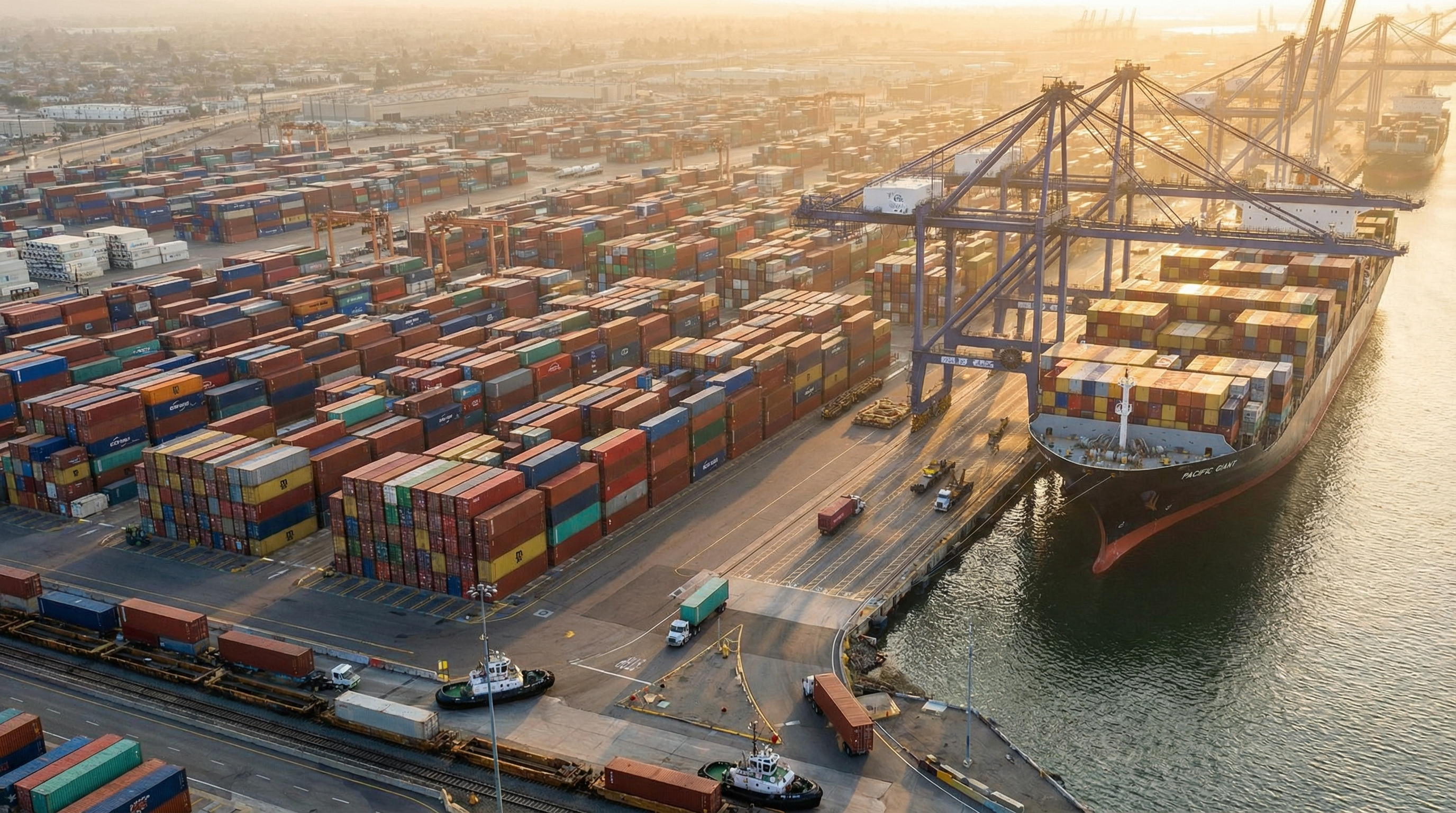
On Friday, February 20, 2026, the Supreme Court ruled 6-3 that the International Emergency Economic Powers Act does not authorize the president to impose tariffs. The decision, in Learning Resources, Inc. v. Trump, invalidated the "reciprocal" tariffs that had raised duties as high as 145% on Chinese goods and up to 50% on imports from India and Brazil throughout 2025. Within hours, President Trump signed an executive order imposing a new 10% global tariff under Section 122 of the Trade Act of 1974 — a law that has never been used before.
For distributors and wholesalers who import goods, the next 150 days will be defined by pricing uncertainty, potential refund windfalls, and a legal landscape that hasn't settled yet. Here's what actually happened, what it means, and what to do about it.
What the Court Actually Struck Down
Chief Justice Roberts, writing for the majority, held that IEEPA's authorization to "regulate" importation does not include the power to tax it. The opinion noted that interpreting "regulate" to include taxation would make IEEPA partly unconstitutional, since the law also authorizes regulation of exportation — and the Constitution reserves taxing power to Congress.
The ruling invalidated all tariffs imposed under IEEPA authority. That includes:
- The initial tariffs on China imposed in February 2025
- The expansion to Canada and Mexico in March 2025
- The broad "reciprocal" tariffs announced in April 2025 that targeted imports from all trading partners
What the ruling did not invalidate: tariffs imposed under other legal authorities. Section 301 tariffs on China (dating back to the first Trump administration), Section 232 tariffs on steel and aluminum, and USMCA-related duties remain in effect. Justice Kavanaugh noted in his concurrence that the ruling "is not likely to greatly restrict Presidential tariff authority going forward" outside the IEEPA context.
Penn Wharton estimates that IEEPA tariffs represent half of total customs duties, with up to $175 billion in potential refunds at stake.
— Penn Wharton Budget Model, February 20, 2026
The $175 Billion Refund Question
The Penn Wharton Budget Model estimates that reversing the IEEPA tariffs generates up to $175 billion in potential refunds. U.S. Customs and Border Protection reported collecting approximately $133.5 billion in tariffs under IEEPA authority as of its last public update in December 2025, with collections continuing through the ruling date.
But the Court explicitly declined to address refunds. "The Court says nothing today about whether, and if so how, the Government should go about returning the billions of dollars that it has collected from importers," Justice Kavanaugh wrote.
What importers need to know: the law generally gives importers 180 days after goods are "liquidated" to protest and request refunds from CBP. The Holland & Knight law firm advised that importers should consult with trade counsel immediately, as those who filed early protective actions at the Court of International Trade may be better positioned for refunds when they become available.
Treasury Secretary Scott Bessent indicated refunds could take years. For distributors carrying significant import volumes, the question isn't whether to pursue refunds — it's how quickly to engage trade counsel to protect the filing window.
Section 122: The Replacement Tariff Nobody's Used Before
Hours after the ruling, Trump signed an executive order invoking Section 122 of the Trade Act of 1974 to impose a 10% tariff on all imports, effective Tuesday, February 24. This is a statute that has never been used by any president.
Section 122 allows the president to impose temporary import surcharges of up to 15% for up to 150 days to address "large and serious" balance of payments problems. After 150 days, Congress must vote to extend the measures. The executive order justified invoking the statute by citing the U.S. balance of payments deficit.
Key constraints for distributors to understand:
- 150-day hard cap. Without Congressional action, Section 122 tariffs expire in mid-July 2026. As the Cato Institute noted, "Section 122 tariffs expire after 150 days unless Congress votes to extend them."
- 15% ceiling. Unlike IEEPA tariffs that reached 145% on some goods, Section 122 caps at 15%. The current order is set at 10%.
- Existing exemptions carry forward. The executive order continued exemptions already in place for aerospace products, passenger cars and light trucks, USMCA-compliant goods from Mexico and Canada, pharmaceuticals, and certain critical minerals and agricultural products.
- Legal challenges are coming. But as Josh Lipsky of the Atlantic Council told Reuters, the Section 122 tariffs would likely lapse before any court reaches a final ruling.
The Administration's Longer Play
The 10% tariff is a bridge. The real strategy, as Reuters reported, is to launch new investigations under Section 301 (unfair trade practices) and Section 232 (national security) that could produce tariffs potentially exceeding the IEEPA rates. Trump's executive order directed the U.S. Trade Representative to investigate "certain unreasonable and discriminatory acts, policies and practices that burden or restrict U.S. commerce."
Bessent said on Fox News that the combination of Section 122 tariffs, enhanced Section 301 duties, and Section 232 tariffs would result in "virtually unchanged tariff revenue in 2026." His quote: "We will get back to the same tariff level for the countries. It will just be in a less direct and slightly more convoluted manner."
Section 301 investigations have historically taken about a year to complete. But the administration signaled it intends to accelerate the timeline. The USTR already has open probes on China and Brazil, and could target Vietnam and Canada next.
Who Actually Pays: The Margin Problem for Distributors
Research consistently shows that tariff costs land on U.S. importers, not foreign exporters. The Federal Reserve Bank of New York published findings in February 2026 confirming that tariff costs are borne by importing businesses and ultimately consumers. A Chicago Booth analysis found that if a 10% tariff is imposed on a good, a U.S. importer pays roughly 9.4% more for it inclusive of the tariff — foreign exporters absorb only about 6% of the tariff cost by reducing their prices.
A study cited by Forbes in January 2026 put the split more starkly: importers paid 64% of the new tariff burden, only 14% was absorbed by foreign exporters through lower prices, and 22% was passed through to retailers and consumers.
For distributors operating on thin margins — typical gross margins in wholesale distribution run between 20% and 30% — a 10% tariff on imported inventory is a direct hit to profitability unless it can be passed through to customers. And the whiplash between IEEPA rates and the new Section 122 rate creates a repricing headache: products that were priced to absorb a 25% tariff are now subject to 10%, while the possibility of higher rates under Section 301 within months makes any pricing decision a bet on an uncertain future.
Importers paid 64% of the tariff burden directly. Only 14% was absorbed by foreign exporters.
— Forbes / Tax Notes analysis, January 2026
Five Things Distributors Should Do This Week
1. Contact trade counsel about IEEPA refunds. The 180-day protest window is real and the clock is ticking on entries that were liquidated months ago. Even if refunds take years, filing now protects your position. Companies that imported significant volumes under IEEPA rates between February 2025 and February 2026 could recover meaningful amounts.
2. Audit your tariff exposure by authority type. Not all tariffs were struck down. Map every product line to its specific tariff authority — IEEPA, Section 301, Section 232, USMCA. This determines what changed Friday, what changes Tuesday, and what stays the same.
3. Adjust pricing with a 150-day horizon. The Section 122 tariff is 10% across the board, replacing IEEPA rates that varied from 10% to 145%. Some product lines just got cheaper to import. Others didn't change. Resist the urge to lock in permanent pricing when the tariff landscape will shift again by mid-July.
4. Review inventory positions on high-tariff goods. If you were holding excess inventory on products that carried high IEEPA tariffs, the replacement cost just dropped. If you pre-purchased at the higher rate, you may have a cost advantage over competitors who waited — use it.
5. Watch the Section 301 investigations. The USTR's new probes will telegraph where tariffs are headed next. The countries and product categories named in the investigation notices will tell you which supply chains are about to get more expensive again. Build scenario plans now.
How exposed is your revenue to trade disruption?
Take our 2-minute Revenue Leakage Assessment — includes tariff-related pricing gaps.
Start AssessmentThe Bottom Line
Friday's ruling was the most significant check on presidential trade authority in modern history. But it didn't end tariffs — it rerouted them. The shift from IEEPA to Section 122 drops the maximum rate from triple digits to 15%, introduces a hard 150-day expiration, and forces the administration into more conventional (and slower) trade law channels.
For distributors, the next five months are a window. A window to pursue refunds on overpaid IEEPA duties. A window to reprice products at lower tariff rates. And a window to prepare for whatever comes out of the Section 301 and 232 investigations the administration is rushing to complete.
The companies that move quickly — engaging trade counsel, auditing exposure, and building flexible pricing models — will navigate this better than those that wait for the dust to settle. In trade policy, the dust doesn't settle. It just moves.
Stay ahead of the curve
Get weekly insights on distribution technology and AI automation.
Go Deeper in the Resource Library
Get AI prompts, implementation templates, SOPs, and call scripts built for distribution companies. 47+ resources and growing — free access.
Access the Resource Library — FreeAlso free: Live virtual training sessions — Thursdays 1 PM ET
Catch lapsed customer licenses before they ship.
Workd License Check pulls every state board, NPI registry, and DEA records daily. Free audit on your top 100 accounts.
Run a Free License Audit