
The Mid-Market AI Window Is Closing. Here Is How to Move Now.

For two years, the biggest companies in every industry have been throwing serious money at AI. They hired data scientists. They built internal infrastructure. They deployed AI agents across sales, operations, and customer service. And the results? They've been hard to ignore. According to NVIDIA's 2026 State of AI report, 88% of enterprise respondents said AI increased their annual revenue, with 30% reporting growth above 10%.
Mid-market companies, the ones in that 100-to-1,000-employee range, have mostly been watching. Some ran pilots. A few picked up point solutions for marketing or content. But the kind of deep, process-level AI integration that the big guys are doing? That's still pretty rare in the mid-market.
Here's the thing: that gap is about to become a real problem. Not because AI is some scary buzzword, but because the economics are shifting in ways that punish companies who wait. The vendors building these tools are maturing. Prices are going up. And the attention those vendors give to new customers, the onboarding help, the flexible contracts, the willingness to customize, that's drying up as enterprise deals eat their capacity.
2026 is a closing window. Companies that act now lock in better terms. Companies that wait will pay more for less. I see it every day.
The Enterprise Head Start Is Real
The numbers don't sugarcoat it. NVIDIA's State of AI report surveyed more than 3,200 respondents across industries and found that 76% of large enterprises (1,000+ employees) are actively using AI in operations. Only 2% of those firms said they have no plans to adopt AI at all. In telecom, 48% of companies have already deployed or are assessing AI agents. Retail and consumer goods are close behind at 47%.
Gartner projects that 40% of enterprise applications will include task-specific AI agents by the end of 2026, up from less than 5% in 2025. That's an eight-fold increase in a single year. And it reflects the pace at which enterprise software vendors are baking AI into their products whether customers ask for it or not.
IBM's 2026 technology predictions tell the same story. Their Chief Architect for AI Open Innovation, Gabe Goodhart, pointed out that competition has shifted away from individual AI models toward orchestrated systems. It's not about whether you use AI anymore. It's about how deeply it's woven into your workflows, connecting data across departments and coordinating tasks from planning through execution.
For enterprise companies, this is Tuesday. For mid-market firms that haven't started, it's a problem that compounds every quarter.
Why the Window Is Narrowing
Three things are converging to make 2026 the year this matters most for mid-market companies.
First, vendor pricing is climbing. CRM platforms, the backbone of most B2B operations, now charge mid-market customers between $50 and $150 per user per month for plans that include AI features. Enterprise tiers regularly exceed $300 per user per month. As AI moves from premium add-on to table stakes, the base price of business software is rising across the board. Companies that negotiate contracts now, while vendors are still competing hard for mid-market share, will lock in rates that late adopters won't see.
Second, vendor attention is finite. AI tool companies are growing fast, but their implementation teams aren't keeping up. Enterprise clients with bigger contracts get priority. That's just how it works. Mid-market companies that sign on now, while these vendors still have bandwidth, will get better onboarding, more customization, and faster support. John Cheney, CEO of Workbooks, wrote in TechRadar that 2026 represents "a rare window" for mid-market businesses. The tools are mature enough to deliver real value, but adoption is still limited enough that you can actually stand out.
Third, the gap compounds. AI isn't a one-time purchase. It's a capability that builds on itself. Companies that deploy AI in one process, measure what happens, and expand to the next one develop knowledge that late starters just can't replicate quickly. A 2026 Deloitte study found that mid-market companies who did adopt AI actually moved faster than enterprises, averaging 90 days from pilot to full implementation. The bottleneck isn't speed. It's making the decision to start.
Find Out Where AI Fits in Your Operations
A free, structured assessment that identifies the highest-ROI AI opportunities in your business, with a clear action plan to move on them.
Take the AI Readiness AssessmentSmall Businesses Are Already Moving
Here's what should really get your attention: while many mid-market companies are still deliberating, smaller businesses are already in the game. Constant Contact's Q1 2026 Small Business Now report surveyed more than 1,500 business owners across five countries and found that 54% are already using AI marketing tools. Another 27% plan to start this year, which could push total adoption above 80% by December.
That's not a typo. More than half of small business owners, companies with fewer resources, smaller teams, and tighter budgets than mid-market firms, have already integrated AI into their marketing. They're using it to analyze trend data (45%), compose content (44%), and stretch marketing budgets that 68% of respondents said they plan to increase in 2026.
The mid-market sits in an uncomfortable spot. Too big to just grab a plug-and-play tool the way a 10-person shop would. Too small to hire a dedicated AI team the way a 5,000-person enterprise can. But that doesn't make the position hopeless. It makes the approach different.
Using ChatGPT Is Not an AI Strategy
I want to be direct about something, because this is a mistake we see constantly. Having a few people on your team use ChatGPT to clean up emails or draft marketing copy is not "adopting AI." It's helpful, sure. But it's not going to move the needle on your business.
The companies getting real results are the ones linking AI directly to their core systems. Their ERP. Their CRM. Their order management. Their customer data. That's where the value lives, because that's where the data lives.
Think about it this way: ChatGPT knows everything about the internet and nothing about your business. An AI agent connected to your systems knows your customers, your inventory, your order history, your pricing. That's a fundamentally different tool.
Companies are starting to graduate from "let's play with ChatGPT" into something much more powerful. And this is one of the things we specialize in at Workd: connecting AI to the core business systems where the actual data lives, so it can do real work, not just polish prose.
Low-Hanging Fruit: Where AI Pays Off Fastest
Let me share a couple of examples from what our customers are actually doing, because I think they illustrate how practical this can be.
Field Reps With an AI Copilot
One of the biggest things we've seen work is giving field reps voice-enabled AI access to their company's systems while they're on the road.
Here's the problem we see constantly: companies send field reps out with phones and laptops, but the reality of being on the road, in meetings, driving between accounts, means the time you actually have in front of those devices is very limited. What normally happens is reps plan their day in advance. Morning of, or the week before. They try to line up everything they need, spending a lot of time preparing for customer conversations.
But things change fast. Cancellations happen. Downtime pops up. You're trying to find other opportunities in the region where you're already meeting customers. All that change, all that information flowing back and forth from your system, is really hard to manage while you're remote.
What we've seen work is voice-enabled AI interfaces. While driving between accounts, a rep can have a quick conversation with their AI agent about what's going on with particular accounts in the area. What are the risks? What are the opportunities? What are the things they have blinders on?
So instead of just stopping in at 5 or 10 accounts and doing the routine touch point, they're turning those conversations into a lot more value. They can bring up situations that they literally would not have been able to see before. That's a huge deal for distribution companies where the rep relationship is everything.
Routine Orders and the Reminder Problem
Another obvious use case: taking care of routine order flow and the reminders that would otherwise be forgotten.
A customer builds an e-commerce order and forgets to hit submit. Without AI, that order just sits there. The shipment doesn't go out on time. Nobody knows until it's too late. With an AI agent watching, it reaches out to remind them: "Hey, looks like you have an order ready to go. Want to submit it before end of day so we can get it on tomorrow's truck?"
Or weekly reminders: "This is what you normally purchase from us. Just want to make sure things are still on track." Simple stuff. But it keeps the relationship warm and catches revenue that otherwise falls through the cracks.
Here's another one we love: calls that come in while you're already on the phone. Instead of going to voicemail or the "black hole" where communication breaks down, they get answered by an AI assistant that actually knows the customer and their situation. It can handle routine questions, take orders, flag urgent issues. The caller gets helped. The rep doesn't miss anything. Everyone wins.
None of this is science fiction. This is stuff that's working right now for companies in the 100-to-500 employee range.
What "Move Now" Actually Looks Like
The mistake most mid-market companies make is thinking AI adoption has to be this massive, company-wide initiative. It doesn't. The companies seeing the fastest results are keeping it focused. Here's what works.
Pick one high-ROI process. Not "implement AI across the organization." One process. Look for something that's repetitive, involves structured data, and directly hits revenue or cost. For B2B distributors, that's often quoting, inventory forecasting, or lead scoring. For service businesses, it's usually customer onboarding or support ticket routing. Pick the spot where a 20% efficiency gain would actually show up on the bottom line.
Deploy AI there and only there. NVIDIA's report found that 38% of companies cited a lack of AI experts as a big barrier to scaling. That barrier shrinks fast when you're focused on a single process instead of trying to boil the ocean. Less resources needed. Less training. Less organizational drama. And you get clearer results, which matters a lot for what comes next.
Measure what actually happened. IBM's 2026 predictions emphasize the shift from AI experimentation toward production-grade systems with real ROI accountability. Apply that same thinking from day one. Track the metrics that matter for the process you picked: time saved, error rate, revenue influenced, cost eliminated. If the numbers aren't there after 90 days, adjust or pick a different process. No attachment to sunk costs.
Expand based on evidence, not enthusiasm. Once one process is working, the internal case for AI stops being theoretical. Budget conversations change. Team resistance drops. The knowledge you built during that first deployment, what worked, what didn't, what data was needed, becomes the foundation for round two and three. Gartner analysts have warned that CIOs have just three to six months to define their AI agent strategies or risk falling behind. For mid-market companies without a CIO, that timeline falls on whoever owns operations or technology decisions.
The Cost of Waiting
The argument for waiting usually sounds reasonable. "The technology isn't mature enough." "Prices will come down." "We'll adopt once best practices are established." Each of these made sense two years ago. None of them hold up in 2026.
The technology is mature. Gartner's projection of 40% enterprise application coverage by year-end isn't aspirational. It reflects tools that already exist and are being deployed today. NVIDIA's survey data shows 44% of companies have already deployed or assessed AI agents, with the survey conducted between August and December 2025. These are production systems, not beta experiments.
Prices aren't coming down. They're going up. As AI moves from optional to core, vendors are raising base pricing and cutting discounts. The 86% of enterprises planning AI budget increases in 2026, with 40% expecting increases above 10%, are telling vendors loud and clear that the market will pay more.
Best practices are already taking shape. IBM notes that standardized protocols for AI agent communication, including MCP, ACP, and A2A, are moving from research labs to production in 2026. The playbook is being written right now. Companies that participate in that process will help shape it. Companies that wait will be told to follow it.
The Real Risk Is Doing Nothing
Mid-market companies are about to face a competitive landscape that shifts permanently. Enterprise competitors are embedding AI into their operations at scale. Small business competitors are adopting AI tools at rates above 50%. The mid-market can't afford to be the segment that sits this out.
Vendor pricing favors early movers. Implementation support favors early movers. The compound effect of learning and expanding AI capabilities favors early movers. Every quarter you wait makes the eventual adoption more expensive, more disruptive, and less of an advantage.
The companies that win in 2026 won't be the ones that adopted the most AI. They'll be the ones that put AI in the right place, measured what happened, and built from there. One process. Ninety days. Real numbers. That's what "move now" actually means.
Stay ahead of the curve
Get weekly insights on distribution technology and AI automation.
Go Deeper in the Resource Library
Get AI prompts, implementation templates, SOPs, and call scripts built for distribution companies. 47+ resources and growing, free access.
Access the Resource Library, FreeAlso free: Workdshop live sessions for distribution leaders
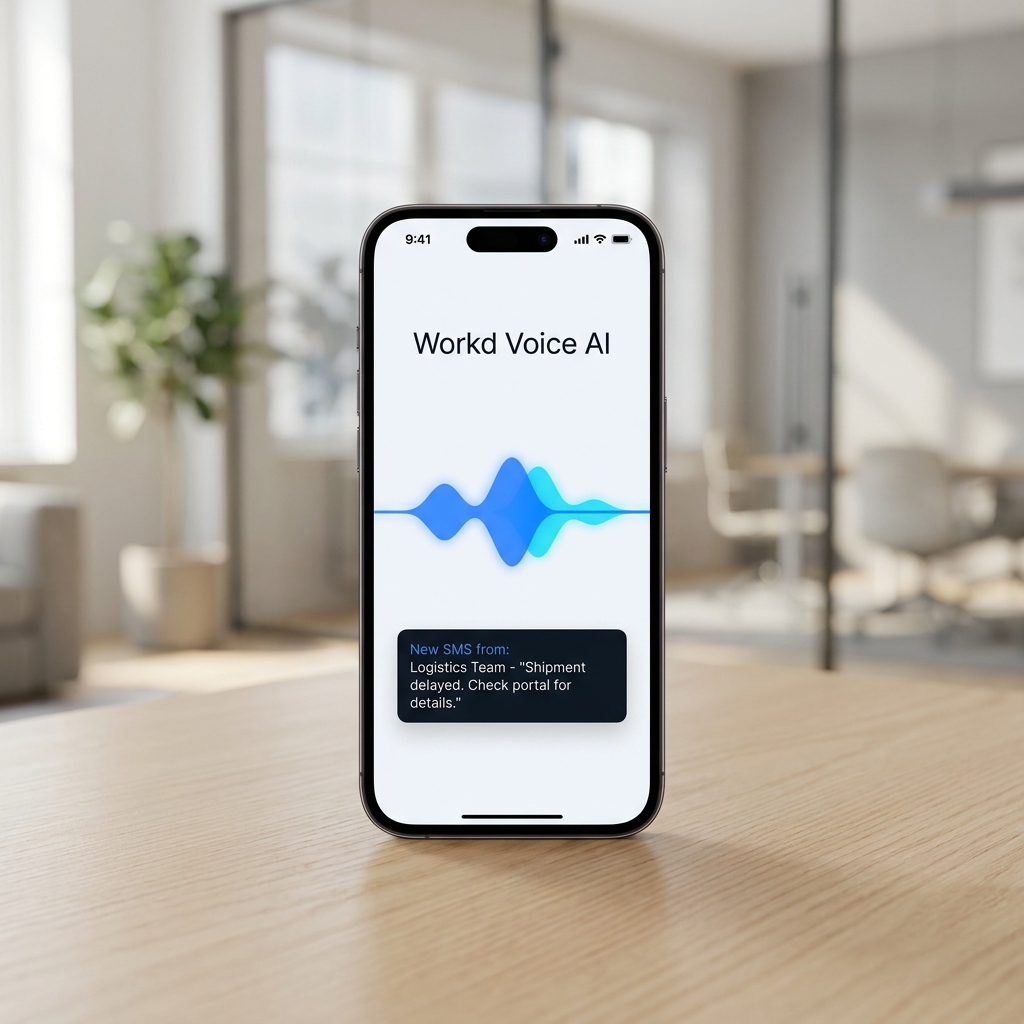
Never let another sales call go to voicemail.
AI answers every call 24/7, handles routine, escalates what matters. SMS handoff included.
Try the AI Voice Agent