
Going Global on Net-60: How Small Distributors Are Vetting International Buyers for the First Time


A $40 million electrical distributor in Ohio gets a cold inquiry from a buyer in the UAE requesting 200 pallets of industrial connectors on Net-60 terms. The purchasing manager has never vetted a foreign buyer before. There's no D-U-N-S number to look up, no domestic trade references to call, and no clear process for figuring out whether this order will turn into revenue or a write-off.
This scenario is playing out across the mid-market distribution sector with increasing frequency. According to the SBA's 2025 Small Business Profile, 270,014 small firms exported goods in 2023, representing 97.2% of all U.S. exporting companies, yet their total export value made up just 33% of identified exports. The gap tells a familiar story: small and mid-size distributors are entering international trade in huge numbers, but most are doing it with limited infrastructure and thin margins for error.
The problem isn't ambition. It's that the credit verification playbook domestic distributors have relied on for decades simply doesn't work across borders.
The Domestic Playbook Falls Apart
In the U.S., vetting a new buyer follows a well-worn path. Pull a D&B report. Check trade references. Maybe call the buyer's bank. For a distributor that's been running this way for 20 years, extending Net-30 or Net-60 to a new domestic customer feels manageable.
International buyers break every part of that workflow. Credit bureaus don't operate the same way in most countries. Financial statements may follow different accounting standards, or may not be publicly available at all. Bank references from foreign institutions can take weeks to obtain and may arrive in formats that are difficult to interpret. Even the legal recourse for collecting on unpaid invoices varies dramatically by jurisdiction.
Allianz Trade's 2025 Global Survey of 4,500 companies across nine countries found that tariff uncertainty and cross-border volatility have sharply increased payment delay expectations, with U.S. business insolvencies projected to rise 11% to 25,580 cases in 2025.
For a mid-market distributor shipping $200,000 in product to a buyer in Lagos or Riyadh, a payment default doesn't just hurt, it can represent a quarter's worth of profit.
Step One: Verify Before You Quote
The most common mistake first-time exporters make is treating the credit check as a formality that happens after the deal is negotiated. In international trade, buyer verification needs to happen before a price is quoted.
Dun & Bradstreet offers international business reports through its Worldwide Network, covering over 500 million business records across more than 200 countries. These reports include payment behavior data, financial strength indicators, and risk scores, but they're not the same depth as a domestic D&B report. For markets in sub-Saharan Africa, Southeast Asia, or parts of Latin America, data can be thin.
The National Association of Credit Management (NACM) recommends a layered approach for international accounts: start with a D&B international report, then supplement with direct financial statements from the buyer, bank references from the buyer's primary institution, and at least two trade references from other international suppliers who've extended credit to the same buyer.
Beyond financial verification, distributors need to screen international buyers against sanctions lists. The U.S. Treasury's Office of Foreign Assets Control (OFAC) maintains lists of sanctioned individuals, companies, and countries. Shipping product to a sanctioned entity, even unknowingly, can result in penalties up to $20 million per violation under the International Emergency Economic Powers Act. Dun & Bradstreet's Compass platform and similar tools offer automated sanctions screening against OFAC, UN, EU, and UK sanctions lists.
The Payment Terms Question Nobody Agrees On
Ask five distributors how to structure payment terms for a first-time international buyer and you'll get five different answers. The U.S. International Trade Administration's official guidance outlines five primary methods, ranked from safest to riskiest for the exporter: cash in advance, letters of credit, documentary collections, open account, and consignment.
For most mid-market distributors taking their first international order, the practical choice comes down to two options: cash in advance or a letter of credit (LC).
Cash in advance eliminates payment risk entirely. The buyer wires payment before product ships. The obvious downside: many international buyers won't agree to these terms, especially for a first order from an unknown U.S. supplier. Wire transfers are the most common method for cash-in-advance international transactions, according to the International Trade Administration.
Letters of credit offer a middle ground. The buyer's bank issues a guarantee to pay the seller upon presentation of compliant shipping documents. An LC essentially shifts the credit risk from the buyer to the buyer's bank, a far more verifiable counterparty. The catch is cost and complexity. LCs involve bank fees on both sides (typically 1-3% of the transaction value), require precise documentation, and any discrepancy in paperwork can delay or void payment.
For orders above $50,000 with an unverified buyer, an irrevocable, confirmed letter of credit is the standard recommendation from trade finance experts. "Confirmed" means a U.S. bank adds its guarantee on top of the foreign bank's guarantee, critical when dealing with banking systems that U.S. institutions may consider higher risk.
What distributors should avoid on a first international order: open account terms. Extending Net-30 or Net-60 to an unproven foreign buyer is the single most common way small exporters absorb preventable losses.
Trade Credit Insurance: The Tool Most Distributors Don't Know Exists
According to Global Growth Insights, demand for export credit insurance rose 45% in recent years, driven by businesses operating in volatile markets. Yet many mid-market distributors have never purchased a trade credit insurance policy, or even know it's available.
Trade credit insurance covers the risk of buyer non-payment on both domestic and international accounts. For exporters, a policy typically covers 85-95% of the invoice value if a foreign buyer defaults. The three largest global providers, Allianz Trade (formerly Euler Hermes), Atradius, and Coface, underwrite the majority of trade credit policies worldwide.
SMBs contributed $13.8 trillion to the B2B cross-border payments market in 2024, according to CoinLaw's cross-border payments analysis, with forecasts projecting growth to $21.2 trillion by 2032 at a 5.6% CAGR.
For a distributor doing $2-5 million in annual international sales, a trade credit insurance policy might cost 0.5-1.5% of insured revenue, a fraction of the margin on a single defaulted shipment. More importantly, these insurers bring their own buyer intelligence. When a distributor submits a new international buyer for coverage, the insurer runs its own credit assessment. If coverage is denied, that's a signal the distributor should demand cash in advance.
The Export-Import Bank of the United States (EXIM) also offers export credit insurance specifically for small businesses. EXIM's charter requires that at least 20% of its lending authority go to small businesses, and its multi-buyer insurance policies can cover short-term export receivables at competitive rates.
Compliance Traps That Catch First-Timers
Payment risk gets most of the attention, but compliance risk can be more damaging. Beyond OFAC screening, first-time exporters face several regulatory requirements that domestic-only distributors have never dealt with:
Export controls. The Bureau of Industry and Security (BIS) maintains the Commerce Control List, which restricts the export of certain goods based on their technical specifications and destination country. A distributor selling industrial pumps, certain electronic components, or specialized chemicals may need an export license, even if the product seems mundane.
Denied party screening. Beyond OFAC's Specially Designated Nationals list, exporters need to check the BIS Entity List, the Denied Persons List, and the Unverified List. A single shipment to a listed entity can result in loss of export privileges.
End-use certificates. For controlled goods, the buyer may need to provide a signed statement confirming the product's final use and that it won't be re-exported to a restricted destination. This isn't optional, it's a legal requirement that many first-time exporters skip.
Anti-bribery compliance. The Foreign Corrupt Practices Act (FCPA) applies to all U.S. companies doing business internationally. Distributors using agents or intermediaries in foreign markets need to understand that liability for bribery extends to third parties acting on their behalf.
See how much revenue you're leaving on the table
Take our 2-minute Revenue Leakage Assessment
Start AssessmentBuilding the Process Before You Need It
The distributors handling international expansion well aren't necessarily bigger or better-resourced. They've built a repeatable process before the first inquiry arrives.
A functional international buyer vetting process for a mid-market distributor includes five elements:
1. A tiered credit policy for international accounts. Define thresholds: orders under $10,000 might accept wire transfer in advance. Orders between $10,000 and $100,000 require a confirmed letter of credit. Orders over $100,000 require both an LC and trade credit insurance. These numbers will vary by industry and margin, but the structure needs to exist before the first order comes in.
2. Automated sanctions and denied-party screening. Manual checks against OFAC and BIS lists are error-prone and don't scale. Platforms like Dun & Bradstreet Compass, Descartes Visual Compliance, and Amber Road (now E2open) offer automated screening that runs every buyer against current lists before an order processes.
3. A relationship with a trade finance bank. Not every commercial bank has an international trade desk. Distributors should establish a relationship with a bank that can issue and advise on letters of credit, process documentary collections, and facilitate foreign currency transactions. JPMorgan Chase, Citibank, and HSBC all have dedicated middle-market trade finance groups, but regional banks like Comerica, Huntington, and KeyBank also serve this space effectively.
4. Trade credit insurance. Even if a distributor starts with EXIM's small business policy, having coverage in place before the first international shipment goes out removes the temptation to extend open account terms under sales pressure.
5. Documentation templates. International orders require more paperwork: commercial invoices formatted for customs, packing lists, certificates of origin, and potentially end-use certificates. Having templates ready, rather than scrambling after an order is placed, keeps shipments moving and LC documents compliant.
The Bottom Line
International expansion isn't optional for distributors chasing growth. Domestic markets are consolidated, competition is intense, and the inquiries from overseas buyers are already arriving. The SBA data makes clear that small and mid-size businesses are the backbone of U.S. exports, 97.2% of exporting firms, even if they account for a smaller share of total export value.
The distributors that will capture this opportunity are the ones treating international credit management as a core competency, not an afterthought. That means investing in buyer verification tools, securing appropriate payment terms, carrying trade credit insurance, and building compliance processes before the first container ships.
The alternative, winging it on a $200,000 Net-60 order from an unverified buyer in an unfamiliar market, is how small distributors turn a growth opportunity into a write-off.
Stay ahead of the curve
Get weekly insights on distribution technology and AI automation.
Go Deeper in the Resource Library
Get AI prompts, implementation templates, SOPs, and call scripts built for distribution companies. 47+ resources and growing, free access.
Access the Resource Library, FreeAlso free: Workdshop live sessions for distribution leaders
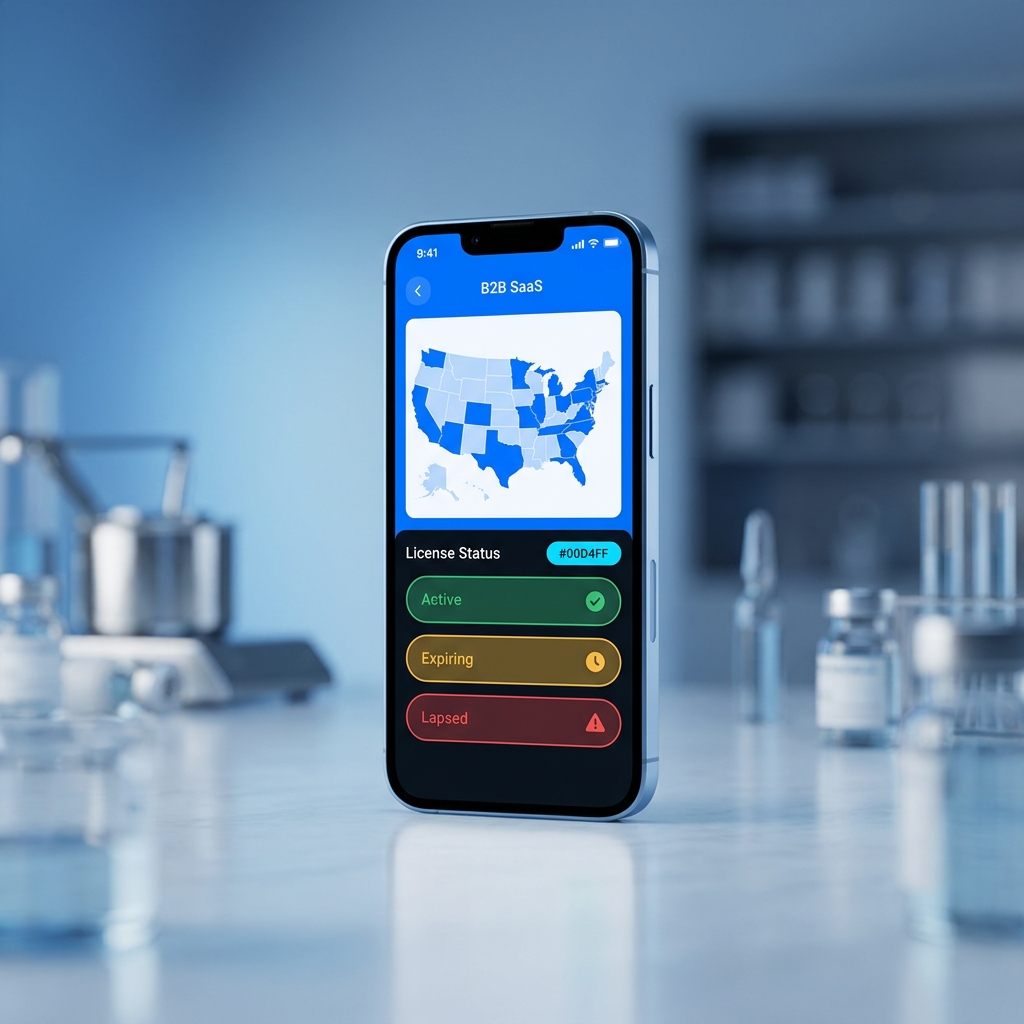
Catch lapsed customer licenses before they ship.
Workd License Check pulls every state board, NPI registry, and DEA records daily. Free audit on your top 100 accounts.
Run a Free License Audit