
How to Actually Use AI in Your Business Today, Not Next Year, Not Someday


Small business AI adoption jumped from 39% to 55% in a single year, according to a 2025 national survey by Thryv. Among companies with 10 to 100 employees, the jump was even steeper, from 47% to 68%. The gap between "interested in AI" and "actually using AI" is closing fast. But for many B2B companies, especially in distribution and operations-heavy industries, the question hasn't changed: where do we actually start?
The answer isn't a six-month digital transformation initiative. It's five concrete deployments, each achievable within a week, that deliver measurable returns without requiring a data science team or a seven-figure budget.
1. Automate Email Follow-Ups (And Stop Losing Deals to Silence)
The single biggest revenue leak in B2B sales isn't bad pricing or weak products. It's the follow-up that never happens. Sales reps send a quote, the customer doesn't respond, and nobody circles back until the deal is already dead.
AI-powered email sequencing fixes this by generating personalized follow-up messages based on the original conversation, the customer's engagement signals (did they open the email? click a link?), and timing patterns that correlate with higher response rates.
The tools already exist: platforms like Outreach and Apollo.io use AI to draft follow-ups, adjust send timing, and flag deals that are going cold. One case study from Outreach showed a 50% increase in meetings booked after rolling out AI-enhanced sequencing, largely because reps stopped letting warm leads go quiet.
Companies with 10 to 100 employees saw AI adoption jump from 47% to 68% in a single year.
, Thryv National Small Business AI Survey, 2025
For a distribution company running 200 open quotes at any given time, automated follow-ups aren't a nice-to-have. They're the difference between a 15% close rate and a 22% close rate, and the math on that is straightforward.
This week's move: Pick one sales rep. Connect their email to an AI sequencing tool. Set up a three-touch follow-up sequence for open quotes. Measure response rates for 30 days.
2. Deploy a Voice AI Agent for Inbound Customer Calls
Gartner projected that conversational AI will reduce contact center labor costs by $80 billion in 2026. That number sounds like an enterprise play, but the underlying technology has become accessible to mid-market companies in the past 18 months.
A voice AI agent can handle the calls that eat up your customer service team's day: order status checks, delivery ETAs, basic account inquiries, and after-hours routing. The agent answers the phone, understands the request through natural language processing, pulls the relevant data from your ERP or order management system, and delivers the answer, all without a human touching it.
This isn't the "press 1 for sales" IVR system from 2005. Modern voice AI carries on actual conversations, handles interruptions, and knows when to escalate to a human. Platforms like Retell AI and Synthflow have made deployment feasible for companies without dedicated AI engineering teams.
This week's move: Identify your top five inbound call types by volume. If three or more are transactional lookups (order status, tracking, account balance), you have a strong voice AI use case. Request a demo from a voice AI platform and pilot it on one phone line.
3. Put AI on Your Accounts Receivable
Late payments are a chronic pain point in B2B distribution. The typical distributor carries millions in outstanding receivables, and the collection process is still largely manual, someone on your AR team sends reminders, makes calls, and tracks promises to pay in a spreadsheet.
AI changes this by automating the entire dunning workflow. Billtrust, a B2B accounts receivable platform, announced major AI-powered collections innovations in mid-2025 that unify automation, AI-driven insights, and agentic AI workflows to help enterprises optimize AR operations and accelerate cash flow. Their platform automatically sends payment reminders calibrated to each customer's payment behavior, prioritizes high-risk accounts for human follow-up, and predicts which invoices are likely to go past due before they actually do.
Gaviti, another AR automation player, uses predictive AI to automate low-value tasks like data entry and reminder scheduling, freeing collectors to focus on complex cases and strategic relationship management.
This week's move: Pull your aging report. Identify how many accounts are 30+ days overdue. If the list is longer than one person can reasonably work in a week, you need AI-assisted collections. Evaluate Billtrust, Gaviti, or LedgerUp against your ERP integration requirements.
4. Use AI to Write (and Improve) Customer Communications
McKinsey's CEO Bob Sternfels revealed in January 2026 that the consulting firm saved 1.5 million hours in search and synthesis work the prior year through AI adoption. McKinsey isn't special, they just moved early. The same productivity gains are available to any company whose employees spend time writing emails, proposals, reports, or internal documentation.
McKinsey reported saving 1.5 million hours in search and synthesis work in 2025 through AI adoption.
, McKinsey CEO Bob Sternfels, January 2026 (via Yahoo Finance)
For B2B distributors, the immediate applications are obvious. Sales reps spend hours writing product recommendations, putting together quote cover letters, and crafting responses to RFQs. Customer service teams draft return authorizations, explain shipping delays, and write up credit memos. All of this can be accelerated, not replaced, accelerated, with AI writing assistants.
The key is to give the AI context. A generic ChatGPT prompt produces generic output. But feed it your product catalog, your customer's purchase history, and your company's communication style guide, and the output becomes a first draft that needs five minutes of editing instead of 30 minutes of writing from scratch.
Deloitte's 2026 State of AI in the Enterprise report found that worker access to AI rose by 50% in 2025, and that two-thirds of organizations cited improved productivity and efficiency as the top benefit achieved from enterprise AI adoption. But only 34% are truly reimagining their business processes around AI, meaning there's still a massive first-mover advantage for companies willing to embed AI into daily workflows rather than treating it as an experiment.
This week's move: Give three employees access to an AI writing tool (Claude, ChatGPT, or Gemini). Create a shared prompt template for your most common communication type, quote follow-ups, RFQ responses, or customer updates. Track time savings over two weeks.
5. Build a Knowledge Base That Actually Answers Questions
Every distribution company has institutional knowledge trapped in people's heads. The veteran sales rep who knows which customers always pay late. The warehouse manager who knows the workaround for that one ERP bug. The customer service lead who memorized the return policy exceptions.
AI-powered knowledge bases change this dynamic by ingesting your existing documentation, product specs, SOPs, pricing sheets, customer notes, and making it searchable through natural language. An employee types "what's our return policy for electrical components over 90 days?" and gets an actual answer, with the source document referenced, instead of hunting through SharePoint folders or asking around the office.
The technology is mature. Retrieval-augmented generation (RAG) systems connect a large language model to your company's documents so the AI grounds its answers in your actual policies and data rather than making things up. Tools like Notion AI, Glean, and Guru offer out-of-the-box solutions, or you can build a custom system with open-source tools if you have technical staff.
For companies where onboarding a new employee takes months because the knowledge lives in tribal memory, this is the highest-leverage AI investment available.
This week's move: Pick one department. Collect its top 20 most-asked internal questions. Upload the relevant documents to a RAG-powered knowledge tool. Test it against the real questions and measure answer accuracy.
How much revenue is slipping through the cracks?
Take our 2-minute Revenue Leakage Assessment and find out where AI automation can recover lost dollars.
Start AssessmentThe Common Thread: Start Small, Measure Everything
None of these five implementations require a board-level AI strategy document or a dedicated innovation team. They require picking one process, deploying one tool, and measuring the result. The companies pulling ahead aren't the ones with the biggest AI budgets, they're the ones that stopped researching and started deploying.
Deloitte's report found that the number of companies with 40% or more of their AI projects in production is expected to double within six months. That acceleration is happening because early movers are proving the ROI is real, and the tools have become simple enough that you don't need a machine learning engineer to set them up.
The risk of waiting isn't theoretical. It's the deals your competitors are closing with faster follow-ups. The customers they're retaining with 24/7 voice support. The cash they're collecting 15 days sooner with AI-driven AR. Every week of "we'll look into AI next quarter" is a week of compounding disadvantage.
Pick one of the five. Deploy it this week. Measure for 30 days. Then pick the next one.
Stay ahead of the curve
Get weekly insights on distribution technology and AI automation.
Go Deeper in the Resource Library
Get AI prompts, implementation templates, SOPs, and call scripts built for distribution companies. 47+ resources and growing, free access.
Access the Resource Library, FreeAlso free: Workdshop live sessions for distribution leaders
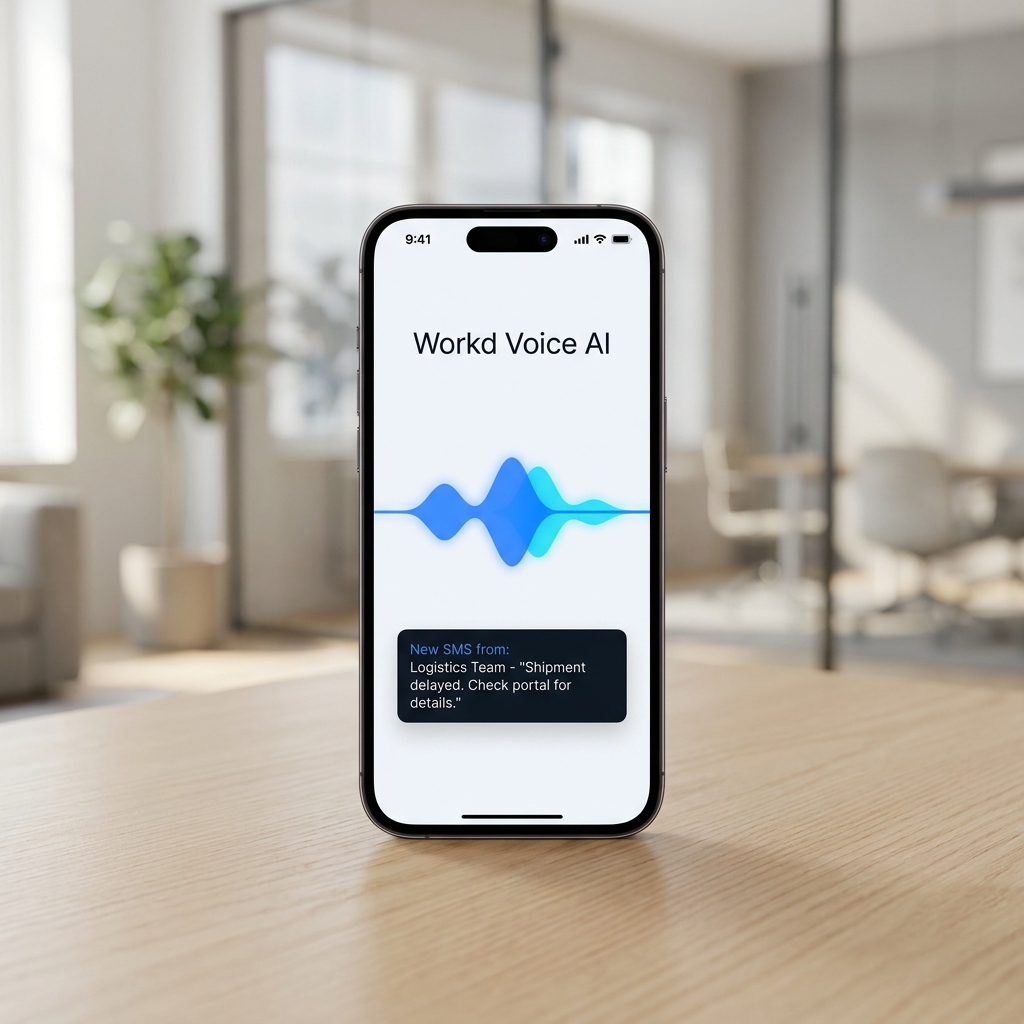
Never let another sales call go to voicemail.
AI answers every call 24/7, handles routine, escalates what matters. SMS handoff included.
Try the AI Voice Agent