
GrubMarket Hits $4.5B Valuation, What Food Distribution Tech Funding Signals for the Broader Supply Chain

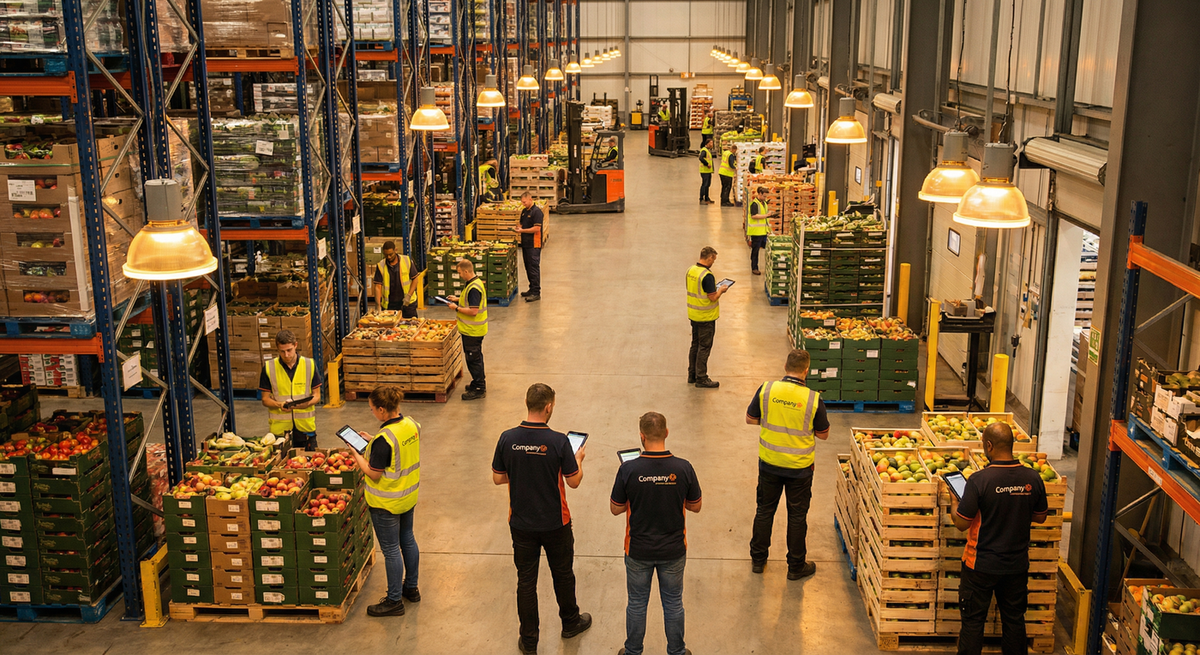
Food tech funding fell 45% in 2025, according to Tracxn. Investors pulled back from consumer-facing food startups, plant-based protein bets went sideways, and the era of growth-at-all-costs quietly ended. Then, on February 2, 2026, GrubMarket raised $50 million in Series H financing at a pre-money valuation of $4.5 billion, making it the largest private food technology company in the United States.
The round wasn't led by a marquee Silicon Valley venture fund. Future Food Fund and Portfolia Funds anchored the investment, joined by Liberty Street Funds, RD Heritage Group, and Flume Ventures. The signal is clear: investor appetite hasn't disappeared from food supply chain technology. It's just become far more selective, and the winners are companies that have built real infrastructure, not just apps.
From Online Grocery to Supply Chain Operating System
GrubMarket started in 2014 as an online farmers' market connecting consumers with local produce. By 2020, CEO Mike Xu had pivoted the company toward B2B wholesale and distribution infrastructure. The transformation has been aggressive. The company now operates in 70 countries, and its product suite reads more like an enterprise software portfolio than a food delivery startup.
The centerpiece is WholesaleWare, an AI-powered SaaS ERP platform built specifically for food distributors, wholesalers, and shippers. It handles financial management, sales support, inventory tracking, lot traceability, grower accounting, and automated logistics routing, the full operational stack that mid-market food distributors need but rarely get from generic ERP vendors.
GrubMarket's valuation jumped from $3.5B to $4.5B in less than a year, a 29% increase while broader food tech funding contracted sharply.
Layered on top is GrubAssist AI, a suite of agentic AI tools that automate order processing, generate business analysis reports, and manage inventory forecasting. In 2025, GrubMarket launched dedicated AI agents for inventory management and reporting, moving beyond basic automation into workflows that traditionally required experienced operations staff.
Orders IO provides white-labeled e-commerce for mobile and online ordering. GrubPay handles digital payments tailored to the specific cash-flow rhythms of food distribution, where net-30 terms and produce-specific billing cycles don't fit neatly into generic payment platforms.
The Acquisition Strategy: Buying the Industry's Plumbing
GrubMarket's growth isn't purely organic. The company has executed a deliberate acquisition strategy, purchasing companies that add either geographic reach or software depth, and often both.
In November 2025, GrubMarket acquired Procurant, a SaaS platform and trading network for the fresh produce industry. Procurant brought more than 850 customers across 14 countries and facilitated $5.5 billion in gross merchandise volume annually. Its tools cover procurement, supplier-retailer connectivity, quality control, compliance, and food safety management. The acquisition gave GrubMarket instant reach into major retail supply chains.
Earlier in 2025, the company acquired Delta Fresh Produce, expanding into Mexican-grown produce for U.S. grocers, and Coast Citrus, a tropical produce provider. In 2024, it acquired Butter, a VC-backed food wholesale operating system, and Parsemony, a software provider for fresh produce distributors and foodservice suppliers.
The pattern is consistent: acquire distribution operators for their customer relationships and logistics networks, then migrate them onto GrubMarket's technology stack. It's the same playbook that built Procore in construction and Toast in restaurants, vertical consolidation powered by purpose-built software.
Why Vertical SaaS Is Winning in Distribution
GrubMarket's trajectory fits a broader pattern that Bessemer Venture Partners identified in their supply chain software roadmap: the same vertical SaaS model that produced Toast ($30B+ market cap), Procore (~$10B market cap), and ServiceTitan (IPO'd in 2025) is now arriving in supply chain and distribution.
The thesis is straightforward. Generic ERP systems, whether from legacy vendors or cloud-first platforms, aren't built for the operational nuances of distribution. Food distributors deal with perishable inventory, lot traceability requirements, FSMA compliance, complex grower accounting, and margin structures that don't map to standard manufacturing or retail ERP modules. The same is true across pharmaceutical distribution, electrical supply, HVAC, and industrial wholesale, each vertical has workflow specifics that horizontal software handles poorly.
Vertical SaaS companies solve this by building deep, industry-specific functionality and then expanding into adjacent services: payments, marketplace, logistics, financing. GrubMarket's stack, ERP, AI agents, payments, e-commerce, and trading network, is a textbook example.
According to Gartner, 60% of supply chain digital adoption efforts will fail to deliver promised value by 2028, largely due to insufficient investment in training and change management, not the technology itself.
What This Means for Mid-Market Distributors
GrubMarket's $4.5 billion valuation might seem distant from the daily reality of a $50 million electrical distributor or a $200 million HVAC wholesaler. But the underlying dynamics are the same, and the implications are concrete.
First, purpose-built distribution software is no longer a niche bet. When institutional investors value a food distribution tech company at $4.5 billion, it validates the entire category. Capital will follow into distribution-specific platforms across verticals, pharmaceutical, industrial, building materials. Distributors who adopt vertical tools early gain a structural advantage over competitors still running on generic systems or decades-old legacy platforms.
Second, AI agents are becoming operational infrastructure. GrubMarket's inventory management and reporting AI agents aren't experimental features. They're core products that major distributors are running in production. For mid-market distributors, this means the competitive bar is rising. The question is no longer whether to adopt AI-powered tools, but how quickly operations teams can integrate them into existing workflows.
Third, the acquisition-plus-technology playbook creates consolidation pressure. GrubMarket's strategy of acquiring distributors and migrating them onto its platform compresses the competitive timeline. Distributors that resist digitization don't just fall behind on efficiency, they become acquisition targets for tech-enabled consolidators.
The Broader Funding Landscape
GrubMarket's raise stands out against a challenging backdrop. According to DigitalFoodLab's 2026 analysis, global agri-food tech investment stagnated in 2025, with U.S. startups capturing a disproportionate share of available capital at the expense of European competitors. Tracxn's data shows food tech funding in the U.S. dropped 45% year-over-year in 2025.
But the money isn't gone, it's concentrating. Later-stage companies with proven revenue, real customers, and operational infrastructure are raising successfully. Early-stage, speculative food tech is struggling. The market is rewarding execution over promise.
GrubMarket CEO Mike Xu made this explicit in the funding announcement: "Since we have a self-sustaining business model, this funding round was not a necessity; rather, we saw it as an opportunity to align our company's valuation with the new level of scale and strength that we have achieved."
That framing, raising from a position of strength rather than need, is becoming the dividing line in distribution technology. Companies that have built real revenue and real operational value can raise capital; those still pitching potential cannot.
Is your ERP holding you back?
Take our free ERP Modernization Assessment
Assess Your ERPWhat Happens Next
GrubMarket has signaled that the Series H funds will go toward team expansion, technology development, and further acquisitions. Given the company's track record, acquiring and integrating multiple companies per year, expect continued consolidation in food distribution.
For distributors outside food, the question is when, not if, similar vertical platforms emerge in their categories. The building blocks are identical: industry-specific ERP, AI-powered automation, embedded payments, and digital ordering. The companies that build or adopt these tools first will set the pace for their industries.
The $4.5 billion number is a signal. Distribution technology has graduated from back-office tooling to strategic infrastructure. The investors have noticed. The question for every mid-market distributor is whether their operations teams have noticed too.
Stay ahead of the curve
Get weekly insights on distribution technology and AI automation.
Go Deeper in the Resource Library
Get AI prompts, implementation templates, SOPs, and call scripts built for distribution companies. 47+ resources and growing, free access.
Access the Resource Library, FreeAlso free: Workdshop live sessions for distribution leaders
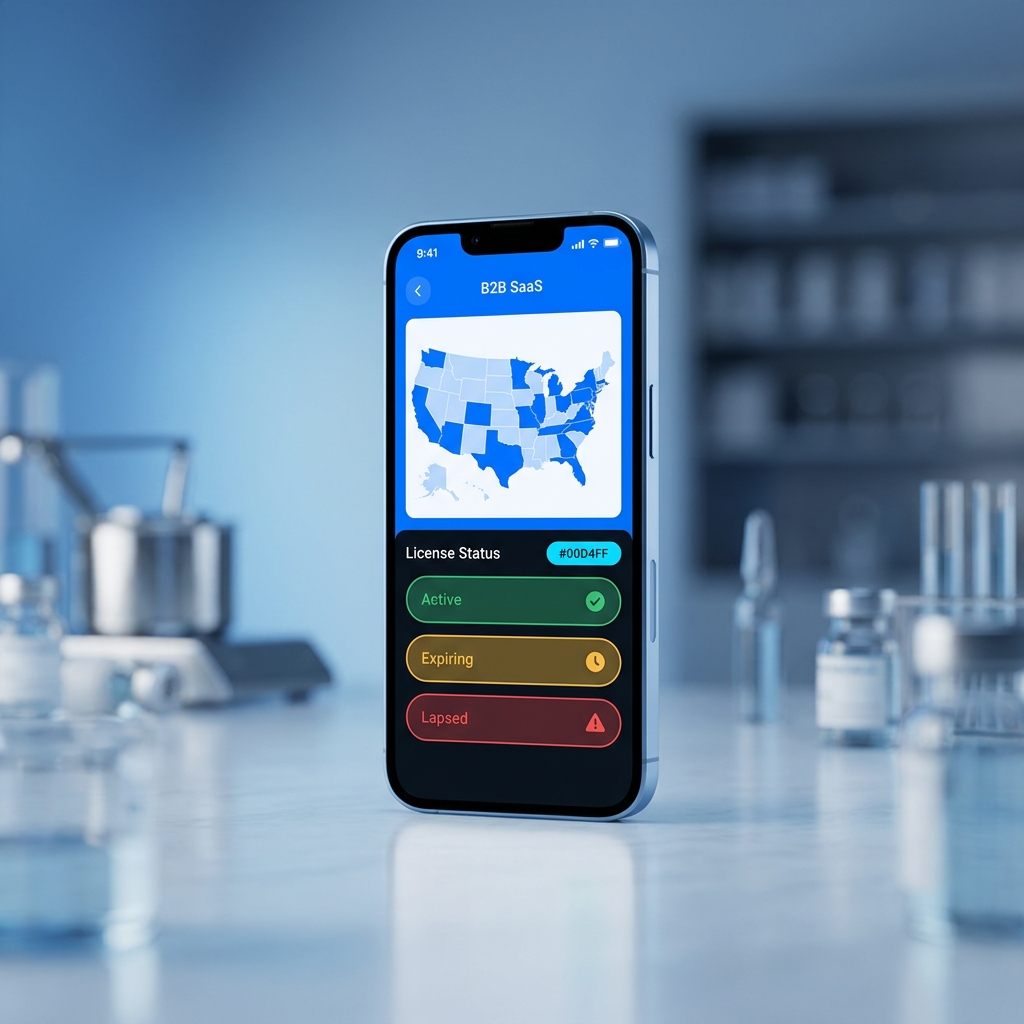
Catch lapsed customer licenses before they ship.
Workd License Check pulls every state board, NPI registry, and DEA records daily. Free audit on your top 100 accounts.
Run a Free License Audit