
66% of CEOs Froze Hiring This Quarter. Here Is What They Are Buying Instead.

Two-thirds of public-company CEOs plan to freeze or cut hiring through the rest of 2026. That comes from a survey of more than 350 executives and investors managing $19 trillion in assets, reported by Fortune on March 18. In the same quarter, Gartner projects global capital spending on AI will reach $2.5 trillion.
Read those two numbers together. The hiring freeze and the spending surge aren't separate stories. They're the same story.
Your first instinct might be to read this as a recession signal. Some kind of pullback. The data says otherwise. Companies freezing headcount are simultaneously making the largest capital bets in a generation on AI. The money didn't disappear. It moved.
The Layoff Ledger: Who Cut, and Why
The headline cases make the pattern clear. In late February, Block CEO Jack Dorsey cut 40% of his workforce. Roughly 4,000 positions. It became the largest AI-attributed layoff event in tech history. His letter to shareholders was blunt: "Intelligence tools have changed what it means to build and run a company." He predicted most companies would reach the same conclusion within a year, Fortune reported.
Here's the thing. Block wasn't in distress. The company grew gross profit throughout 2025, raised its 2026 guidance, and investors sent the stock up 24% after the announcement. When a company cuts headcount from a position of strength, it's not managing a downturn. It's placing a structural bet.
Two weeks later, Atlassian slashed 10% of its workforce, about 1,600 jobs, to "self-fund further investment in AI and enterprise sales," according to CEO Mike Cannon-Brookes, as CNBC reported on March 11. More than 900 of those roles were in software R&D.
Then came Meta. Reports in mid-March indicated the company was planning to cut 15,000 to 16,000 employees. Roughly 20% of its workforce. At the same time, Meta is doubling its AI spend to $135 billion and planning up to $600 billion in infrastructure investment by 2028, according to CNBC. Wall Street responded by getting more bullish, not less.
I talked to a colleague at Meta last week. He's waiting to find out if he's included in the cuts. I asked him if it would be obvious who'd get let go. In my corporate experience, it was always pretty intuitive. You could generally tell who was performing and who wasn't. But he said the last couple of years have been different. Someone in his leadership chain, a person who was above average on most KPIs, got cut in a previous round. It surprised everyone. His take: it's become less predictable whether you'll be retained because you never really know the ultimate motivations. Is it cost savings? Does your department matter as much as it used to? There's a real sense of losing control as an individual contributor. Even if you're doing great work.
That's the human side of these numbers. The pattern across the boardroom is consistent: cut labor costs, redirect capital to AI infrastructure, let the market reward the decision. As investment chief Brad Conger put it in Fortune's analysis: "AI's not replacing jobs, but job cuts are funding AI expenditures." But when you're the person waiting on that email, the macro trend doesn't feel very macro.
What the Money Is Actually Buying
That $2.5 trillion in projected AI spending isn't going toward chatbots and dashboards. The category that's captured the most executive attention in early 2026 is AI agents. Software that can reason, plan, and execute multi-step tasks on its own.
NVIDIA's 2026 State of AI report, drawing on survey data from more than 3,200 respondents across five industries, found that 44% of companies had deployed or were actively assessing AI agents as of late 2025. The adoption rate was highest in telecommunications (48%) and retail (47%). By early 2026, those experiments had turned into real deployments touching code development, legal review, financial tasks, and administrative support.
The broader numbers are just as telling. Sixty-four percent of organizations are now actively using AI in operations. Eighty-eight percent report that AI has increased annual revenue. Eighty-seven percent report reduced costs. And 86% plan to increase their AI budgets further in 2026, with 40% planning increases of 10% or more.
The agent timeline is accelerating
Gartner predicts that 40% of enterprise applications will feature task-specific AI agents by the end of 2026, up from less than 5% in 2025. Task specialization is evolving AI assistants into agents capable of performing complex, end-to-end tasks. Gartner analysts warn that CIOs have three to six months to define their agent strategies or risk ceding ground to faster-moving competitors.
Beyond agents, the spending is flowing into voice AI for customer interactions, automation platforms that connect existing systems, and intelligent CRM that acts on data rather than just storing it. The common thread: these aren't experimental tools. They're capacity multipliers. They let existing teams do more with what they have.
What We're Seeing With Our Customers
This is something we see every day at Workd. Companies expanding their footprint without expanding headcount. Not in theory. In practice. Right now.
One of our customers, a distribution company, had a classic problem. Their field workers needed to check order statuses, look up account details, pull pricing. Every time, they'd call back to the office. That meant tying up a customer service rep for what was basically a data lookup. Now those field workers talk to a voice AI agent. They get what they need in seconds. No phone tag. No waiting on hold. The office team is freed up to handle the stuff that actually requires a human.
Another customer uses AI agents to handle inbound customer inquiries, collections calls, payment reminders, and daily task routing for their team. The agents pull from data already on file and direct people through their day based on what needs attention. It's not flashy. It just works. And it means they didn't have to hire three more people to keep up with growth.
We're also seeing companies use AI for proactive outreach. Not just responding to problems, but catching them before the customer even calls. Running AI against their own data to spot issues, flag accounts that need attention, and reach out before things go sideways. That's a capability most mid-market companies couldn't dream of two years ago. Now it's table stakes for the ones paying attention.
Here's my favorite one. One of our customers has team members who are frequently backpacking through remote countries. Like, off-the-grid remote. And they're still running all their US customer outreach and sales because they interact with AI agents to get the work done. One of their associates famously has one of the highest sales books of business in the company while routinely summiting Kilimanjaro. Not a metaphor. The actual mountain. That's what happens when your tools work for you instead of the other way around.
None of these companies went out and hired a bigger team. They got smarter about how the team they have spends their time. That's the pattern I keep seeing. The companies winning right now aren't necessarily spending more. They're spending differently.
The Midwest Signals a Broader Shift
The AI story usually gets told through the lens of Silicon Valley. But the more interesting shift might be happening in the middle of the country.
BMO's Midwest Business Outlook, released March 18, found that companies across Illinois, Wisconsin, Minnesota, and Indiana are moving from AI pilots to real deployment. The driver is structural labor constraints that aren't going away. "Across the Midwest, companies are shifting decisively from planning to execution," said Tony Sciarrino, Head of BMO Commercial Bank, U.S. "In a region defined by manufacturing intensity and tight labor markets, businesses are prioritizing AI, automation, and capital discipline to extend capacity, protect margins, and stay competitive," according to the report.
BMO's chief U.S. economist Scott Anderson added: "Growth is being supported by manufacturing activity and AI-related investment, while tighter labor supply and lingering trade uncertainty continue to shape decision-making."
This matters because it signals that AI deployment is no longer a coastal tech story. Manufacturing companies, distributors, regional businesses. They're all making the same calculation as the tech giants. Just at a different scale. The issue isn't interest or intent. It's access to the right tools.
How Much Revenue Is Leaking From Your Pipeline?
Most B2B companies lose 15-30% of potential revenue to process gaps AI can close. Get a free, no-obligation assessment of where your pipeline is leaking and what to do about it.
Get Your Free AssessmentThe Mid-Market Gap
Here's where it gets interesting for most businesses. While 90% of business leaders report using AI in some capacity, only 16% have successfully integrated it into their CRM systems, according to TechRadar's analysis. That's a 74-point gap between general AI usage and CRM integration. It tells you something specific: the tools exist, but mid-market companies are struggling to put them where they matter most.
The reasons are predictable. Legacy systems weren't built for AI. Internal teams don't have the technical depth to evaluate and deploy these tools. And the enterprise solutions that do exist are priced for Fortune 500 budgets.
Yet 59% of sales and marketing leaders plan to significantly increase AI adoption over the next year, with CRM as a primary focus. The demand is there. The supply side hasn't caught up for companies between 50 and 500 employees.
This is where early movers gain the most ground. Mid-market companies that figure out AI-native CRM, automated pipeline management, and intelligent customer engagement before their competitors will capture outsized market share. The tech is mature enough to deliver real value. But adoption is still limited enough that competitive differentiation is achievable. That window won't stay open forever.
A Deployment Signal, Not a Recession Signal
The usual reading of a hiring freeze is contraction. Companies pull back, reduce risk, wait for better conditions. That framing falls apart when the same companies are simultaneously writing the largest technology checks in corporate history.
The labor market data backs this up. Entry-level job listings have dropped 30% since 2022. Middle management postings have fallen 42%. By late 2026, 20% of companies are expected to use AI to flatten organizational hierarchies, eliminating more than half of mid-tier management roles, according to Fortune's analysis.
These aren't companies retreating. They're restructuring around a different model of how work gets done. The hiring freeze is the visible symptom. The AI deployment is the cause.
NVIDIA's data reinforces the point. Among large companies with more than 1,000 employees, 76% report active AI usage. Only 2% say they're not using AI and have no plans to start. The question isn't whether to deploy AI anymore. It's how fast, and in which functions first.
What Happens Next
Jack Dorsey predicted most companies would reach the same conclusion Block did within a year. The pace of announcements in March 2026 suggests the timeline might be shorter.
For mid-market B2B companies, the math is straightforward. Enterprise competitors are pouring billions into AI. Smaller competitors are moving fast because they have fewer legacy systems in the way. The companies in the middle, the ones with real revenue, real customers, and real operational complexity, have a narrow window to act.
The 66% of CEOs who froze hiring this quarter didn't stop spending. They redirected it. The companies that recognize this as a deployment signal, not a distress signal, and move accordingly are the ones that will define the next chapter of B2B competition.
Go Deeper in the Resource Library
Get AI prompts, implementation templates, SOPs, and call scripts built for distribution companies. 47+ resources and growing, free access.
Access the Resource Library, FreeAlso free: Live virtual training sessions, Thursdays 1 PM ET
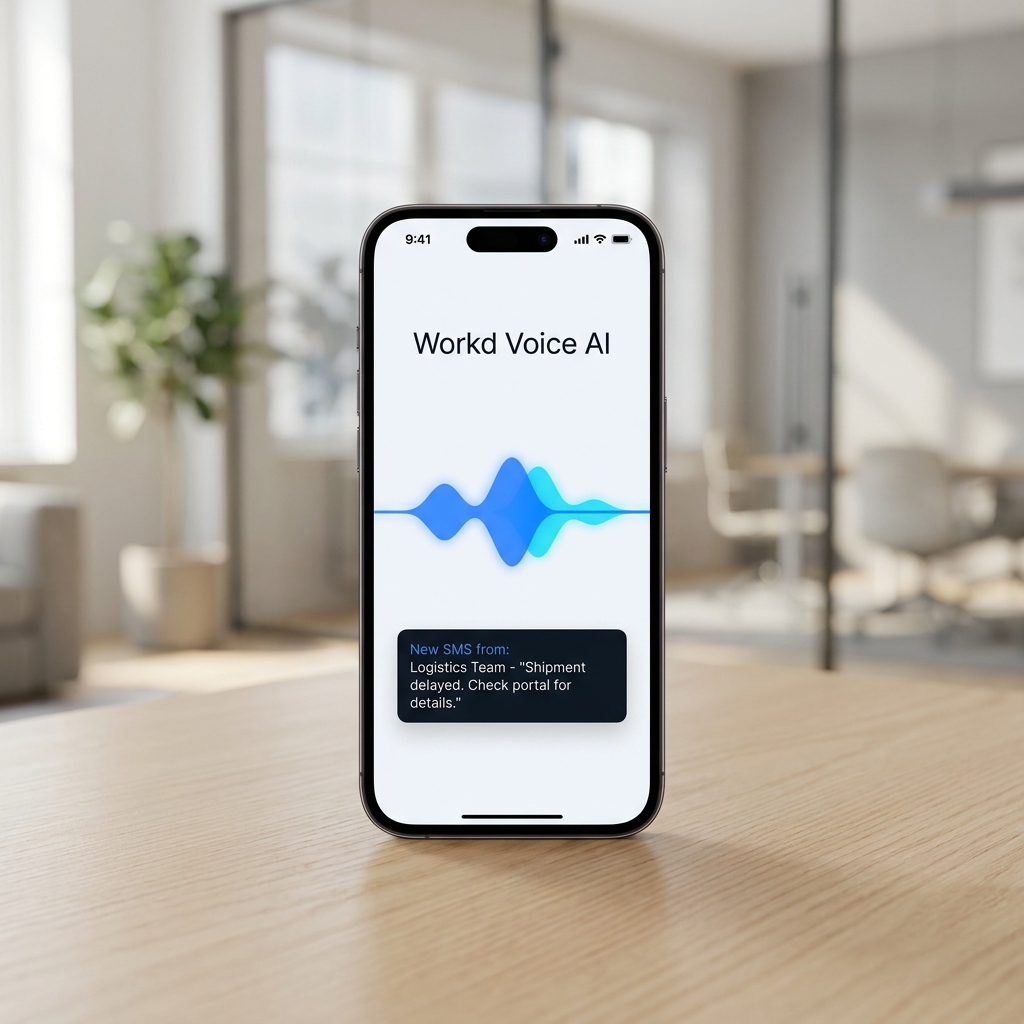
Never let another sales call go to voicemail.
AI answers every call 24/7, handles routine, escalates what matters. SMS handoff included.
Try the AI Voice Agent