
Blockchain Comes to Pharma Distribution: What Wellgistics' XRP Bet Means for the Industry

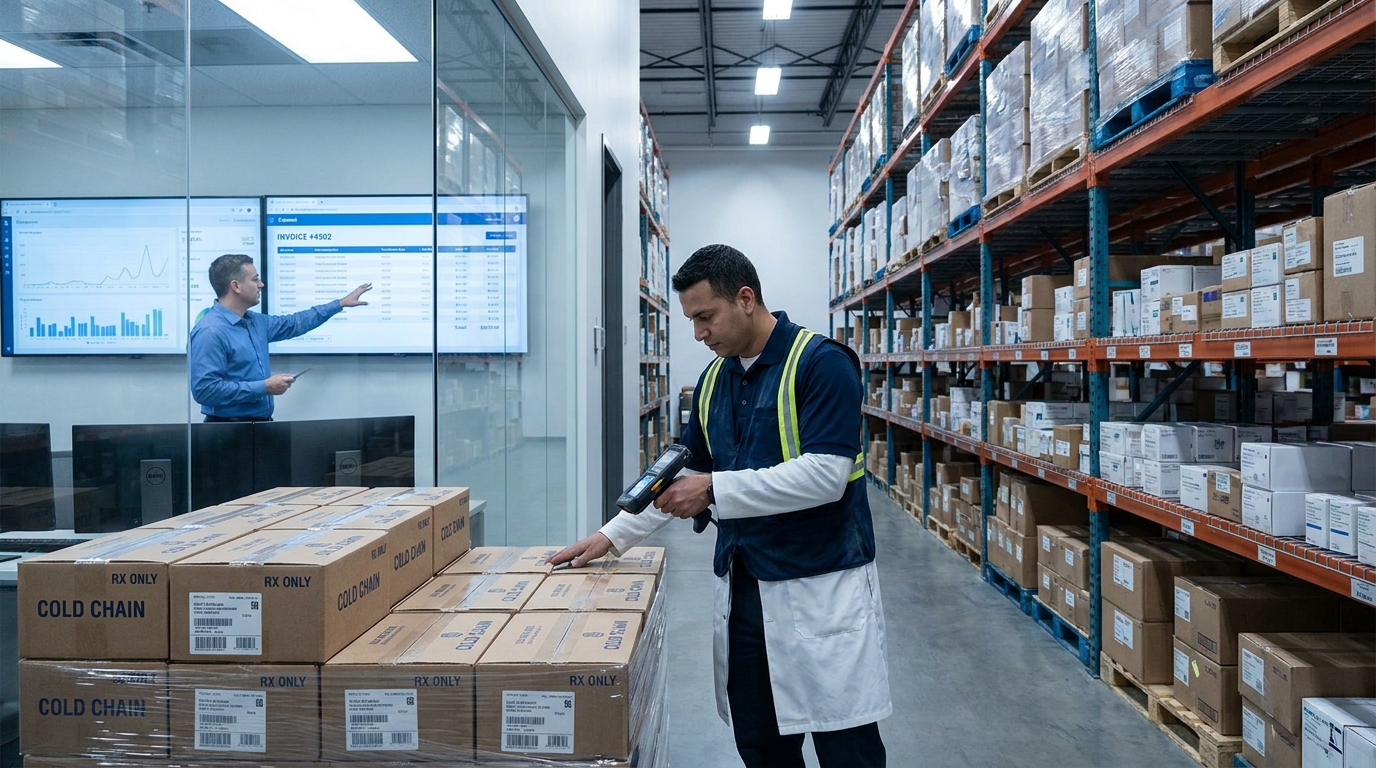
A traditional bank wire costs $10 to $30 per transaction and takes one to three business days to settle. An XRP Ledger transfer costs less than $0.0002 and settles in under four seconds. That gap explains why Wellgistics Health, a NASDAQ-listed pharmaceutical distributor, rolled out blockchain-powered payments to more than 6,500 independent pharmacies in August 2025—creating what the company calls the largest deployment of cryptocurrency payments in American healthcare.
The move is bold, polarizing, and worth understanding whether you run a pharma operation or any other kind of distribution business. Not because every distributor should rush to adopt blockchain payments, but because the pain points Wellgistics is trying to solve—slow settlements, high transaction fees, cash flow friction—are universal across distribution.
The Problem: Distribution Runs on Slow Money
Independent pharmacies operate on notoriously thin margins. The National Community Pharmacists Association reported that the average independent pharmacy's net profit margin hovered around 1.5% to 2% in recent years. When you're working with margins that tight, waiting three days for a payment to clear isn't just inconvenient—it's a cash flow crisis.
The challenge isn't unique to pharma. Across B2B distribution, payment friction is a persistent drag on operations. Credit card processing fees run 2% to 3% per transaction, according to payment data aggregated by Helcim. ACH transfers are cheaper—typically 0.5% plus a flat fee—but still take one to three business days to settle. Wire transfers settle faster but cost $10 to $50 each, making them impractical for routine orders.
For a distributor processing 500 wire transfers per month, transaction fees alone can exceed $15,000—before accounting for the cost of capital tied up during settlement delays.
This is the environment in which Wellgistics made its bet. The company, which went public in February 2025 after spinning off from Danam Health, partnered with pharmacy software provider RxERP to build an XRP-based payment rail that handles compliance requirements including HIPAA privacy rules and anti-money laundering regulations. Every transaction is recorded on the XRP Ledger, creating an immutable audit trail.
What Wellgistics Actually Built
The XRP Implementation Program isn't a speculative whitepaper—it's a live system. Pharmacies using the platform can pay suppliers and move funds in seconds rather than days. The system operates 24/7, including weekends and holidays, which matters in healthcare where stockouts can mean patients go without medication.
Brian Norton, CEO of Wellgistics Health, framed the adoption in practical terms: "Independent pharmacy owners are far more forward-thinking than many realize. They see the power of blockchain and understand how transformative this will be as it scales across the industry."
The company backed the technology commitment with capital. In May 2025, Wellgistics secured a $50 million credit facility and announced plans to hold XRP as a treasury asset—not just use the network for transactions. The company serves more than 6,500 independent pharmacies and 200 pharmaceutical manufacturers nationwide.
It's worth noting the context: Wellgistics' stock (WGRX) dropped more than 80% from its IPO debut, closing at $0.62 per share in late 2025. Whether the blockchain bet drives a turnaround or becomes a footnote is still very much an open question.
The Bigger Picture: Blockchain in B2B Distribution
Wellgistics is an outlier, but it's not operating in a vacuum. The blockchain supply chain market was valued at $1.77 billion in 2026 and is projected to reach $12.41 billion by 2031, growing at a compound annual rate of 47.65%, according to Mordor Intelligence. Verified Market Research puts the broader blockchain supply chain market on track to hit nearly $11 billion by 2032.
The adoption isn't just theoretical. According to data compiled by CoinLaw, approximately 35% of small businesses in the U.S. accepted cryptocurrency for B2B transactions by 2025. RippleNet, the enterprise network behind the XRP Ledger, has partnered with more than 300 financial institutions globally for cross-border settlement.
Manufacturing accounts for 21% to 22% of blockchain adoption in financial services, driven largely by supply chain applications, according to CoinLaw's analysis of industry data. Banking leads at 29% to 30%, but the supply chain use case is growing faster.
Blockchain adoption in finance and logistics grew at a compound annual rate of roughly 53% through 2025, according to SQ Magazine's analysis of industry data.
Why Most Distributors Shouldn't Follow—Yet
Before any mid-market distributor starts evaluating XRP wallets, some reality checks are in order.
Volatility risk is real. XRP's price swings make it a poor store of value for businesses that need predictable cash flows. Wellgistics' decision to hold XRP as a treasury asset is a bet most $50M-to-$500M distributors can't afford to make. A 20% price swing on your working capital is an existential risk when margins are thin.
Regulatory uncertainty persists. While the SEC's case against Ripple Labs provided some clarity, the regulatory framework for cryptocurrency in B2B commerce remains a patchwork. Tax reporting requirements, state-level regulations, and accounting standards for digital assets add compliance overhead that can offset transaction cost savings.
Counterparty adoption is the bottleneck. A payment rail only works if both sides use it. For blockchain payments to replace ACH or wire transfers in distribution, suppliers, customers, and financial institutions all need to participate. Wellgistics has the advantage of controlling both the distribution network and the payment platform. Most distributors don't have that vertical integration.
Existing alternatives are improving. Same-day ACH, which the Federal Reserve expanded in recent years, settles transactions within hours for a fraction of the cost of wire transfers. Real-time payment networks like FedNow, launched in 2023, are steadily expanding bank participation. These incremental improvements may solve the settlement speed problem without requiring distributors to adopt an entirely new financial infrastructure.
What Distributors Should Actually Do
The Wellgistics story isn't really about blockchain. It's about the fact that B2B payment infrastructure in distribution is decades behind consumer payments. While consumers tap their phones to pay for coffee in milliseconds, distributors are still faxing purchase orders and waiting days for ACH settlements.
The practical takeaway for mid-market distributors:
Audit your payment costs. Most distributors don't have a clear picture of what they spend on transaction fees, float costs, and manual payment processing. The numbers are often worse than expected.
Evaluate faster settlement options within traditional rails. Same-day ACH, FedNow participation, and automated payment matching can dramatically reduce settlement times without the risks of cryptocurrency adoption.
Automate accounts receivable. The biggest payment friction in distribution isn't the payment rail—it's the manual processes around invoicing, reconciliation, and collections. AI-powered AR automation can compress days-sales-outstanding more effectively than switching payment networks.
See where AI can streamline your operations
Get a personalized AI readiness score in 2 minutes
Take the AssessmentWatch the infrastructure, not the hype. If FedNow achieves broad bank adoption or if stablecoin-based settlement (using dollar-pegged tokens rather than volatile cryptocurrencies) matures, the cost-benefit calculation for blockchain payments in distribution could shift rapidly. The technology to watch isn't XRP specifically—it's whether any digital settlement layer achieves the combination of speed, low cost, regulatory clarity, and broad counterparty adoption needed for B2B commerce.
The Signal in the Noise
Wellgistics' bet may or may not pay off for Wellgistics. But the underlying problem it's trying to solve—that moving money between businesses in distribution is slow, expensive, and unnecessarily complex—is real and getting more attention.
According to Grand View Research, the global blockchain supply chain market was estimated at $2.26 billion in 2023 and is projected to reach $192.9 billion by 2030 at a CAGR of 88.8%. Even if those projections prove optimistic by half, the trajectory is clear: the financial plumbing of B2B commerce is going to change.
The question for distribution leaders isn't whether to adopt blockchain today. It's whether your current payment and settlement infrastructure is costing you more than you realize—and whether you're positioned to move quickly when the better alternative becomes clear.
For 6,500 pharmacies in the Wellgistics network, that alternative arrived in August 2025. For the rest of the industry, the clock is ticking.
Stay ahead of the curve
Get weekly insights on distribution technology and AI automation.
Go Deeper in the Resource Library
Get AI prompts, implementation templates, SOPs, and call scripts built for distribution companies. 47+ resources and growing — free access.
Access the Resource Library — FreeAlso free: Live virtual training sessions — Thursdays 1 PM ET
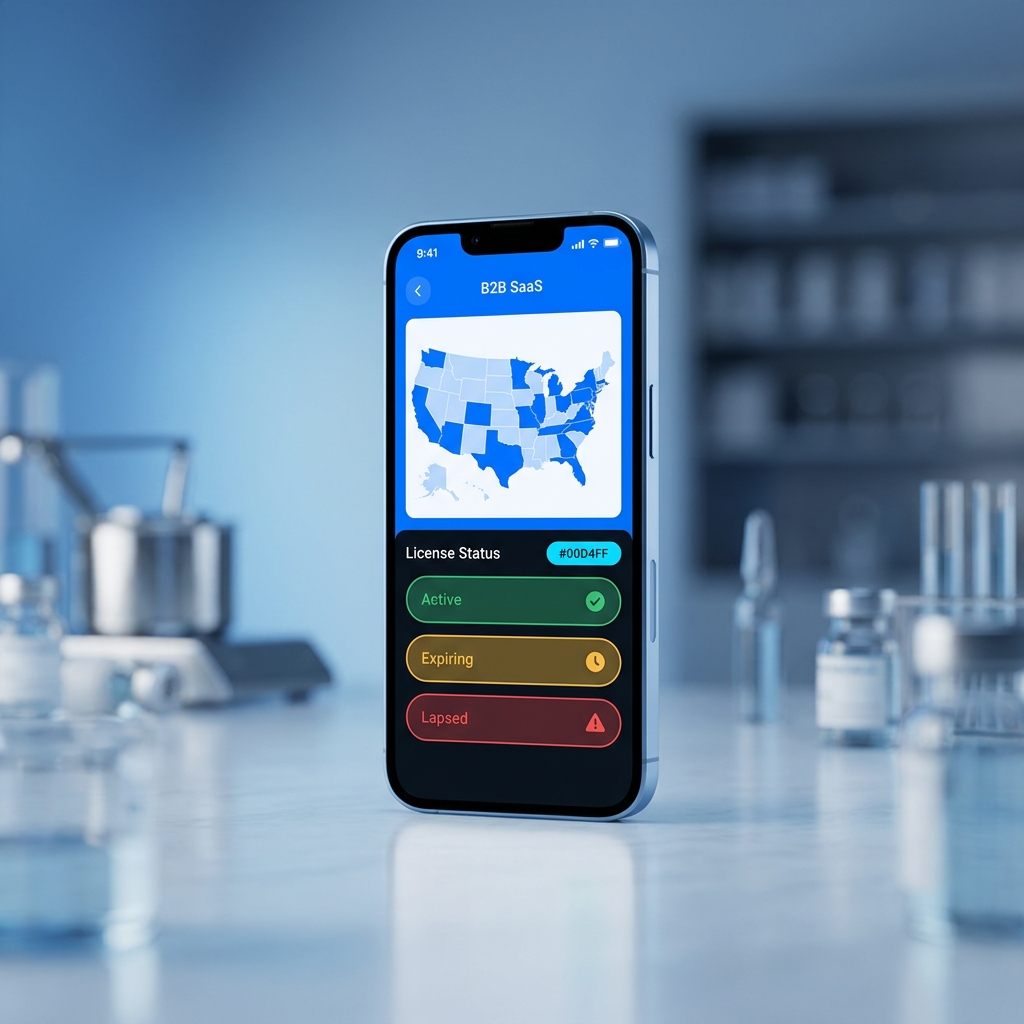
Catch lapsed customer licenses before they ship.
Workd License Check pulls every state board, NPI registry, and DEA records daily. Free audit on your top 100 accounts.
Run a Free License Audit