
How B2B Distributors Are Using AI Chatbots to Handle After-Hours Orders

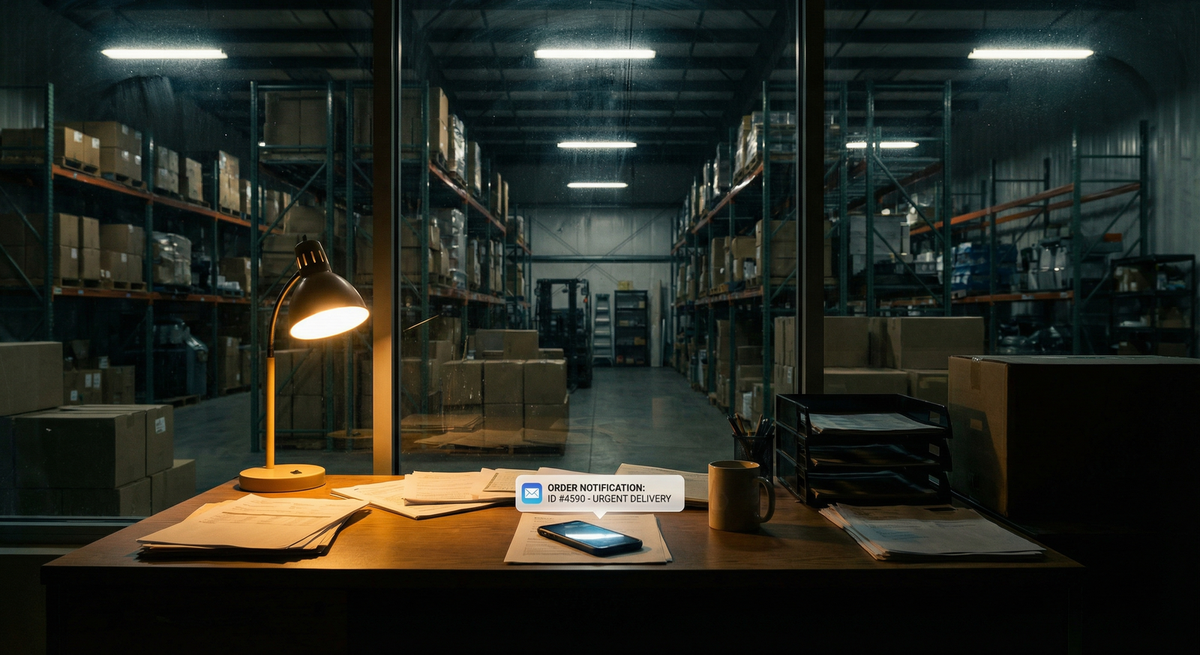
A 411 Locals study found that businesses answer only 37.8% of inbound calls. The rest go to voicemail, and in distribution, voicemail at 9 PM means a lost order. According to industry estimates, each unanswered call represents $100 to $1,200 in lost revenue. For a mid-market distributor fielding dozens of after-hours calls weekly, the math adds up to six figures annually left on the table.
The problem isn't new. Distribution customers, contractors, restaurant operators, facility managers, don't work banker's hours. They finalize orders after job sites close, during evening prep, or early mornings before their own staff arrives. For decades, the industry's answer was voicemail, a callback the next morning, and the hope that the customer hadn't already placed the order with a competitor who picked up the phone.
AI chatbots and voice agents are changing that equation. Not as experimental tools or innovation-lab projects, but as production systems that take orders, check inventory, and confirm pricing while the distribution company's lights are off.
The After-Hours Revenue Gap
The scale of the problem is larger than most distribution executives realize. Forrester predicted that by 2025, more than half of large B2B transactions, including those worth $1 million or more, would be processed through digital self-serve channels. A 2024 Forrester-commissioned survey found that 73% of B2B buyers expect the same convenient online experience they're accustomed to in consumer settings, from real-time stock updates to one-click reorders.
Meanwhile, McKinsey's 2024 B2B Pulse Survey found that 39% of B2B buyers are willing to spend over $500,000 per order through self-service digital commerce, up from 28% just two years earlier. The direction is unambiguous: B2B buyers want to transact when they want, how they want, without waiting for a sales rep to be available.
73% of B2B buyers expect the same convenient online experience they get in consumer settings, including the ability to order at any hour.
, Forrester, 2024
For distributors still relying on phone-and-fax ordering, this creates a compounding disadvantage. Every after-hours call that hits voicemail is a customer signaling demand that goes unmet. Over time, those customers migrate to competitors who offer digital ordering, or to the growing crop of AI-powered alternatives.
What AI After-Hours Ordering Actually Looks Like
The technology has moved beyond simple chatbot scripts. Modern AI ordering agents for distribution fall into two categories: text-based chatbots (deployed on websites, SMS, or messaging apps) and voice agents (handling inbound phone calls). Both have matured significantly in the past 18 months.
Text-based AI chatbots sit on a distributor's website or integrate with platforms like SMS and WhatsApp. A contractor visits the site at 10 PM, types "I need 200 feet of 3/4-inch copper pipe, delivery to the Greenfield job site Thursday," and the chatbot processes the request. It checks real-time inventory, applies the customer's contracted pricing, confirms delivery availability, and either places the order directly or queues it for morning confirmation.
The key difference from older chatbots is context. AI agents trained on a distributor's product catalog, customer pricing tiers, and order history can handle the ambiguity of real ordering conversations. When a customer says "same as last time but double the fittings," the system understands what "last time" means.
Voice AI agents handle the phone channel, still the dominant ordering method for many distribution verticals. When a customer calls after hours, instead of voicemail, they reach an AI agent that sounds conversational, understands product terminology, and can process a standard reorder in under three minutes. The agent pulls up the customer's account, confirms items and quantities, checks stock levels, and provides an order confirmation number.
The major distributors are already moving. According to Digital Commerce 360, Grainger, MSC Industrial Direct, Fastenal, and Watsco all made significant investments in digital commerce and AI capabilities through 2025. MSC Industrial Direct generated 63.7% of its total revenue through e-commerce channels in Q1 2025, proving that even in traditionally relationship-driven distribution, digital ordering at scale works.
The Integration Challenge
The technology to build an AI ordering agent exists today. The hard part isn't the AI, it's the integration layer underneath.
For an AI chatbot or voice agent to process a real distribution order, it needs access to several systems simultaneously: the ERP for inventory and pricing, the customer database for account-specific terms and credit status, the logistics system for delivery scheduling, and often a product information management system for catalog data. Most mid-market distributors run a mix of legacy and modern systems that weren't designed to expose data through APIs.
This is where many early implementations stall. A chatbot that can answer general questions but can't actually place an order is a FAQ page with extra steps. The value comes from end-to-end transaction capability, and that requires clean, real-time data pipes between the AI agent and core business systems.
Gartner's warning is relevant here: the firm predicted that 60% of supply chain digital adoption efforts will fail to deliver promised value by 2028, largely due to insufficient investment in training, change management, and, critically, the foundational data infrastructure that AI tools depend on.
MSC Industrial Direct generated 63.7% of total revenue through e-commerce in Q1 2025, up from 61.6% in 2022. The shift to digital ordering in distribution is accelerating, not plateauing.
Voice vs. Chat: Which Channel Matters More?
The answer depends on the customer base. In electrical and plumbing distribution, where contractors call from job sites with specific part numbers, voice AI agents capture orders that would otherwise be lost. In food distribution and industrial supply, where buyers often reorder standard SKU lists, text-based chatbots with quick-reorder functionality tend to be more efficient.
The most effective implementations offer both. A contractor who calls at 7 PM reaches a voice agent. A purchasing manager who logs in at 11 PM to adjust tomorrow's delivery uses the chatbot. The underlying AI system is the same, what changes is the interface.
What matters more than channel choice is coverage. The after-hours window, roughly 6 PM to 7 AM, plus weekends, represents 70% of the week. Distributors that are reachable during 100% of the week have a structural advantage over those available for only 30% of it.
What Mid-Market Distributors Should Do Now
Start with data, not the chatbot. Before evaluating AI vendors, audit the accessibility of your core systems. Can your ERP expose real-time inventory via API? Can customer pricing tiers be queried programmatically? If the answer is no, solving the data layer comes first.
Measure the gap. Track after-hours call volume, voicemail-to-callback conversion rates, and orders that arrive first thing in the morning via email or fax. These are the orders that could have been captured the night before. Quantify the revenue sitting in that gap.
Pick one channel and one customer segment. Don't try to deploy AI ordering across every channel and every product line simultaneously. Start with your highest-volume reorder customers on the channel they already use most, phone or web. Prove the ROI, then expand.
Keep humans in the loop, initially. The best early implementations route AI-processed orders to a morning confirmation queue. Sales reps review and approve before fulfillment. This builds trust internally while the system establishes accuracy. Over time, as confidence grows, the confirmation step can be removed for routine reorders.
Is your tech stack ready for AI?
Take our free AI Readiness Assessment
Check Your ReadinessThe Competitive Clock Is Ticking
The distribution companies investing in AI-powered ordering aren't doing it because it's trendy. They're doing it because buyer behavior has already shifted, and the gap between what customers expect and what most distributors offer is widening every quarter.
When Grainger reports that AI and digital tools are core to its competitive strategy, not a side project, mid-market distributors should take notice. The largest players are building always-on ordering capabilities that will become the baseline expectation. Distributors that can't match that availability will compete on price alone, which is a race most mid-market companies can't win.
The after-hours order isn't a nice-to-have. It's revenue that's already being demanded. The only question is whether it lands in your system or your competitor's.
Stay ahead of the curve
Get weekly insights on distribution technology and AI automation.
Go Deeper in the Resource Library
Get AI prompts, implementation templates, SOPs, and call scripts built for distribution companies. 47+ resources and growing, free access.
Access the Resource Library, FreeAlso free: Workdshop live sessions for distribution leaders
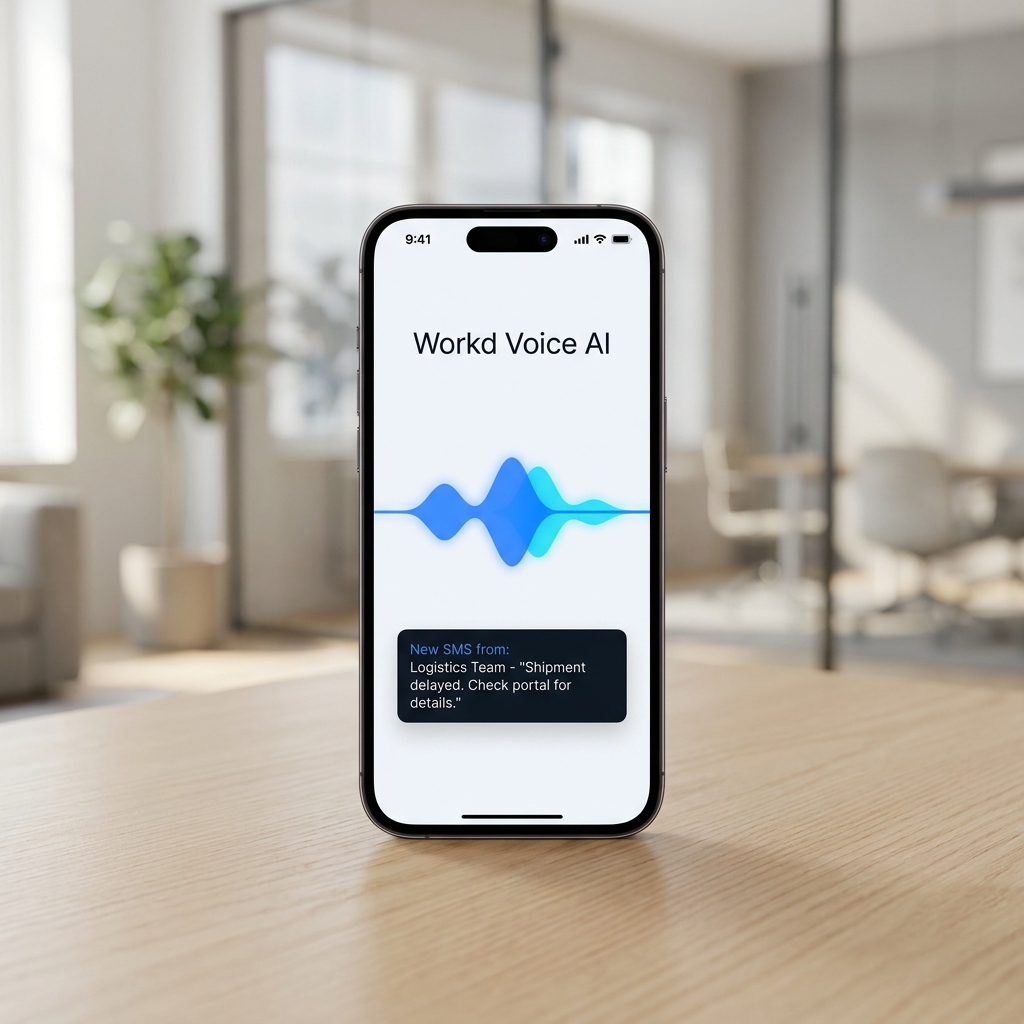
Never let another sales call go to voicemail.
AI answers every call 24/7, handles routine, escalates what matters. SMS handoff included.
Try the AI Voice Agent