
The 3PL Squeeze: Why Growing Distributors Are Pulling Fulfillment Back In-House

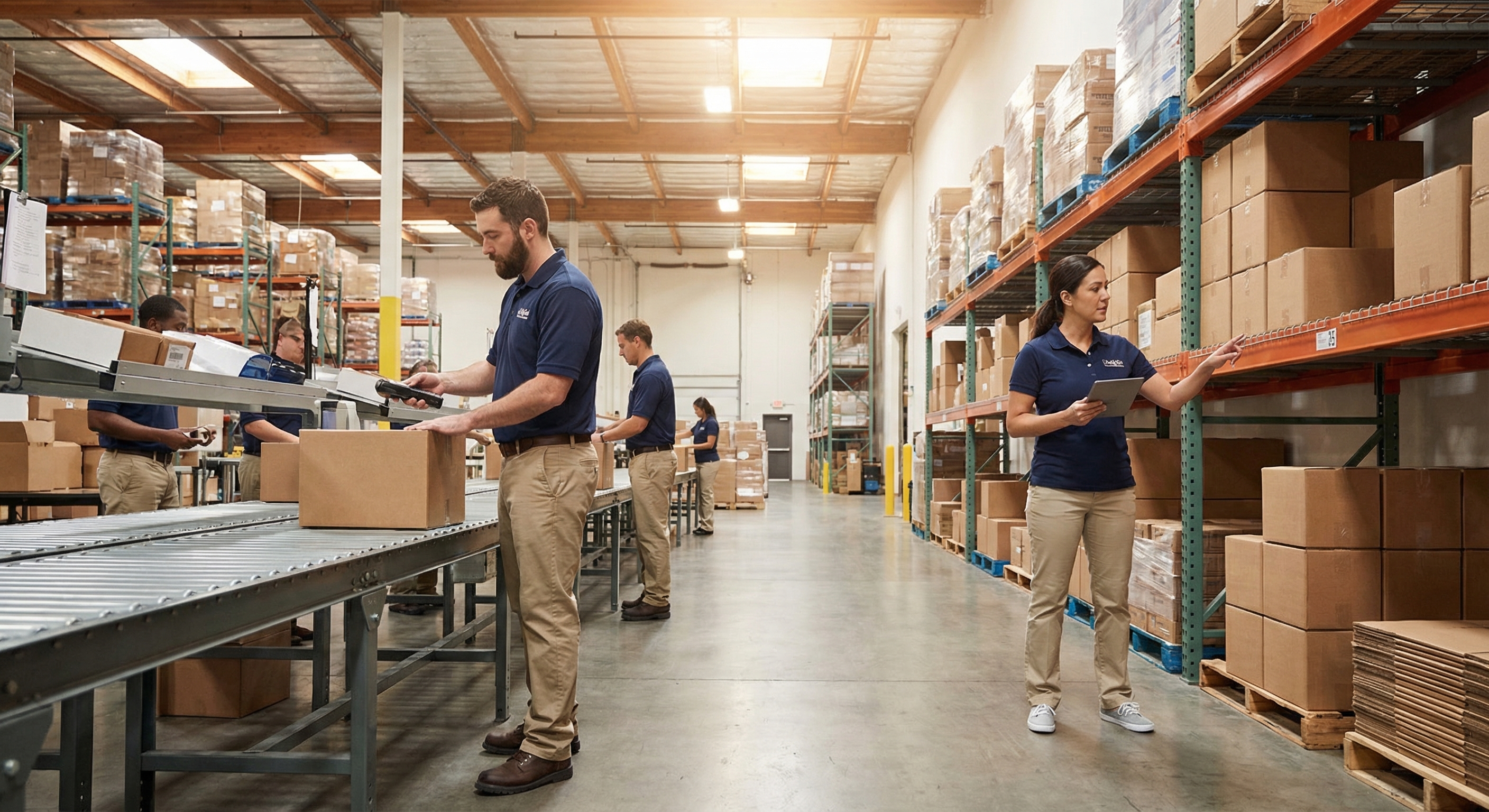
The average monthly minimum fee at third-party logistics providers jumped from $337.50 in 2024 to $517 in 2025 — a 53% increase in a single year, according to The Fulfillment Advisor's annual warehousing survey of more than 600 facilities. For mid-market distributors already operating on thin margins, that kind of escalation forces a hard question: Is outsourced fulfillment still worth it?
For a growing number of companies in the $10M–$500M revenue range, the answer is no. After years of leaning on 3PLs to handle warehousing, picking, packing, and shipping, distributors across pharmaceutical, electrical, HVAC, and industrial supply verticals are bringing operations back under their own roofs. The reasons go beyond sticker shock — though the economics alone are compelling.
The Cost Escalation That Started the Conversation
Warehousing costs per square foot have climbed steadily from $6.53 in 2017 to $9.47 in 2025, according to data from Warehousing & Fulfillment. But the real pain for mid-market distributors isn't the headline rate — it's the proliferating fee structure underneath it.
Nearly half of warehouses (48.6%) now charge long-term storage fees, up from just 23.3% in 2024, according to The Fulfillment Advisor's 2025 report. Add receiving fees, pick-and-pack charges, special handling surcharges, return processing costs, and technology access premiums, and the per-order cost of 3PL fulfillment can run $4 to $6 — or higher for complex B2B orders with kitting, lot tracking, or compliance documentation.
For a distributor shipping 500 orders per day at $5 per order in 3PL fees, that's $912,500 annually — before shipping costs, before surcharges, and before the hidden cost of service failures that erode customer relationships.
The global 3PL market reached an estimated $1.32 trillion in 2025, according to The Business Research Company. The U.S. segment alone hit $217.6 billion, per Mordor Intelligence. That growth reflects real value — 3PLs remain the right answer for many companies. But for mid-market distributors with stable, predictable volume and existing warehouse infrastructure, the math increasingly favors insourcing.
Service Inconsistency: The Problem Money Can't Fix
Cost is the catalyst, but control is the closer. When companies pull fulfillment in-house, the stated reasons almost always include some version of "we needed more control over the customer experience."
Frost Buddy, a drinkware brand, transitioned to in-house fulfillment after two and a half years with ShipBob. Co-founder Mitch Mammoser explained the decision bluntly: "For us, it strictly came down to cost of shipping and labor and having more control." DavidsTea insourced its fulfillment operations after sustained online order delays from its 3PL provider. The company's CFO Frank Zitella told analysts that "no other organization could match the entrepreneurial spirit and innovation required to ensure we improve the overall brand experience."
These are consumer brands, but the dynamic is identical — and arguably more acute — in B2B distribution. When a plumbing supply distributor ships the wrong fittings to a job site, the contractor doesn't just return the order. They call a competitor. In pharmaceutical distribution, a mislabeled lot or temperature deviation during fulfillment isn't a customer service issue — it's a compliance violation. The stakes of getting it wrong are higher, and the tolerance for inconsistency is lower.
Inbound Logistics' 2025 3PL Market Research Report found that 34% of shippers cited poor customer service as the top reason for a failed 3PL partnership. While that number has improved from 60% two years prior, it still represents a substantial population of companies whose outsourced logistics aren't meeting expectations.
What Changed: WMS Got Cheaper and Smarter
Five years ago, insourcing fulfillment for a mid-market distributor meant either bolting together spreadsheets and barcode scanners, or investing six figures in a warehouse management system designed for companies ten times their size. That constraint is gone.
The global WMS market is projected to grow from $4.57 billion in 2025 to $10.04 billion by 2030 at a 17.1% CAGR, according to MarketsandMarkets. A significant share of that growth is coming from cloud-native platforms designed specifically for companies that don't need — and can't afford — enterprise-grade complexity.
Platforms like Logiwa, ShipHero, and Cin7 now offer cloud-based WMS with real-time inventory visibility, automated pick path optimization, barcode scanning via consumer-grade mobile devices, and native shipping integrations — all for $500–$2,000 per month. That's a fraction of what the same capabilities cost a decade ago and well below what most mid-market distributors spend monthly on 3PL fees alone.
Deloitte's 2024 survey found that 49% of wholesalers and manufacturers experience order errors due to misaligned pricing or inventory data — a problem that insourced fulfillment with integrated WMS can directly address by keeping inventory, pricing, and order data in a single system.
The convergence is straightforward: the tools that used to justify outsourcing — because only 3PLs could afford them — are now accessible to the companies that outsourced in the first place.
See how much revenue you're leaving on the table
Take our 2-minute Revenue Leakage Assessment
Start AssessmentThe Hybrid Model: Not All-or-Nothing
The insourcing trend doesn't mean 3PLs are obsolete. For many distributors, the answer isn't full insourcing — it's selective insourcing of core fulfillment while maintaining 3PL relationships for geographic reach, seasonal overflow, or specialized handling.
A $50M electrical supply distributor in the Midwest, for example, might handle 80% of orders from its own warehouse using cloud WMS and light automation, while keeping a 3PL partnership on the West Coast for same-day delivery to California contractors. The economics work because the distributor controls its highest-volume, most-predictable workflows directly and only pays 3PL rates for the long-tail scenarios where outsourcing genuinely adds value.
Jeremy Tancredi, a partner in West Monroe's Operations Excellence practice, told Supply Chain Dive that companies need "a clear vision of what you're trying to get out of it, and not just thinking with a single-minded cost type of mindset." For B2B distributors, that vision often includes tighter integration between fulfillment data and the rest of the business — sales, inventory planning, accounts receivable — which is inherently easier when fulfillment runs on systems the distributor controls.
What Insourcing Actually Requires
Pulling fulfillment in-house isn't free, and it isn't simple. Companies that do it successfully tend to share three characteristics.
Sufficient volume to justify the fixed costs. Distributors shipping fewer than 50 orders per day typically won't see economics that beat a 3PL — the per-unit overhead of warehouse space, labor, and technology is too high at low volumes. Above 100–200 orders per day, the calculus shifts decisively.
Existing or accessible warehouse space. Many mid-market distributors already have warehouse capacity — the question is whether it's being used efficiently. Underutilized space in an existing facility can be repurposed for fulfillment with modest investment in racking, workstations, and conveyor systems.
Willingness to invest in systems integration. The biggest risk in insourcing isn't the warehouse — it's the data. When fulfillment moves in-house, every order, every inventory movement, every shipment status update needs to flow cleanly between the WMS, ERP, and customer-facing systems. Distributors that insource without solving the integration problem end up trading 3PL fees for a different set of inefficiencies.
The AI Layer That Wasn't Available Before
One factor accelerating the insourcing trend is the maturation of AI-powered operational tools that were previously the exclusive domain of large enterprises and sophisticated 3PLs.
Demand forecasting models that adjust reorder points based on seasonality, customer behavior, and market signals. Automated exception handling that flags anomalous orders before they ship. Intelligent pick-path routing that reduces warehouse travel time by 20–30%. These capabilities, once baked into proprietary 3PL platforms as justification for premium pricing, are increasingly available as standalone tools or embedded features in modern WMS and ERP platforms.
For mid-market distributors considering insourcing, AI doesn't just close the capability gap with large 3PLs — it eliminates one of the primary arguments for outsourcing. If a 50-person distributor can deploy the same demand intelligence and operational optimization that a 3PL uses across thousands of clients, the value proposition of outsourcing narrows to infrastructure and labor arbitrage. And as warehouse space and labor costs stabilize, even that advantage erodes.
What to Watch in 2026
Three trends will shape how this plays out over the next 12–18 months.
3PL consolidation and pricing pressure. Expect continued fee escalation as 3PLs themselves face rising labor and real estate costs. Providers serving the mid-market will need to justify their pricing against increasingly capable in-house alternatives.
WMS commoditization. Cloud WMS platforms will continue dropping in price while expanding functionality. The gap between what a $1,000/month WMS can do and what a $50,000 enterprise system can do will narrow further, making the technology argument for outsourcing weaker by the quarter.
Integration as the differentiator. Distributors that insource fulfillment successfully will be those that treat it as a data integration project, not just a warehouse project. The companies that connect fulfillment data to sales, finance, and customer experience systems — creating a single operational picture — will outperform both their outsourcing peers and competitors who insource without integrating.
The 3PL squeeze isn't a temporary market fluctuation. It's a structural shift driven by rising outsourcing costs, falling technology costs, and growing distributor demand for operational control. The companies that recognize this and act on it will find themselves with better margins, tighter customer relationships, and a fulfillment operation that works the way their business actually runs.
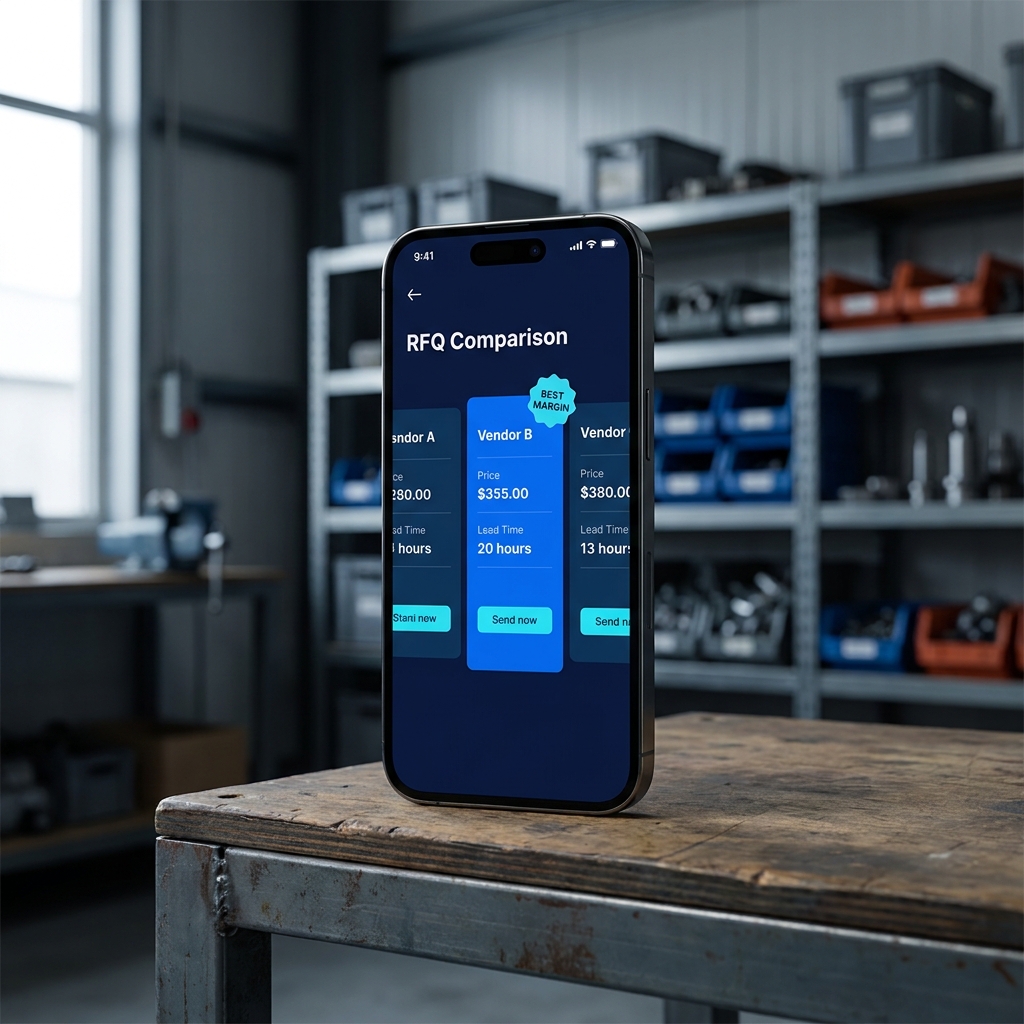
Stop losing margin in the email thread.
Vendor RFQs linked to customer quotes — sales sees real-time vendor pricing on every active quote.
Free Sourcing AuditStay ahead of the curve
Get weekly insights on distribution technology and AI automation.