
The Seven-Figure AI Agent Opportunity in B2B Distribution

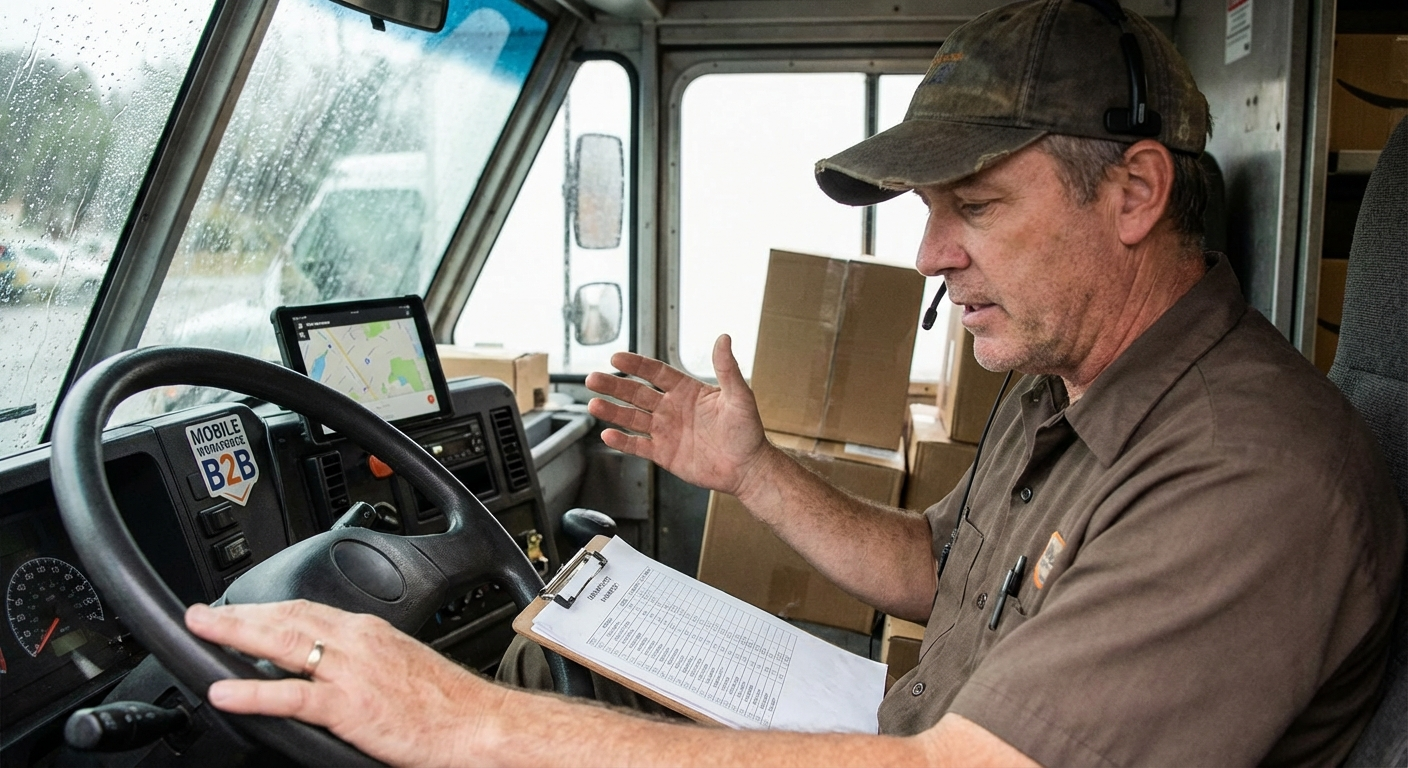
Inside sales reps at B2B distributors spend roughly 30% of their time actually selling. The rest disappears into data entry, order tracking, internal meetings, and chasing information across disconnected systems. According to the Salesforce State of Sales Report, that ratio has barely budged in five years.
AI agents are changing the math. Not by replacing reps, but by absorbing the repetitive, scriptable work that keeps them from customers. And for distributors who deploy them strategically, the revenue impact is reaching seven figures.
The market is moving fast.
According to Google Cloud's 2025 ROI of AI Report, 52% of executives now have AI agents deployed in production. Enterprises report average returns of 171% from agentic AI deployments, with U.S. companies averaging 192%, per Capgemini's 2025 analysis.
Where the ROI Actually Lives
The distributors seeing real returns aren't automating everything at once. They're targeting specific, high-volume tasks where AI agents excel: scripted conversations at scale.
The qualifying questions are straightforward: Can the task be trained? Can it be scripted? Does it follow a repeatable pattern? If a company could onboard a new associate to handle it within a week, an AI agent can likely do it faster, more consistently, and without fatigue.
The highest-impact use cases in distribution fall into three categories:
Outbound lead qualification. A human rep makes 40-60 calls per day. An AI agent makes hundreds. Even at lower conversion rates per call, the volume advantage is dramatic. McKinsey's research on sales automation found that high-performing reps spend 20-25% more time with customers than their peers — AI agents create that time by handling qualification at scale.
Dormant account reactivation. Most distributors have hundreds of accounts that went quiet in the past 12-24 months. These accounts already know the company, already have purchasing history, and often just need consistent outreach to re-engage. AI agents can work through these lists methodically — calling, emailing, following up — until the account responds or is definitively closed.
AR collections. Late payments are a perennial problem in distribution. AI agents can send payment notices, make follow-up calls, offer payment plans, and capture new payment methods — escalating to humans only when negotiation or judgment is required. The cash-flow impact alone can reach six figures annually for mid-market distributors.
The Economics: Why the Numbers Work
The cost comparison between human and AI appointment-setting is stark.
Appointment setter cost comparison
A human appointment setter earning $60,000/year costs roughly $240 per working day. With typical success rates, the cost per booked appointment runs approximately $25.
An AI agent doing the same work on utility pricing (cents per minute of conversation) brings the cost per booked appointment down to roughly $5-6 — a 75-80% reduction.
Even if the AI converts at half the rate per conversation, the volume advantage — hundreds of calls versus dozens — produces a net gain of 200-300% in total appointments.
This math holds across use cases. The underlying dynamic is simple: AI agents cost a fraction of human labor per interaction and can operate at volumes no human team can match. The return comes from volume, not from individual interaction quality.
For a mid-market distributor with $50-200M in revenue, deploying AI agents across two or three use cases — lead qualification, account reactivation, and collections — can realistically produce $500K to $1.5M in incremental revenue and recovered cash flow within the first year.
AI Training Built for B2B Operations
Free 1-hour live sessions on AI automation for B2B — voice AI, CRM, operations, and more. Join on Zoom with live demos and Q&A.
Check It OutWhat the Agents Actually Do
An AI voice agent in distribution doesn't operate like a chatbot reading a script. Modern agents built on large language models handle natural conversation — responding to questions, navigating objections, and adapting when the prospect goes off-script — while following a defined workflow underneath.
Consider a collections agent. The workflow looks like this: send a payment notice via email, then call if no response within three days. On the call, the agent can reference the specific invoice, offer a payment plan, capture a new payment method, or schedule a callback. If the customer raises a dispute or asks for terms the agent can't authorize, it escalates to a human collector with full context.
The same logic applies to appointment setting. A craft brewery deploying AI agents to book tastings at restaurants reported that agents handled scheduling conflicts, answered product questions, and confirmed logistics — all in natural conversation. The agent booked appointments at a rate that would have required three or four human callers to match.

The Scaling Advantage for Mid-Market
The AI agent market reached an estimated $7.6-7.8 billion in 2025 and is projected to exceed $10.9 billion in 2026, growing at over 45% annually, according to industry analysts. But the real story for mid-market distribution isn't market size — it's the competitive leveling effect.
Traditionally, scaling a sales or collections team meant proportional increases in headcount, training, management overhead, and office space. A $75M distributor competing against a $500M competitor couldn't match their 40-person inside sales team.
AI agents change that equation. They scale like a utility: need twice the outbound capacity, pay for twice the usage. No hiring, no training lag, no seasonal staffing headaches. A distributor running a five-person sales team can now produce outbound volume comparable to a team of 20 — matching larger competitors' reach without matching their payroll.
The Data Foundation
AI agents are only as useful as the data they can access. An agent that can't look up a customer's order history, check inventory, or reference pricing is just a phone dialer with a script.
According to MuleSoft's 2025 Connectivity Benchmark, organizations average 897 applications but only 29% are integrated. That gap is the primary bottleneck for AI agent deployment in distribution.
The agents need access to lead and customer records, product catalogs and inventory levels, order and payment history, and calendar systems for scheduling. The integration work — connecting these data sources so agents can query them in real time — is where most of the implementation effort goes. The agent logic itself is increasingly commoditized; the data connections are what determine whether an agent is useful or not.
How Much Revenue Is Slipping Through the Cracks?
Free 5-minute assessment identifies where your distribution business is losing 5-15% of potential revenue.
Take the Revenue Leakage AssessmentCapabilities Worth Knowing About
Two features that distributors consistently underestimate:
Multilingual operation. Modern AI voice agents can converse fluently in 70+ languages, then produce English summaries for internal teams. For distributors serving multilingual customer bases, this eliminates a communication barrier that previously required bilingual staff or left revenue on the table.
Voice-based CRM capture. Outside sales reps — the ones who generate the most revenue but enter the fewest CRM notes — can call in between appointments to dictate account summaries, flag risks, and set follow-ups. Notes go directly into the system. One distributor reported that a veteran rep who had never voluntarily used their CRM started capturing detailed notes via voice after every customer visit.
Where to Start
The companies generating real returns aren't pursuing AI for its own sake. They're identifying one or two high-volume, high-value tasks where the economics clearly favor automation, connecting the necessary data, and measuring results against specific revenue or efficiency targets.
Lead qualification and dormant account reactivation are the most common starting points — both are high-volume, low-complexity, and directly tied to revenue. Collections is the next logical step, with clear cash-flow metrics.
The technology is mature enough that the question is no longer whether AI agents work in distribution. The question is which use cases to deploy first, and how quickly the data integration can be completed.
Go Deeper in the Forge Vault
Get AI prompts, implementation templates, SOPs, and call scripts built for distribution companies. 47+ resources and growing — free access.
Access the Forge Vault — FreeAlso free: Live virtual training sessions — Thursdays 1 PM ET