
AI in Pharma Distribution: Where Compliance and Automation Intersect

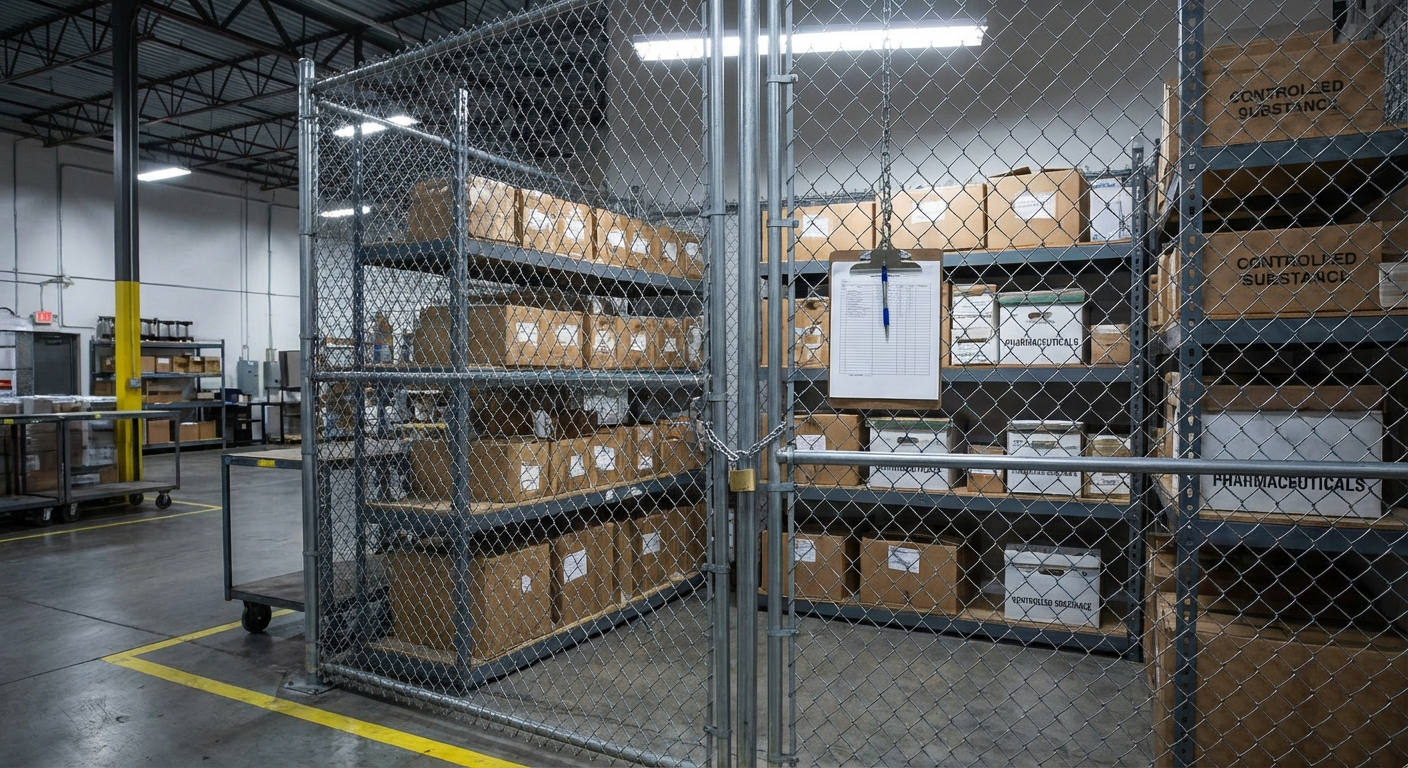
The Drug Supply Chain Security Act hit full enforcement for wholesale distributors on August 27, 2025. The FDA has intensified inspection activities, issuing multiple 483 warning letters to manufacturers and distributors, according to IQVIA's compliance analysis. Small dispensers have until November 27, 2026, but for the big three—McKesson, Cencora (formerly AmerisourceBergen), and Cardinal Health, who control over 90% of U.S. drug distribution with a combined $850 billion in revenue—compliance is no longer a future obligation. It's an operational reality being enforced now.
Against this backdrop, pharmaceutical distributors are evaluating AI with a question that doesn't arise in general distribution: how do you automate operations in an environment where a single error can trigger regulatory action, product recalls, or criminal liability?
The Regulatory Landscape in 2026
DSCSA interoperability requirements mean every transaction, every shipment, and every product unit must be tracked, verified, and documented through an electronic, interoperable system. But DSCSA is only one layer. Pharmaceutical distributors simultaneously navigate:
- State Board of Pharmacy licensing—50+ separate licensing regimes with varying requirements
- DEA oversight—suspicious order monitoring and controlled substance tracking with strict reporting obligations
- FDA cold chain requirements—temperature monitoring and excursion documentation for biologics and temperature-sensitive products
- Payer and manufacturer audits—documentation requirements that can trigger months-long reviews
Each of these regulatory bodies operates independently. A single transaction may need to satisfy requirements from all of them simultaneously. That's the complexity AI needs to navigate—and it's exactly the kind of multi-dimensional compliance monitoring where AI outperforms manual processes.
McKesson partnered with Microsoft in April 2025 to implement Azure and AI solutions for inventory management and supply chain operations, according to Technavio's market analysis—a signal that even the largest distributors are investing in AI-augmented compliance.
Where AI Is Delivering Results
DSCSA verification and exception management. The interoperability requirements generate a massive volume of verification transactions. Most proceed normally, but exceptions—mismatched serial numbers, unverifiable product identifiers, suspect product alerts—require investigation and documentation. AI pattern recognition classifies exceptions into known categories and routes them automatically. Healthcare Distribution Alliance (HDA) reporting suggests distributors using automated exception handling are resolving verification issues 60-70% faster while producing more complete audit documentation.
Suspicious order monitoring. DEA requires wholesale distributors to identify and report suspicious orders for controlled substances. The challenge is consistency: manual review introduces subjective judgment that varies by reviewer and shift. AI applies the same analysis criteria to every order, every time—flagging unusual quantities, atypical customer ordering patterns, and geographic anomalies. The documentation it generates is comprehensive and consistent, which matters when DEA audits the process.
Cold chain monitoring. Traditional temperature monitoring is reactive—excursions are discovered after products ship. AI-powered monitoring analyzes temperature data, weather forecasts, carrier performance history, and packaging specifications to predict excursion risk before shipments leave the facility. When excursions do occur, AI distinguishes between sensor noise and genuine temperature events, reducing false positives that waste investigation resources.

Credential and license monitoring. Distributors can only sell to authorized trading partners. Keeping track of license expirations, registration lapses, and DEA authorization changes across thousands of customers is a constant administrative burden. AI monitors credential databases continuously and alerts before a trading partner's authorization lapses—preventing sales that would constitute compliance violations.
AI Training Built for B2B Operations
Free 1-hour live sessions on AI automation for B2B — voice AI, CRM, operations, and more. Join on Zoom with live demos and Q&A.
Check It OutThe Non-Negotiable: Auditability
The pharmaceutical industry's relationship with AI differs fundamentally from other distribution verticals because of one requirement: every automated decision must be explainable and auditable.
When the FDA or DEA reviews your operations, "the AI decided" is not an acceptable answer. Regulators need to see what data the system evaluated, what criteria it applied, what conclusion it reached, and why. This means pharmaceutical AI implementations require:
- Complete decision logging—every AI-generated action documented with inputs, reasoning, and outputs
- Model version control—the ability to reproduce any historical decision using the model version that was active at the time
- Human-readable explanations—not just log files, but documentation that a compliance officer or auditor can follow
- Defined authority boundaries—clear rules about what AI can decide autonomously, what requires human confirmation, and what it cannot touch
The authority framework matters most in controlled substance operations. AI can flag suspicious orders for review. It can generate the documentation. It cannot approve controlled substance shipments or override DEA-related holds. That boundary needs to be architectural, not policy—built into the system, not just written in a procedure manual.
Implementation: Compliance-First, Not AI-First
The distributors succeeding with AI in pharmaceutical operations share a common approach: they start with compliance requirements and work backward to AI capabilities, rather than starting with AI features and trying to make them compliant.
In practice, this means:
Validation before deployment. AI systems affecting compliance-sensitive processes go through validation protocols similar to what pharmaceutical manufacturers use for production systems—documented test cases, performance thresholds, change control procedures.
Integration with quality management. AI-identified issues feed directly into existing CAPA (Corrective and Preventive Action) processes. AI-generated documentation flows into the quality management system. AI performance metrics appear in management reviews. The AI doesn't exist in a parallel universe—it plugs into the compliance infrastructure that's already in place.
Graduated automation. Smart implementations start with AI as an assistant—flagging, recommending, drafting documentation—and expand automation authority as the system proves reliable. Full automation of routine verifications might happen within months; controlled substance operations may always require human-in-the-loop.
The Complete AI Implementation Guide for Distribution
9 chapters covering everything from readiness assessment to deployment. Built from real implementations, not theory.
Read the Free GuideQuestions to Ask AI Vendors
Pharmaceutical distributors evaluating AI solutions should push past generic demos. Specific questions that separate vendors with real pharma experience from those adapting general-purpose tools:
- "Walk me through how your system handles a DSCSA verification exception." The answer should reference specific exception types, investigation workflows, and documentation requirements—not generic "we handle compliance" language.
- "Show me the audit trail for an automated decision." If the vendor can't produce a complete, human-readable record of an AI decision on the spot, their logging isn't production-ready.
- "How does your suspicious order monitoring differ from our current manual process?" Look for specific DEA criteria, consistency advantages, and documentation improvements—not vague AI promises.
- "What happens when your AI is wrong?" The answer should include specific escalation paths, error documentation, and feedback mechanisms that prevent recurrence.
The Bottom Line
AI in pharmaceutical distribution isn't inherently risky. Poorly implemented AI—without auditability, without defined authority boundaries, without compliance-first architecture—is risky. AI that strengthens compliance monitoring, improves documentation completeness, and applies consistent criteria to every transaction isn't just safe. In a post-DSCSA enforcement environment, it's becoming necessary to operate at scale.
The distributors implementing AI thoughtfully—with compliance as the starting point, not an afterthought—are finding that automation and compliance aren't in tension. They're complementary.
Stay Ahead of the Curve
Get weekly insights on AI, automation, and B2B operations delivered to your inbox.
Go Deeper in the Forge Vault
Get AI prompts, implementation templates, SOPs, and call scripts built for distribution companies. 47+ resources and growing — free access.
Access the Forge Vault — FreeAlso free: Live virtual training sessions — Thursdays 1 PM ET