
Multilingual Voice AI Is Becoming Table Stakes in Distribution

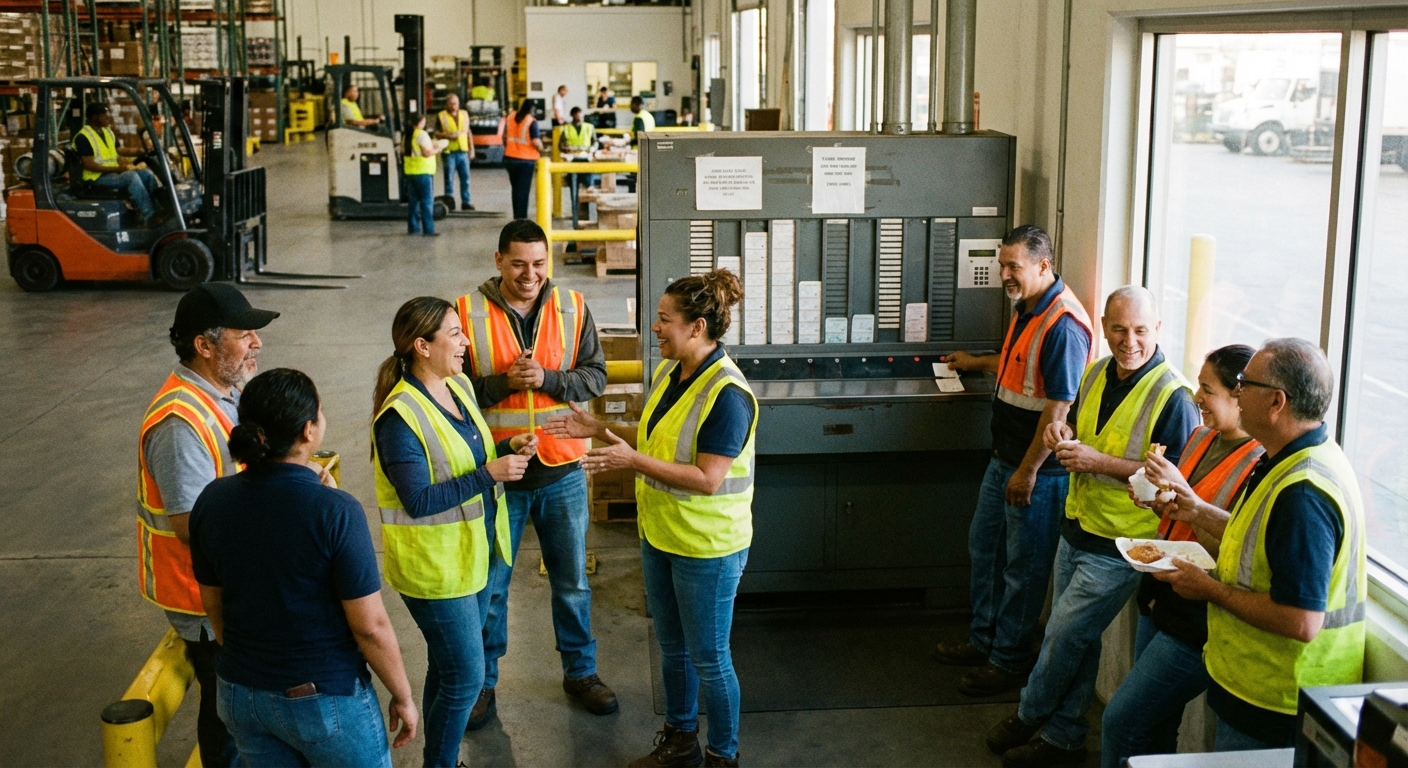
More than 68 million people in the United States speak Spanish at home, according to the U.S. Census Bureau's American Community Survey. In states like Texas, California, and Florida—where distribution networks are densest—that number can exceed 30% of the local population. Yet the overwhelming majority of distribution software, IVR systems, and customer service channels operate exclusively in English.
That gap is starting to cost real money. As voice AI matures—80% of businesses plan to deploy AI-driven voice technology in customer service by the end of 2026, per Verloop's industry survey—multilingual capability is shifting from a nice-to-have to a competitive requirement.
The Revenue Impact of Language Barriers
The problem isn't abstract. Foodservice distributors in South Florida serve restaurants where the kitchen staff, the owner, and the purchasing manager all prefer Spanish. Building materials distributors in Texas sell to contractors whose crews communicate in Spanish on the job site. Industrial suppliers in Southern California cover territories where Mandarin, Vietnamese, and Spanish are spoken alongside English.
Companies that offer native-language customer service consistently report significantly higher retention rates among non-English-speaking customers compared to English-only competitors serving the same demographics.
When a Spanish-speaking restaurant owner calls to reorder and encounters an English-only IVR, three things happen: the call takes longer, the order is more likely to contain errors, and the customer starts looking for a distributor who makes it easier. Multiply that friction across hundreds of accounts and the revenue leakage becomes significant.
The traditional solution—hiring bilingual customer service reps—works until someone calls in sick, until you expand into a region with a Haitian Creole-speaking population, or until you need coverage at 6 AM when the warehouse opens but the bilingual rep doesn't start until 9.
What Changed in the Technology
Two years ago, multilingual voice AI meant clunky translation delays and robotic output. The technology has moved fast. Modern speech models from providers like OpenAI (Whisper), Google (USM), and Meta (SeamlessM4T) now handle real-time multilingual conversation with near-native fluency.
The key advances that matter for distribution:
- Direct language understanding. Current models process Spanish, French, or Mandarin natively rather than translating to English first. This eliminates the awkward lag and preserves context that translation strips away.
- Code-switching recognition. Bilingual speakers commonly mix languages mid-sentence ("I need twenty cases of the tomate grande, the same as last week"). Modern speech models handle this without breaking.
- Domain vocabulary training. Models can be fine-tuned on distribution-specific terminology—product codes, unit measures, trade terms like "net-30" or "FOB destination"—in multiple languages simultaneously.
- Dialect awareness. Mexican Spanish differs from Puerto Rican Spanish. Quebec French differs from Parisian French. The best current models distinguish these variations and respond appropriately.
Free Live AI Sessions for B2B
Free 1-hour live sessions on AI automation for B2B — voice AI, CRM, operations, and more. Join on Zoom with live demos and Q&A.
See Upcoming SessionsThe Field Rep Angle
Customer-facing service gets most of the attention, but there's an equally important internal use case: multilingual field sales teams.
The Bureau of Labor Statistics reports that 27% of warehouse and logistics workers in the U.S. speak a language other than English at home. In distribution hubs like Los Angeles, Houston, and Miami, that number is significantly higher. Field reps covering these territories regularly code-switch between English and Spanish (or other languages) throughout the day.
When voice AI supports multiple languages, it supports the rep's natural workflow. A bilingual rep can dictate visit notes in whichever language feels faster. They can pull up account information by asking in Spanish. They don't have to mentally translate to interact with their CRM or order entry system.

This isn't about accommodation—it's about speed. A rep who can speak naturally to their tools closes the loop faster, logs more complete notes, and spends more time selling.
What Implementation Looks Like
Deploying multilingual voice AI in a distribution environment isn't as simple as flipping a switch, but it's no longer a multi-year project either. The typical implementation involves three layers:
Language detection and routing. The system automatically identifies which language a caller is speaking within the first few seconds—no "press 1 for English" menus. If the detected language isn't supported, it gracefully routes to a human agent or offers a callback.
Domain-specific training. Generic multilingual models know Spanish, but they don't know your product catalog in Spanish. This layer involves training on your SKU names, industry terminology, and common customer phrases in each target language. Most vendors can complete this training in two to four weeks using existing order history and call recordings.
Full feature parity. Whatever a customer can accomplish in English—checking order status, placing a reorder, asking about product availability—needs to work identically in every supported language. Partial coverage creates a worse experience than no coverage, because it sets expectations the system can't meet.
Is Your Business Actually Ready for AI?
Cut through the hype. This 5-minute assessment evaluates your data, processes, team, and tech stack—and gives you an honest roadmap.
Take the AI Readiness AssessmentThe Competitive Window
Most mid-market distributors still operate English-only systems. That's starting to change. Gartner predicts that 40% of enterprise applications will feature task-specific AI agents by the end of 2026, up from less than 5% in 2025. Multilingual capability is a standard feature of most new voice AI deployments.
The distributors moving first are getting two advantages: they're capturing customers who were underserved by English-only competitors, and they're building the domain-specific language training data that makes their systems more accurate over time. Both advantages compound.
The question for every distributor serving multilingual markets isn't whether to add language support. It's whether to do it now—while it's a differentiator—or later, when it's just the cost of entry.
Stay Ahead of the Curve
Get weekly insights on AI, automation, and B2B operations delivered to your inbox.
Go Deeper in the Forge Vault
Get AI prompts, implementation templates, SOPs, and call scripts built for distribution companies. 47+ resources and growing — free access.
Access the Forge Vault — FreeAlso free: Live virtual training sessions — Thursdays 1 PM ET