
Why Mobile-First Matters in Distribution (And How to Get There)

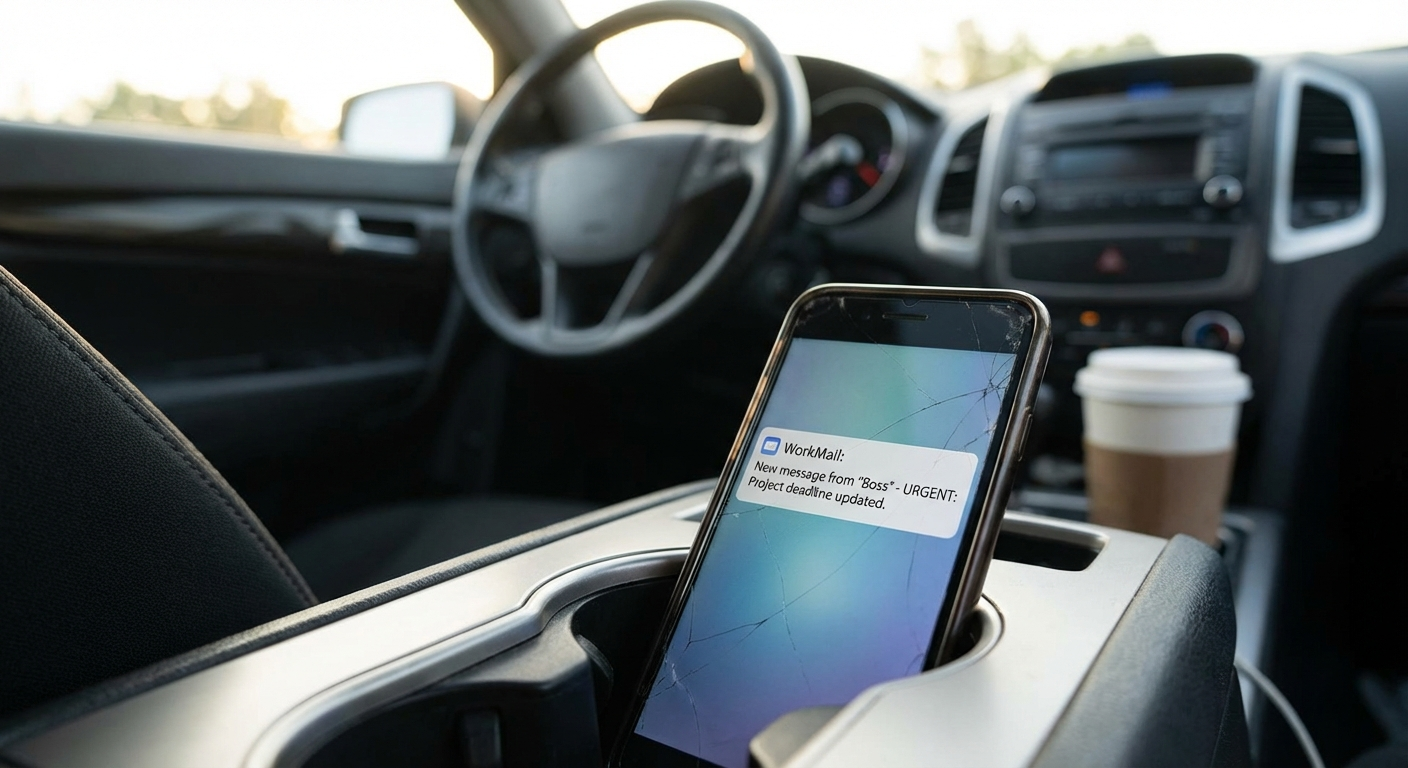
The International Data Corporation estimated the U.S. mobile worker population at 93.5 million in 2024 — roughly 60% of the workforce. In distribution, that percentage is even higher. Sales reps are in customer aisles. Drivers are on the road. Warehouse teams move between bays. Service technicians work on customer sites. The work happens away from desks.
Yet most distribution software is still designed for people sitting at computers. The cost of this mismatch is measurable: delayed order entry, double data entry, incomplete CRM records, and a competitive disadvantage against firms whose reps can submit orders from a parking lot.
average productivity increase from mobile workforce management tools
According to World Metrics research, organizations that adopt mobile workforce management solutions see an average 30% productivity improvement — driven by real-time data capture, eliminated re-keying, and faster information flow.
The Real Cost of Desktop-Bound Systems
When business software requires a desktop, the consequences cascade through daily operations.
Eight-hour information delays. A sales rep finishes a customer visit at 10 AM. The order doesn't get entered until they're back at the office at 6 PM. Fulfillment can't start until the data arrives, which means a same-day shipment opportunity becomes a next-day delivery — or later.
Double data entry. The rep takes notes on paper during the visit, then re-keys everything into the system hours later. Every dual entry is a chance for errors — wrong quantities, missed line items, incomplete customer notes. Research consistently shows that manual transcription introduces errors at rates between 1% and 4% per field.
Degraded data quality. Entering information hours after the fact means details get forgotten or simplified. A nuanced conversation about expanding product lines becomes "followup needed." The CRM fills with entries too vague to act on.
Worker frustration and turnover. Field teams spend mornings with customers and evenings with computers. That's a formula for burnout. Distribution companies already face tight labor markets — adding unnecessary admin work to field roles makes retention harder.
Competitive disadvantage. A competitor whose rep submits orders from the parking lot ships that afternoon. A competitor whose reps log visit notes in real time has better customer intelligence. In distribution, where relationships and responsiveness drive loyalty, these differences compound.
The math is straightforward: a mid-size distributor with 20 field employees losing two hours per day each to desktop-required tasks wastes approximately 10,000 hours per year. At fully loaded labor costs, that's a six-figure annual drain — before counting the revenue impact of delayed orders and degraded customer data.
What Mobile-First Actually Means
"Mobile-first" is not "we have an app." Most distribution ERPs offer a mobile application — typically a scaled-down, afterthought version of the desktop interface that's painful to use on a phone.
True mobile-first means the phone experience is the primary design target, not a port. It means complete functionality — anything that can be done on desktop can be done on mobile. It means thumb-friendly interfaces, minimal typing, smart defaults, and quick actions designed for how people actually use phones. It means offline capability, because cellular coverage in warehouses and rural delivery areas is unreliable. And it means performance: sub-second load times, not a web app that takes 12 seconds to render a customer record.
The test is simple: could your field team do their entire job on their phone without ever touching a desktop? If not, the system isn't mobile-first — it's desktop-first with a mobile add-on.

The Four Payoffs
Real-time information flow. Orders enter the system as they're placed. Inventory updates as it moves. Customer notes are captured in the moment. The gap between events happening and systems reflecting them shrinks from hours to seconds. For distribution, where same-day fulfillment increasingly determines whether a customer stays or switches, this speed matters.
Error reduction. Capture data once, at the source, in the moment. No transcription from paper. No remembering details hours later. No re-keying between systems. Fewer shipping errors, more accurate billing, more complete customer records.
Productivity reallocation. Eliminating the evening admin ritual doesn't just save time — it changes what field teams can do with their day. More customer visits, more orders, more relationship building during business hours instead of data entry after hours. The 30% productivity improvement that World Metrics found isn't about working faster — it's about eliminating work that shouldn't exist.
Better employee experience. Nobody got into sales or delivery to do data entry. Mobile tools that actually help — rather than burden — improve satisfaction and reduce turnover. In an industry where experienced reps carry irreplaceable customer relationships, retention isn't just an HR metric. It's a revenue metric.
Your Competitors Are Automating. Are You?
6 live sessions. Real AI tools. Walk away with workflows actually running in your business — not just slides about what AI could do.
Learn MoreThe Roadmap to Mobile-First
Phase 1: Honest assessment. What percentage of field activities can be done on mobile today? What's the quality of that experience? Talk to your field teams directly — they know what works, what's painful, and what workarounds they've invented. Most managers are surprised by the gap between what they think field teams can do on mobile and what actually works.
Phase 2: Prioritize by pain. Focus on the use cases that are most frequent, most time-sensitive, and most painful when delayed. In distribution, that's typically order entry, customer visit logging, delivery confirmation, and inventory checking. These are also the use cases where mobile-first delivers the fastest ROI.
Phase 3: Evaluate realistically. Three paths exist: improve the current system's mobile experience (sometimes possible, often disappointing), add mobile-specific tools integrated with core systems (fastest path for most), or replace the core platform with one designed mobile-first (biggest change, but eliminates the root problem). The right choice depends on how much life the current ERP has left.
Phase 4: Pilot with influential users. Select three to five tech-comfortable, socially influential field employees. Give them the mobile tools for real work — not a demo environment. Collect detailed feedback over 30 days. Their experience will determine whether the rest of the team embraces or resists the rollout.
Phase 5: Change management. Mobile tools succeed or fail based on adoption. Communicate the why (this makes your job easier, not harder), train properly (ongoing, not one-time), lead by example (managers use the tools too), and celebrate early wins visibly.
Common Objections — and Why They're Wrong
"Our people aren't tech-savvy." Your field teams use smartphones in their personal lives — texting, navigation, banking, social media. If business apps are hard to use, that's a software design problem, not a user capability problem. The gap is between consumer app quality and enterprise app quality, not between users and technology.
"Security concerns." Modern mobile device management (MDM) provides enterprise-grade security — remote wipe, encryption, app containerization, biometric authentication. In many cases, a managed mobile device is more secure than a shared desktop in a warehouse office.
"We tried mobile and it didn't work." This almost always means the mobile experience was poor — a clunky desktop port that frustrated users — not that mobile as an approach doesn't work. The distinction matters. A well-designed mobile-first tool overcomes the resistance that a bad mobile app created.
The field service management market is growing at 14%+ annually
According to GM Insights' 2025 analysis, the global field service management market — driven largely by mobile-first tools — exceeded $6 billion in 2025 and is growing at over 14% CAGR. The shift from desktop to mobile-first field operations isn't a trend. It's a market restructuring.
What to Look For
When evaluating mobile-first platforms for distribution, the criteria that matter most:
- The mobile app isn't a port of desktop — desktop is an extension of mobile
- Full functionality on mobile, not a feature subset
- Designed for field workflows by people who understand distribution
- Full offline capability with intelligent sync when connectivity returns
- Continuous improvement based on actual field usage data
The ultimate test: do field teams want to use the app, or do they have to? If adoption requires mandates, the tool isn't good enough. If field teams voluntarily abandon their paper workarounds for the app, you've found the right one.
New to Distribution Technology? Start Here
Our getting-started guide covers the basics without the jargon.
Read the GuideGo Deeper in the Forge Vault
Get AI prompts, implementation templates, SOPs, and call scripts built for distribution companies. 47+ resources and growing — free access.
Access the Forge Vault — FreeAlso free: Live virtual training sessions — Thursdays 1 PM ET