
Build vs. Buy: Why Most Distributors Get the Software Decision Wrong

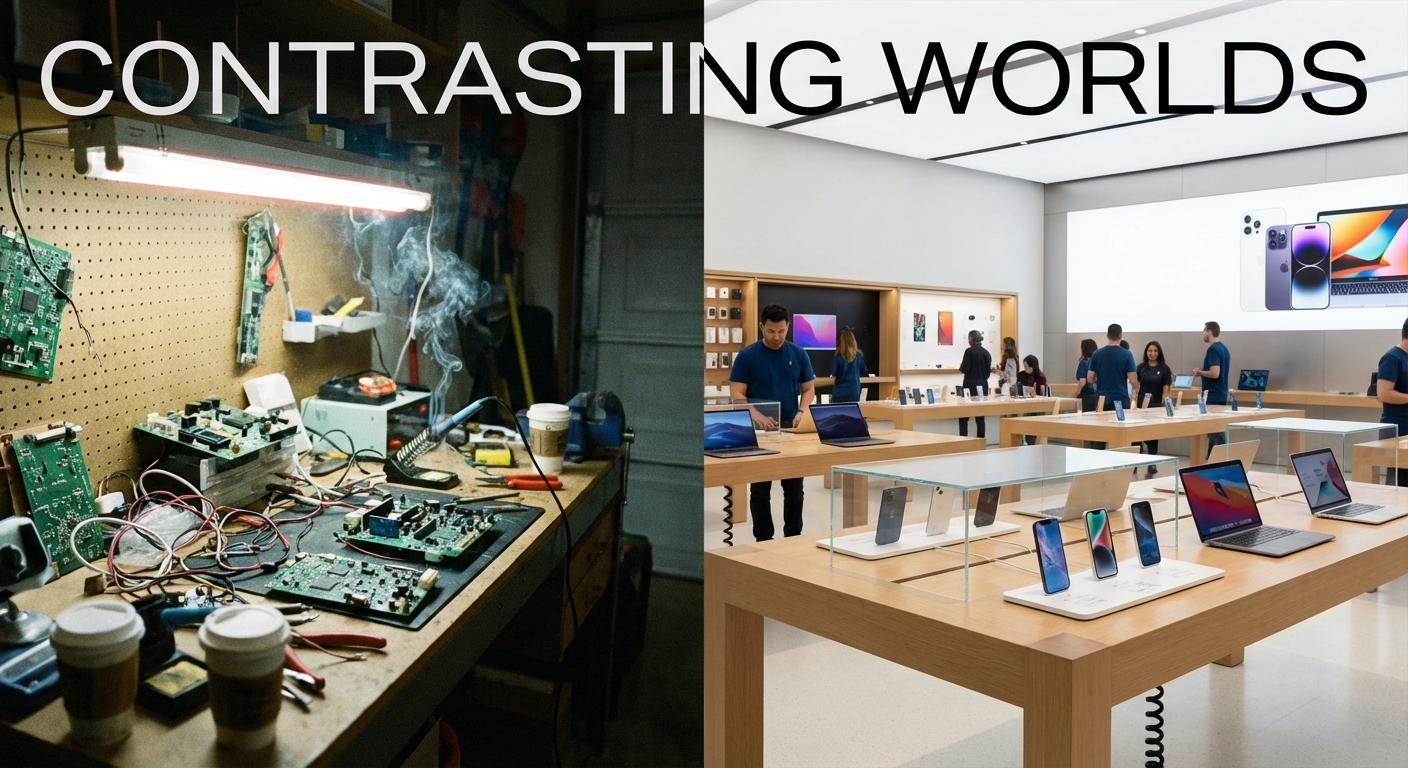
According to Forrester, 67% of software projects fail because of wrong build-vs.-buy choices. In distribution—where margins are thin and IT teams are small—the stakes of that decision are even higher.
The pattern repeats across the industry: a mid-market distributor decides its processes are too unique for off-the-shelf software, greenlights a custom build, and 18 months later finds itself over budget, behind schedule, and stuck with a half-finished system. The Standish Group's CHAOS research has tracked this dynamic for decades, finding that only about 16% of custom IT projects finish on time and on budget with full functionality. The rest run over, get scaled back, or are canceled outright.
None of this means building is always wrong. But the conditions where it makes sense are far narrower than most companies assume.
When Building Custom Software Actually Works
Custom development can pay off—but three conditions need to hold simultaneously.
Genuine process differentiation. Not "we do things a little differently" but a process so novel that no commercial platform can accommodate it even with configuration. In practice, most distribution companies overestimate their uniqueness. Ordering, inventory management, routing, customer pricing—these are variations on well-understood patterns. According to a 2025 CIO.com analysis, companies that honestly audit their workflows typically find only 10–15% of operations are truly proprietary.
Real software engineering capability. Not a couple of developers who maintain spreadsheets, but an institutional ability to architect, deploy, secure, test, document, and evolve production software for years. Most distributors are distribution companies, not software companies. The skill sets barely overlap.
Tolerance for budget overruns. SoftwareSeni's 2025 analysis of custom software projects found that 30–40% fail outright or deliver late and over budget. Maintenance alone runs 15–30% of the original build cost annually. A realistic exercise: double the initial estimate, add 25% per year for maintenance, and see if the project still pencils out. If the ROI depends on hitting original estimates, the project is already in trouble.
of software projects fail due to wrong build-vs.-buy decisions
Source: Forrester Research
Why Buying Usually Wins
For the majority of distribution companies, commercial platforms offer a better deal on nearly every dimension.
Amortized R&D. A purpose-built distribution platform represents tens of thousands of engineering hours spread across its entire customer base. Replicating that investment in-house—even partially—is economically irrational unless the use case is genuinely one-of-a-kind.
Speed. Commercial platforms deploy in weeks to months. Custom builds take 12–36 months to reach a comparable baseline. Every month spent in development is a month competitors with modern systems are pulling ahead on efficiency, customer experience, and data-driven decision-making.
Continuous improvement. Vendors ship updates, security patches, and new capabilities continuously. Custom software only improves when the company funds and staffs that improvement. The industry rule of thumb—annual maintenance running 20–30% of the original build cost—means a $500,000 custom system costs $100,000–$150,000 per year just to keep the lights on, before any new features.
Key-person risk. When a vendor's engineer leaves, the vendor replaces them. When a distributor's lead developer leaves, the custom system becomes a liability. Institutional knowledge walks out the door, and finding a replacement willing to maintain someone else's code at distribution-industry wages is a hard sell.
The Hybrid Model Gaining Traction
The most pragmatic approach—and the one gaining ground across mid-market distribution—is buy-and-extend: purchase a commercial platform for the 85% of operations that are standard, then build targeted custom applications for the 15% that genuinely differentiate.
The hybrid pattern—using a low-code platform alongside a commercial core system—has proven effective for mid-market manufacturers looking to capture most of the value of a custom build at a fraction of the cost and timeline. The approach works because it concentrates custom development effort on high-value differentiation while avoiding the trap of rebuilding commodity functionality from scratch.
Your Competitors Are Automating. Are You?
6 live sessions. Real AI tools. Walk away with workflows actually running in your business — not just slides about what AI could do.
Learn MoreA Practical Decision Framework
Distribution companies evaluating the build-vs.-buy question should work through five steps:
1. Audit uniqueness honestly. List every process believed to be unique. Then have someone outside the company evaluate the list. Industry consultants and platform vendors who've seen hundreds of operations can quickly identify what's genuinely novel versus what's a common variation.
2. Cost it with a reality multiplier. Get an estimate from someone who has delivered custom distribution software before—not from the internal team that wants to build it. Double the timeline. Add 25–30% annually for ongoing maintenance. Compare that five-year total to the five-year cost of a commercial platform.
3. Assess the capability gap. Building software means becoming a software company. What hiring is required? At what cost? What happens when those hires get recruited by tech companies paying 40% more?
4. Evaluate the hybrid path. Can a commercial platform handle the standard 85% while custom modules address the unique 15%? This approach delivers faster time-to-value while preserving differentiation where it matters.
5. Vet the vendor relationship. For the buy path, the vendor relationship matters as much as current features. How responsive is the vendor to feature requests? What's their track record on shipping promised capabilities? Do they have distribution-specific expertise, or is the product a generic platform that requires heavy customization?
The Prototype Trap
One pattern deserves special warning: the prototype that becomes production. Someone builds a quick proof-of-concept. Leadership likes the demo. The prototype gets pushed into daily use "temporarily" while the production version is developed. But the production version keeps getting delayed. Temporary becomes permanent.
This is more common than anyone in the industry admits. Prototypes lack error handling, security controls, scalability, audit trails, and testing—all the unsexy engineering that separates a demo from a reliable system. When someone says "we just need to productionize it," the honest multiplier is roughly 5x the original prototype effort.
of custom software projects fail or deliver late and over budget
Source: SoftwareSeni, 2025 analysis of custom software project outcomes
The Bottom Line
The build-vs.-buy decision is ultimately about honest self-assessment. Most distribution companies that choose to build do so because they overestimate their uniqueness, underestimate the cost, or conflate "we do things differently" with "our processes are genuinely novel."
The data points consistently in one direction: for the vast majority of mid-market distributors, a purpose-built commercial platform—extended where genuine differentiation requires it—delivers better outcomes at lower cost and lower risk than a custom build. The companies that succeed with custom development are the exceptions, not the rule, and they succeed because they met all three prerequisites: true differentiation, real engineering capability, and honest budgeting.
Stay Ahead of the Curve
Get weekly insights on AI, automation, and B2B operations delivered to your inbox.
Go Deeper in the Forge Vault
Get AI prompts, implementation templates, SOPs, and call scripts built for distribution companies. 47+ resources and growing — free access.
Access the Forge Vault — FreeAlso free: Live virtual training sessions — Thursdays 1 PM ET