
7 Agentic AI Trends Reshaping Distribution in 2026

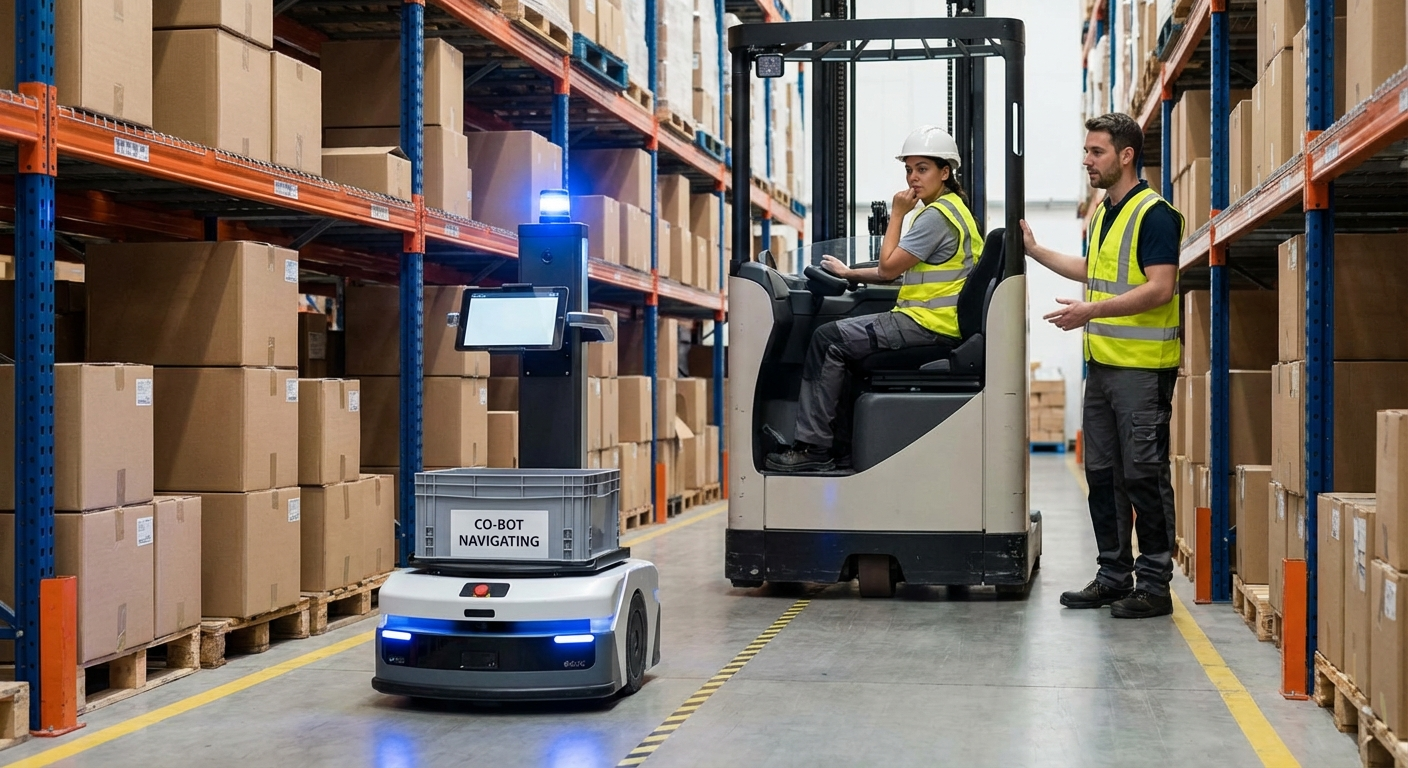
Gartner predicts 40% of enterprise applications will embed task-specific AI agents by the end of 2026, up from less than 5% in 2025. That adoption curve is steepest in operations-heavy industries like distribution, where high transaction volumes and repetitive decision-making create ideal conditions for autonomous agents. Here are seven trends defining the shift.
1. Order Processing Goes Autonomous
The first wave of AI in order management was data extraction—pulling information from emails, PDFs, and portal downloads into ERP systems. The 2026 wave is decision-making. Order agents now handle the full workflow: receive through any channel, validate against customer profiles and inventory, apply pricing rules including exceptions, check credit limits, and release to fulfillment.
IBM research found that 62% of supply chain leaders report AI agents embedded in workflows accelerate decision-making and communications. For distributors, that translates to standard orders flowing from receipt to fulfillment release in seconds rather than hours. The remaining exceptions that require human attention are genuinely complex—situations that benefit from judgment rather than data entry speed.
of enterprise applications will embed task-specific AI agents by end of 2026, up from less than 5% in 2025, according to Gartner.
2. Inventory Optimization Gets Predictive
Traditional inventory management is threshold-based: reorder when stock drops below a set point. Agentic systems are predictive—they anticipate demand by incorporating weather forecasts, economic indicators, seasonal patterns, and even social media signals for consumer-facing goods.
McKinsey found AI-driven demand forecasting reduces inventory levels by 20 to 30 percent while maintaining or improving fill rates. Leading manufacturers are already deploying this at scale, using AI to adjust inventory positioning across distribution networks multiple times daily—cutting excess stock significantly while sustaining high product availability.
3. Customer Service Handles Real Complexity
Voice and chat agents for customer service aren't new. What's changed is scope. Current-generation agents access real-time inventory and pricing across multiple locations, process returns and credits within defined limits, schedule deliveries, handle product substitution conversations, and escalate to humans with full context rather than forcing customers to start over.
ABI Research found 94% of companies surveyed plan to use AI for customer-facing interactions. The shift from "can answer basic questions" to "can resolve most issues" means customer service capacity scales without proportional headcount—particularly relevant given ongoing labor constraints in distribution.
Learn to Put AI to Work in Your Business
Join our 6-session live course and walk away with real AI workflows running in your operation. Hands-on, practical, no fluff.
See the Course4. Procurement Agents Start Negotiating
This is the most surprising development of 2026. AI agents now conduct routine procurement decisions—monitoring market prices, identifying when current supplier pricing diverges from market rates, and initiating conversations through email or supplier portals to request better terms.
Dataiku reported that one transportation company deployed agents in its buying process where buyers initiate agentic workflows that request quotes from approved suppliers and rank responses autonomously. Deloitte's 2025 Global CPO Survey found 67.68% of procurement executives identify enhanced decision-making as the top generative AI value. Humans still handle strategic supplier relationships—agents handle the commodity purchasing that used to consume hours of buyer time.
5. Warehouse Operations Get Orchestrated
Microsoft's February 2026 launch of agentic AI tools for Dynamics 365 supply chain management represents a broader trend: AI orchestrating warehouse operations holistically rather than optimizing individual functions. Agents coordinate across pick paths, labor allocation, receiving schedules, and shipping cutoffs simultaneously, identifying tradeoffs that functional managers might miss.
For example: accepting a slight pick efficiency reduction to avoid overtime costs, or prioritizing certain orders to maintain service levels for key accounts even when it disrupts standard sequencing. The World Economic Forum's November 2025 analysis emphasized that autonomous orchestration requires integrating planning and execution data across traditional silos—a technical challenge, but one with significant payoff.
6. Financial Operations Automate Beyond the Basics
Accounts receivable and payable have been automation targets for years. What's new in 2026 is the complexity agents handle. On the AR side, agents analyze payment patterns to prioritize collection efforts, generate customer communications adjusted for relationship history, and negotiate payment plans within defined parameters. On the AP side, agents manage early payment discount optimization, catch duplicate invoices, and handle routine vendor inquiries.
The month-end close—traditionally a scramble of batch processing—becomes more continuous as agents process transactions in real time. For mid-market distributors where the finance team wears multiple hats, this frees capacity for analysis rather than data reconciliation.
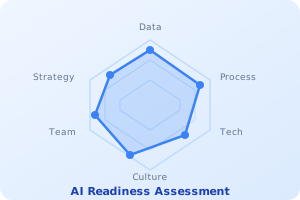
Is Your Business Actually Ready for AI?
This 5-minute assessment evaluates your data, processes, team, and tech stack—and gives you an honest roadmap.
Take the AI Readiness Assessment7. Multi-Agent Coordination Emerges
The most forward-looking trend is agents working together across functional boundaries. An order agent identifies a stockout. It queries the inventory agent for alternatives. The inventory agent checks with procurement about expedited ordering. Procurement negotiates with a supplier. Customer service proactively notifies the customer about options. The entire chain executes in minutes.
This is still early-stage. BCG reported that agentic systems accounted for 17% of total AI value in 2025 and projected 29% by 2028—growth that depends heavily on solving agent-to-agent coordination. Debugging multi-agent workflows is challenging, and the protocols for inter-agent communication are evolving. But the potential for end-to-end process automation makes this the trend to watch.
of agentic AI projects will be canceled by end of 2027 due to escalating costs or inadequate risk controls, Gartner predicted in June 2025. Governance matters as much as capability.
What These Trends Mean Together
Taken together, these seven trends point toward a fundamental shift in distribution operations. The human role moves from executing processes to designing them, from routine decisions to exception handling, from managing transactions to managing systems.
The transition won't be instant. Gartner's prediction that over 40% of agentic AI projects will be canceled by end of 2027—citing escalating costs, unclear value, or inadequate controls—is a reminder that enthusiasm alone doesn't produce results. The distributors that succeed will invest in data quality, build governance frameworks, and evolve their workforce to partner with agents rather than compete against them.
The agentic era isn't a future prediction. It's the operating environment for 2026.
Go Deeper in the Forge Vault
Get AI prompts, implementation templates, SOPs, and call scripts built for distribution companies. 47+ resources and growing — free access.
Access the Forge Vault — FreeAlso free: Live virtual training sessions — Thursdays 1 PM ET