
2026: The Year AI Moves from Training to Working

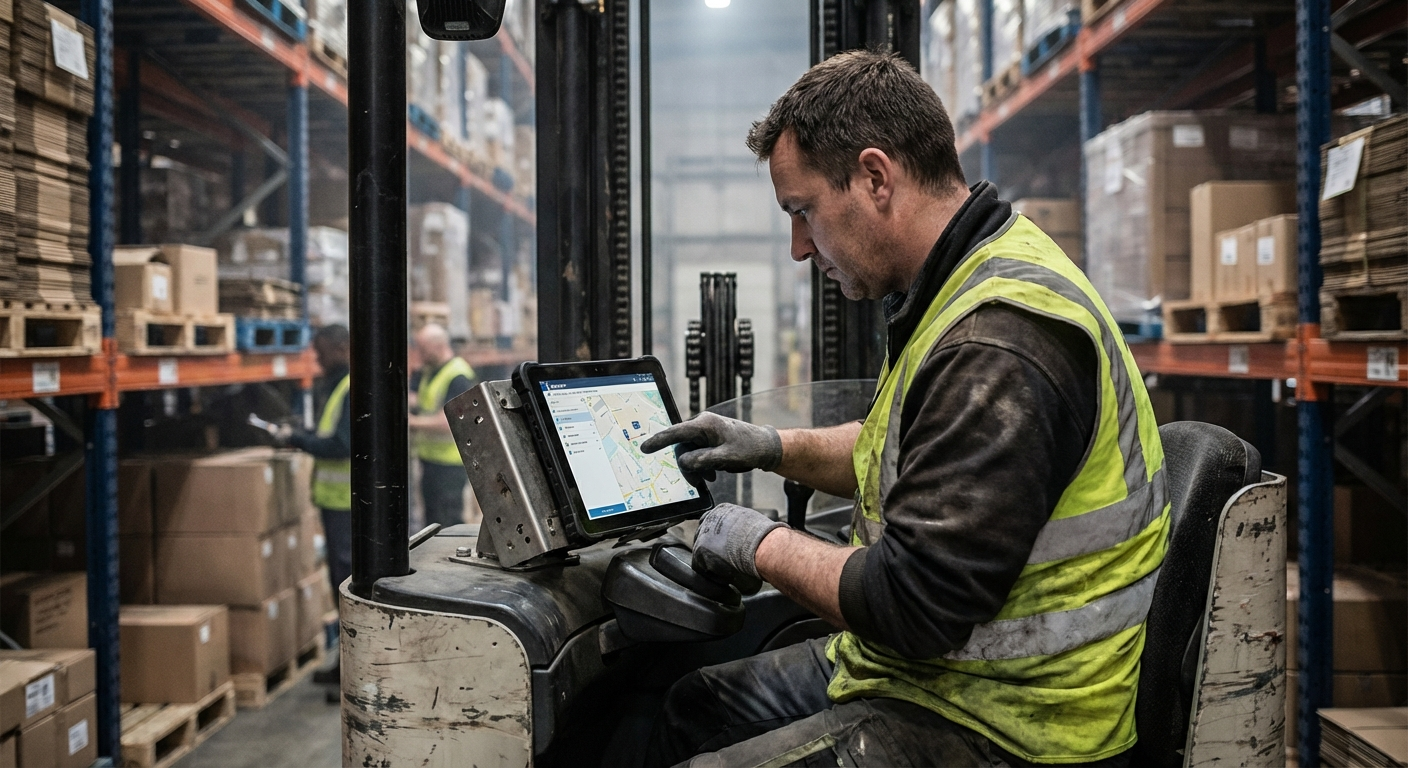
For the first time, companies are spending more on running AI than building it. Inference workloads—the computing required to actually use trained models—crossed 55% of AI cloud infrastructure spending in early 2026, according to ByteIota's analysis of cloud expenditure data, reaching $37.5 billion. A November 2025 Deloitte report estimated inference accounted for half of all AI compute in 2025 and projected it would jump to two-thirds by 2026.
The shift marks the end of an era defined by a single question: who can train the biggest model? The new question is simpler and harder: who can actually deploy AI in production?
The Economics Changed Faster Than Anyone Expected
The speed of the cost collapse is staggering. According to Stanford's 2025 AI Index Report, the cost of running inference at GPT-3.5-level performance dropped from $20.00 per million tokens in November 2022 to $0.07 per million tokens by October 2024—a 280-fold reduction in under two years. Google's Gemini-1.5-Flash-8B hit that price point, and competitors have continued pushing costs lower since.
Drop in inference costs for GPT-3.5-level performance between November 2022 and October 2024, according to Stanford's 2025 AI Index Report.
Meanwhile, training costs keep climbing. Frontier models now cost hundreds of millions of dollars to train. Anthropic, OpenAI, and Google continue pouring capital into training runs, but the marginal capability gains from each generation have narrowed. The jump from GPT-3 to GPT-4 produced qualitative breakthroughs. Subsequent iterations have delivered incremental benchmark improvements—useful, but not the kind of leaps that justified the hype cycle.
Training isn't stopping. But the center of gravity has moved.
What's Driving the Pivot
Three forces are converging to make 2026 the deployment year.
High-quality training data is scarce. The largest language models have consumed most of the high-quality text available on the public internet. Synthetic data can supplement, but researchers have documented diminishing returns. The "just add more data" playbook has a ceiling, and major labs appear to be hitting it.
Inference hardware is improving fast. NVIDIA's Blackwell architecture, AMD's MI300X, and a wave of inference-specific chips from startups like Groq and Cerebras are driving per-query costs down. At CES 2026, Lenovo's Ashley Gorakhpurwalla noted that infrastructure spending is shifting to match the inference-heavy workload mix.
Enterprise demand has arrived. Gartner predicted that 40% of enterprise applications would embed task-specific AI agents by the end of 2026, up from less than 5% in 2025. That adoption requires inference at scale—millions of queries per day, not occasional training runs.
What This Means for Business
The training-to-inference pivot is unambiguously good news for companies looking to adopt AI.
The models available today are good enough. For most enterprise applications—order processing, customer service, document analysis, inventory forecasting—current models deliver production-quality results. Waiting for the next frontier model is increasingly hard to justify when inference costs keep falling on the models that already exist.
The cost barrier is collapsing. Workloads that were prohibitively expensive two years ago are now routine. A distributor processing 10,000 customer interactions per day through an AI agent pays a fraction of what the same capability would have cost in 2024. The economics now favor deployment over deliberation.
Stop Reading About AI — Start Using It
Free 1-hour live sessions on AI automation for B2B — voice AI, CRM, operations, and more. Join on Zoom with live demos and Q&A.
See Upcoming SessionsIntegration is the new bottleneck. The harder problem is no longer AI capability—it's connecting AI to existing data, systems, and workflows. Companies investing in clean data pipelines and API infrastructure today will deploy faster than those still debating which model to use.
The New Competitive Landscape
When training defined the competition, only a handful of organizations mattered—the labs with billions in compute budgets. The inference era broadens the field considerably.
Vertical expertise beats raw scale. A model fine-tuned on distribution industry data—product catalogs, order patterns, supplier relationships—outperforms a larger generic model for those specific tasks. Domain knowledge becomes a moat.
Operational execution differentiates. Running AI reliably at scale requires monitoring, cost management, quality assurance, and graceful failure handling. These are engineering and operations challenges, not research problems. Companies that build this muscle early compound their advantage.
Inference cost management matters. As PYMNTS reported in August 2025, companies are discovering that inference costs at production scale add up quickly—especially when usage patterns are unpredictable. The organizations building cost monitoring into their AI stack from day one are avoiding the surprise bills hitting less prepared adopters.
The Year of Doing
The AI industry spent years talking about what models could do. In 2026, the conversation has shifted to what they're actually doing—in warehouses, on phone lines, inside ERP systems, across supply chains.
The infrastructure is ready. The costs work. The models perform. For enterprises still running pilot programs or waiting for "the right moment," the training-to-inference shift eliminates the last credible excuse for delay.
The Complete AI Implementation Guide for Distribution
9 chapters covering everything from readiness assessment to deployment. Built from real implementations.
Read the Free GuideGo Deeper in the Forge Vault
Get AI prompts, implementation templates, SOPs, and call scripts built for distribution companies. 47+ resources and growing — free access.
Access the Forge Vault — FreeAlso free: Live virtual training sessions — Thursdays 1 PM ET